
Category Archives: Polling

Change Reasearch Three-State Polling Shows Interesting Results

By Jim Ellis

July 15, 2019 — Just before the July 4th holiday break Change Research conducted a series of research studies in three of the first four Democratic presidential caucus and primary states.

The firm tested either 420 or 421 likely Democratic nomination event voters in each place during the period of June 29-July 4: in Iowa (420 respondents), New Hampshire (420), and South Carolina (420).

Iowa is, as we know, the site of the first caucus vote, which is scheduled for Feb. 3, 2020. This will be followed by the New Hampshire primary on Feb. 11 and the South Carolina primary pegged for Saturday, Feb. 29. The Nevada Democratic electorate, with their caucus placed on the calendar for Saturday, Feb. 22, was not polled.

Part of the media coverage surrounding these surveys looks at the aggregate numbers that these three individual places produced. The three states are highly important because they, together, will set the race’s early tone. But, from a statistical perspective, the aggregate total has little bearing as to who would eventually become the Democratic nominee.

These aggregate Change Research numbers, however irrelevant to the actual race trajectory, have captured some attention because they are so close. The sum of the candidates’ support percentages from the combined three states, from a total of 1,261 respondents, find Sens. Bernie Sanders (I-VT) and Elizabeth Warren (D-MA) leading the group with 19 percent apiece, closely followed by former Vice President Joe Biden at 18 percent, Sen. Kamala Harris (D-CA) with 17 percent, and South Bend Mayor Pete Buttigieg posting a combined 15 percent preference. No other even candidate breaks the three percent level.

What carries much greater weight, however, is the individual candidates’ status in the individual early trend-setter states. As has been prevalent in Iowa’s electoral history, neighboring regional Midwestern candidates have typically done well in the first caucus. Such is the case again according to this Change Research poll.
Continue reading

The Trump Issues

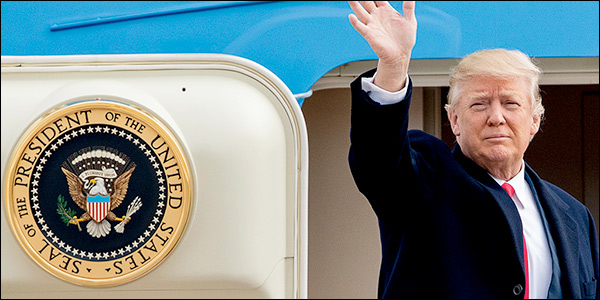
President Donald Trump | whitehouse.gov


By Jim Ellis

July 12, 2019 — International pollster YouGov, surveying for The Economist magazine (July 7-9; 1,500 US adults from the YouGov opt-in Internet panel, 1,140 US registered voters, 592 likely Democratic primary voters) finds former Vice President Joe Biden maintaining a lead over the nomination field, but his margin is dissipating.

In this poll, Biden has a 22-17-14-11-5 percent advantage over Sens. Elizabeth Warren (D-MA), Kamala Harris (D-CA), Bernie Sanders (I-VT), and South Bend Mayor Pete Buttigieg, respectively, but the survey contains much more information.

This YouGov poll presents an exhaustive study of the electorate and some of the more interesting findings containing the respondents’ views regarding President Trump’s performance in certain key issue areas. In fact, the YouGov pollsters queried the respondents on 17 different subjects that yielded various conclusions.

In almost every poll, President Trump records upside-down overall job approval ratings. In this particular survey, his approval index is 43:53 percent (-10) positive to negative within the registered voter sample.

Continue reading

Is Sen. Markey (D-MA) Vulnerable?

By Jim Ellis

Massachusetts Sen. Ed Markey (D)

July 8, 2019 — The Politico news site ran a story last week befor the Fourth of July break quoting a Massachusetts consultant saying that Sen. Ed Markey’s seat “is there for the taking,” and predicted the state’s extremist Democratic Party faction will make defeating him a major objective in the guise of freshman Rep. Ayanna Pressley’s (D-Boston) successful challenge to then-veteran Rep. Mike Capuano (D) in the last election.

An early June Suffolk University/Boston Globe poll is cited as the source for concluding that Sen. Markey is having some political trouble. In our analysis of the study, we see some Markey vulnerability, but it is inaccurate to say that signs are pointing to the senator possibly losing his re-nomination campaign.

The Suffolk/Globe poll (June 5-9; 600 registered Massachusetts voters, 513 self-identified Massachusetts Democratic (207) or Independent voters (306), 370 Democratic responses to the US Senate ballot test) is the same one that drew some national publicity because it projected home state Sen. Elizabeth Warren posting only 10 percent support in the presidential Democratic primary ballot test, as former Vice President Joe Biden led the field with a 22 percent preference score. It is not a stretch to predict that this race would likely poll differently if re-tested today.

The main reason that Sen. Markey is viewed as vulnerable relates to his 44 percent preference among the Democratic respondents on the senatorial ballot test. While this number is indisputably low for an incumbent, we must also view the results in context. His two announced opponents, labor union attorney Sharon Liss-Riordan and businessman and author Steve Pemberton, both only record a support level of five percent. Though Sen. Markey should reasonably be commanding majority support, he is still almost 40 points ahead of his closest known competitor.

The upstarts who want to see Markey challenged generally hope one of the top name Democrats will jump into the race, such as Boston Mayor Marty Walsh or US Rep. Joe Kennedy III (D-Newton), but it is highly unlikely that either of these men will run.

Continue reading

Poll: Biden Falling

By Jim Ellis

July 2, 2019 — The Morning Consult organization immediately went into the field after the second night of the Democratic presidential forum (June 27-28; 2,407 US self-identified Democratic registered voters) and found that former Vice President Joe Biden’s support slipped, at least as an immediate reaction to what is commonly viewed as his poor debate performance, while Sen. Kamala Harris (D-CA), evaluated as performing quite well, gained.

The MC data still finds Biden in first place, but down five points from their previous survey. On June 23, just three days before the first forum, Biden led Sen. Bernie Sanders (I-VT), 38-19 percent while Sen. Harris lagged at six percent support. Just after the debate, when completing the poll on June 28, Biden dropped to 33 percent, but Sanders remained constant at the 19 percent level. Conversely, Sen. Harris doubled her past support to 12 percent.

MORNING CONSULT POLL RESULTS:

Click on above graphic to go to complete Media Consult poll results story.

In the Morning Consult survey, Sen. Elizabeth Warren (D-MA) also posted 12 percent support, which was virtually on par with her standing in their June 23 poll when she recorded 13 percent preference. South Bend Mayor Pete Buttigieg, who actually scored well on the second debate night, had a similar result to Sen. Warren. While he was polling seven percent on the June 23 poll, he basically remained constant one week later, dropping to six percent on the MC June 28 survey.

Former Texas representative, Beto O’Rourke, who was dogged with poor debate reviews from his first night performance, also dropped in the Morning Consult polling. Before the forum, O’Rourke was only in the four percent range, and after, even lost half that support base, dropping to two percent.

Continue reading

Debates Begin; Some Polls Tighten

By Jim Ellis

June 28, 2019 — Several polls were released just before the presidential debate series began and we see some inconsistency. Former Vice President Joe Biden leads in the most recent national surveys, but by varying margins.
The closest poll comes from YouGov (June 22-25; 522 likely US Democratic primary voters) and finds Biden’s lead over Sen. Elizabeth Warren to be 24-18 percent. In a close third place is Vermont Sen. Bernie Sanders with 15 percent.

All other candidates are in single digits. Those who have been experiencing a recent downward trend, Sen. Kamala Harris, and ex-Rep. Beto O’Rourke, again posted poor support scores, this time seven and three percent, respectively. South Bend Mayor Pete Buttigieg has been polling inconsistently in recent surveys. Here, we see downward movement, as he registers only five percent support, a polling range that has also been detected in other late June polling.

YouGov also finds two of the lower-tier candidates performing a bit better in this survey. Hawaii Rep. Tulsi Gabbard reaches three percent national support, and Sen. Cory Booker posts two percent support. All others are at one percent or below.

But the Morning Consult data, with a much larger survey sample, tells a much different story. Their poll (June 19-26; 7,150 likely US Democratic primary voters via automated response device) detects a much larger Biden lead. The results find the former vice president at 35 percent support with Sen. Sanders in second place – as he has been in most national polls – with 18 percent, and Sen. Warren in third at 12 percent. Like in the YouGov poll, only the top three finishers posted double-digit support numbers.

The lower tier is very similar to the YouGov results sans Gabbard. They find Sen. Harris (six percent), Mayor Buttigieg (six percent), O’Rourke (four percent), and Sen. Booker (three percent) comprising a second tier. All the rest are at one percent or less.

The HarrisX survey (June 24-26; 892 self-identified Democratic registered voters) brandished a middle-sized sample with commensurate results. HarrisX also finds Biden leading the Democratic race, but his 29 percent support factor falls virtually evenly between what was found in YouGov and Morning Consult.

Continue reading

Biden’s Early Obstacle

By Jim Ellis

Former vice president and ex-Delaware senator Joe Biden

June 27, 2019 — One of the reasons that Hillary Clinton’s campaign began to come unglued in 2016 was failing to meet expectations in the early places.

Unfortunately for her, Iowa was always one of her weakest states and the fact that it is first on the voting schedule caused her air of inevitability to be pierced rather quickly.

As you may remember, Clinton won the Iowa Caucus, but the result was a virtual tie with Sen. Bernie Sanders, forcing the local committee people to decide some precinct results with the flip of a coin — tosses in which Clinton prevailed every time. With her inevitability veil coming off, Clinton then headed to New Hampshire where she would lose 60-38 percent.

Because the race winnowed to a two-person affair, Clinton was successfully able to rebound, scoring early victories in Nevada and South Carolina to get her campaign back on track.

Two new polls suggest that former Vice President Joe Biden may be facing a similar pattern in the early states, and being mired in a crowded field suggests we may see a different final result than what Clinton achieved.

Two new surveys suggest that Biden may already be weakening in the first two states. Though small in terms of first ballot delegate votes (Iowa, 41; New Hampshire, 24), the pair are critically important in casting early momentum. With 25 candidates now beginning the campaign, and at least six appearing viable, developing early momentum is more important than within the much smaller 2016 nomination field.

Change Research conducted the Iowa and New Hampshire polls (along with one in South Carolina where Biden has a comfortable 39-15-13-11 percent edge over Warren, Sanders, and Buttigieg) and their findings suggest that Biden could have some early trouble. Though the polling samples are small — 308 respondents for each state — the sample size may accurately reflect the diminutive voting universes found in the two places. All the surveys were conducted from June 17-20.

In Iowa, Biden leads, but with only a 27-20-18-17 percent margin over Sens. Elizabeth Warren and Sanders, while South Bend Mayor Pete Buttigieg posts a close 17 percent support. Having four candidates within 10 points suggests that any one of them could break out with a win, especially with the Feb. 3 Caucus still months away.

Continue reading

He’s Baaaaaack!

By Jim Ellis

                      Judge Roy Moore

June 24, 2019 — As expected and despite urgings from President Trump not to do so, former Alabama state Supreme Court Chief Justice Roy Moore announced his Senate 2020 candidacy late last week.

We will remember Judge Moore’s ill-fated 2017 special Senate election effort that resulted in Democrat Doug Jones becoming the first member of his party to win an Alabama Senate seat since Howell Heflin was last re-elected in 1990.

Even before the announcement, Moore and Sen. Richard Shelby (R) were again trading barbs. Judge Moore argued that Shelby’s involvement, which culminated in the senior senator saying he was placing “country before party,” led to Jones’ victory, while Shelby retorted that he still thinks “Alabama can do better,” in a reference about electing Judge Moore.

Arguably, Alabama is the most important Senate race on the 2020 election board. If the Republicans take back the seat, which is a must if they want to cement their hold on the majority, the Senate party division would increase to 54 Republicans. Looking at the remaining seats in play for the current election cycle it becomes increasingly difficult for the Democrats to reach majority status if they lose this race.

In 2017, Judge Moore, after defeating appointed incumbent Luther Strange 55-45 percent in a run-off election after placing first with 39 percent in the original special primary, was found to have attempted to date, or did date, between two and nine underage girls when he was a deputy district attorney in Etowah County some 40 years ago. The controversy likely cost Moore the election, a battle that he lost to Jones 50.0 to 48.3 percent.

The 2020 regular primary appears to feature a more difficult field of opponents for Moore than did the special election. Appointed Sen. Strange waded into his own batch of quicksand when allegations surfaced that he allegedly cut a deal with Gov. Robert Bentley (R) when the former man was Alabama’s attorney general and the state chief executive was being scrutinized for spending and utilizing state resources for his personal use.

Continue reading