
Tag Archives: Texas

Two Hidden Races

By Jim Ellis — Wednesday, Oct. 16, 2024

House

A pair of campaigns to win a US House seat that have not attracted much political attention could come into play according to the most recent information; they are in Nevada and Texas.

Nationally, it appears the House majority could come down to one or two seats, so every race becomes important. Therefore, even contests that were expected to be non-competitive could be the campaigns that tip the majority to one party or the other.

Two such matches are coming to the forefront in Nevada and Texas. Both contests are in districts rated heavily for the incumbent party, but showing potential flip signs. With the majority margins so close, every campaign’s importance factor increases.

Nevada Rep. Mark Amodei

Similar to Sen. Deb Fischer’s Nebraska re-election situation, Nevada Rep. Mark Amodei (R-Carson City) faces a strong Independent opponent and no Democrat. Greg Kidd is a registered Republican who qualified by petition signature to run in this expansive northern Nevada congressional race as an Independent. Kidd is a venture capitalist and former analyst for the Federal Reserve and has committed $3 million of his own money to his campaign.

There has been no recent polling released for this race, so it is difficult to tell if the ballot test is close. An expenditure the size of what Kidd is capable of making, however, can certainly move numbers, but Rep. Amodei has so far been virtually inactive on the airwaves. Considering Kidd’s personal financial resources and commitment to self-financing his political effort to a major degree, expect Rep. Amodei to immediately increase his campaign presence.

The FiveThirtyEight data organization rates NV-2 as R+13, and the Dave’s Redistricting App statisticians calculate a 53.8R – 40.5D partisan lean. The Down Ballot data organization ranks NV-2 as the 59th most vulnerable seat in the Republican Conference.

While the data suggests the 2nd is a safe Republican seat, the metrics are measured from a Democratic vs. Republican perspective. In this case we see a strong Independent candidate who is a registered Republican but campaigning on abortion rights and pro-prosperity economics. This could well change the paradigm here and make this a more competitive race than the traditional predictive data would suggest.
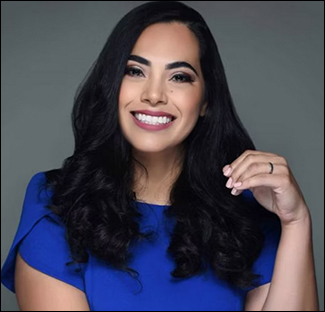
Mayra Flores

In south Texas, we see a rematch from the 2022 campaign where Rep. Vicente Gonzalez (D-McAllen) and then-Rep. Mayra Flores (R-McAllen) squared off in an incumbent vs. incumbent post-redistricting pairing.

Flores had won a special election in June of 2022 in the 2011 version of CD 34, which stretched along the Gulf of Mexico from Brownsville in the district’s southernmost point then to the north around the Corpus Christi area, and all the way to the outer Austin suburbs. That version of District 34 was rated D+5 according to the FiveThirtyEight data organization.

The 2022 34th District is much different, as it starts just south of Corpus Christi, and stretches to Brownsville, and then west along the Mexican border into the city of McAllen. The new version carries a D+17 rating and is obviously skews much more Democrat than the configuration that elected Flores. Yet, we see new competitive signs.

Despite her losing in 2022 by a 53-44 percent count, a new poll from the 1892 firm for the National Republican Congressional Committee (Sept. 28-Oct. 1; 400 likely TX-34 voters; live interview) finds Flores trailing Rep. Gonzalez by just a 49-46 percent margin. This is largely an under-the-radar race that has drawn little national attention but may be moving up the conversion priority chart.

The poll is another indication that the Republicans are doing better with the Hispanic population. This district is 88 percent Hispanic, and former President Donald Trump, in this same 1892 study, leads Vice President Kamala Harris 49-47 percent despite the seat being drawn to elect a Democrat.

Both NV-2 and TX-34 should receive renewed national interest. Watch for other seemingly safe districts for one party or the other similarly come into play.

Senate Trends

By Jim Ellis — Tuesday, Oct. 15, 2024

Senate

As we get closer to early votes being cast and election day itself, several of the key Senate races are a focal point of attention.

It appears at this point the Republicans are on a path to secure at least a 51-49 majority with wins in West Virginia and Montana, while GOP challengers in Ohio, Pennsylvania, and Wisconsin are getting closer. Democrats are countering with big spending in three Republican states, Florida, Nebraska, and Texas, hoping to score an upset in order to save their small majority.

Ohio businessman Bernie Moreno (R)

Ohio Sen. Sherrod Brown (D) is running for a fourth term and has held the polling lead for the entire campaign, but recent surveys suggest a tightening of the contest. Though former President Donald Trump has established a healthy lead in the Buckeye State, a place he has twice won by eight percentage points, Sen. Brown has continued to post an advantage over GOP businessman Bernie Moreno.

The trend, however, shows a tightening of the race. While Sen. Brown led consistently by five points earlier in the cycle, the most recent nine polls suggest an average lead of only 1.5 percentage points. Therefore, with Trump doing well at the top of the ticket, and Moreno closing the gap, we definitely see a trend moving toward the GOP challenger in this hot Ohio race.

• Overcoming the Casey family political legacy in Pennsylvania is a difficult task for Republicans considering Sen. Bob Casey Jr. (D) has won three statewide campaigns and his father, the late Bob Casey Sr. (D) scored four victories, two as attorney general and two as governor.

The senator has enjoyed consistent polling leads through the election campaign, but the later polls are tightening. Instead of holding an average high single-digit advantage, Sen. Casey’s average lead has dropped to four points according to the last 10 published polls. While the trend is favorable for Republican challenger David McCormick, it may not be strong enough to deny the senator re-election.

• In a similar pattern to that of Sen. Casey, Wisconsin two-term Sen. Tammy Baldwin (D) has also seen her once more formidable lead getting smaller. Typically reaching high single to low double digits over businessman Eric Hovde (R), the senator’s average edge over the last 13 polls has dropped to four percentage points.

Since Wisconsin typically features tight statewide election results, such polling results are not surprising. Considering that both she and Sen. Casey have never trailed in the multitude of surveys conducted in their states, we can also expect Sen. Baldwin to return for another term.

The Democrat challengers in Florida and Texas — along with the Independent that the Nebraska Democratic establishment backs — are continuing to post close polling numbers, but like with the established Democratic incumbents in their competitive campaigns, the GOP incumbents remain favored.

• While polls consistently show Florida Sen. Rick Scott (R) three to four points ahead of former Rep. Debbie Mucarsel-Powell (D), the margin is likely higher. In 2018, when Sen. Scott, then the state’s governor, unseated then-Sen. Bill Nelson (D), he did so with a 10,033-vote victory from a voter pool that exceeded eight million ballots.

At that time, Democrats held a 257,000-person lead in voter registration over Republicans. Today, there are 1.05 million more Republicans than Democrats, indicating that the state has moved over 1.3 million people in the Republicans’ favor since the last time Sen. Scott was on the ballot.

With pollsters missing the Republican voter strength in the Florida statewide races by seven points in 2022, and considering the huge registration changes, the trends below the radar heavily favor a Scott re-election victory.

• A surprise Senate race always seems to appear in every cycle, and we have one forming in Nebraska. Here, Sen. Deb Fischer (R), who doesn’t even have a Democratic opponent, finds herself in a legitimately tight campaign with Independent Dan Osborn. In four polls taken since the beginning of September, Osborn holds an average lead of just under two percentage points.

This contest needs to be monitored, since the trends do suggest an upset is possible. While Trump and Sen. Pete Ricketts (R) enjoy strong double digit leads in the same polls as mentioned above, the Fischer race has become a serious contest. Sen. Fischer may be able to right her political ship since the campaign has sprung into action and is hard at work trying to paint Osborn as a liberal Democrat, but only time will tell if their strategy will be successful.

• In Texas, talk continues, just as it did in 2018, that Sen. Ted Cruz (R) is in danger of losing his seat. While Rep. Colin Allred (D-Dallas) pulls within an average of four points opposite the incumbent over the most recent 12 polls from the beginning of September, the path is still a difficult one for the challenger.

With the Biden-Harris energy policies not favorable to the dominant Texas oil and gas industry, the Lone Star State being most affected by the southern border issue, and south Texas sees Hispanic support rising for Republicans, the timing doesn’t appear favorable to reverse a Republican statewide winning streak that begin in 1996.

While the trends undoubtedly suggest a close finish, as was the case when Cruz defeated then-Rep. Beto O’Rourke (D) by just three points in 2018, the most likely outcome this year is another Cruz victory. The Democrats are increasing strength in the Houston, Dallas, Austin, and San Antonio metro areas, but their gains are not large enough to neutralize the rest of America’s second-most populous state.

All six of the races covered above are well worth increased political attention as the campaign cycle draws to a close. While the Republicans appear to be on track to secure at least a minimum majority, an upset in one of the Republican incumbent campaigns could reverse such an impending trend.

Senate Recap – Part III

By Jim Ellis — Friday, Oct. 4, 2024

Senate

Our final segment of the three-part US Senate recap series covers the campaigns from Ohio through Wisconsin. At this point, the Republicans appear in favorable position to convert West Virginia and Montana while protecting Florida and Texas. Doing so would give the GOP a small Senate majority, but the question remains as to whether they can expand such a contingent beyond 51 senators.

Ohio Sen. Sherrod Brown (D)

Ohio — One of the races where movement is detected is in the Buckeye State of Ohio where three-term Sen. Sherrod Brown (D) is defending his seat against GOP businessman Bernie Moreno. For months, this race stood with Sen. Brown holding a five-point edge even though former President Donald Trump was posting leads close to 10 points within the same polling samples. Within the past two weeks, however, the race has shown tightening tendencies as detected in publicly released polling.

Sen. Brown has been concentrating his campaign and major resource advantage on driving home the image that he delivers for Ohio and that the state is his top priority. He never mentions the national ticket, Washington, or anything related to the Democratic Party. While Sen. Brown had raised just under a huge $53 million through the end of June, we now see several outside Super PACs coming into the state to help Moreno and attack Brown. Whether this race flips to Moreno in the end still remains to be seen.

Pennsylvania — Sen. Bob Casey Jr. (D) and his late father, Gov. Bob Casey Sr. (D), have together won seven statewide races in Pennsylvania, and the family is a legacy within the state. Lately, the Keystone State race has been the most polled Senate contest in the country and Casey’s once strong lead over Republican former hedge fund CEO David McCormick (R) has narrowed.

This is another key race going down to the wire, but the Casey name is still very formidable in Pennsylvania even though Sen. Casey is far to the left of his more conservative late father. While Trump may well be in position to win here again, as he did in 2016, toppling Sen. Casey will prove to be much more difficult. This remains a race to watch, but Sen. Casey should still be regarded as the favorite.

Texas — We are hearing a familiar refrain from the Lone Star State Democrats as they attempt to sell their argument that Rep. Colin Allred (D-Dallas) can upset Sen. Ted Cruz (R). While Cruz’s favorability numbers are not particularly high, and polling repeatedly shows a close race, such has been the case in many previous Texas races. Yet, in the end, Republicans prevailed with comfortable margins.

The state is changing politically. While Democrat candidates are doing well in the big cities, such as Houston, Dallas, Austin, and San Antonio, the rural areas are strongly Republican and the Hispanic voting patterns are showing further signs of moving closer to the GOP.

Expect the turnout model to favor the Republicans when voters actually cast their ballots. Because President Joe Biden’s energy policies have not been favorable to Texas’ mega oil and gas industry, and the southern border issue dominates the Lone Star issue matrix, it is likely that Rep. Allred, while an attractive candidate, picked the wrong year to attempt to reverse a statewide political trend that hasn’t seen a Democrat win a major office here since 1994.

Utah — Sen. Mitt Romney (R) is retiring after one term, and 3rd District Rep. John Curtis (R-Provo), due to his strong plurality win in a crowded GOP primary – recording 49 percent of the primary vote over three Republican opponents – is poised to easily capture the seat in November. As was the case when Curtis won his House seat in a 2017 special election, he fared poorly in this year’s Republican nominating convention but then rebounded to record a solid primary victory.

Environmental activist Caroline Gleich is the Democrat’s nominee but has little chance of winning the general election during a presidential year in solidly Republican Utah.

Virginia — Sen. Tim Kaine (D), the Democratic vice presidential nominee in 2016, seeks a third term in the Senate and should have little trouble winning in a state that has been definitively trending Democrat over the past decade with the 2021 statewide election being the lone exception. Prior to serving as a senator, Kaine had been elected governor of the state and mayor of Richmond, while being appointed as chairman of the Democratic National Committee.

The senator’s Republican opponent is retired Navy captain and ex-congressional candidate Hung Cao. While Cao over-performed in his congressional race even while losing, his Senate fundraising does not place him in the competitive realm with an accomplished incumbent such as Sen. Kaine. As was the case in his 2018 re-election campaign, expect Sen. Kaine to win re-election with a percentage in the high 50s.

West Virginia — Without Sen. Joe Manchin, now an Independent, on the November ballot, this race is a lock for GOP Gov. Jim Justice, who is ineligible to seek a third term in his current office. Running over 60 percent in the few polls taken of this contest, and seeing his Democratic opponent, Wheeling Mayor Glenn Elliott, failing to raise even $300,000 through the end of June, means the general election is a lock for the GOP and Gov. Justice, and with such a victory comes a 50-50 electoral tie in the Senate chamber.

Wisconsin — Sen. Tammy Baldwin (D) is on the statewide ballot for the third time, after serving seven terms in the US House and six years in the Wisconsin state Assembly. Her opponent is businessman Eric Hovde; potentially stronger Republican candidates such as Rep. Bryan Steil (R-Janesville), decided not to run. Hovde did bring resources to the table when dropping at least $13 million of his own money into the race.

Sen. Baldwin has been polling ahead all year but, as in Pennsylvania and Ohio, we’ve seen a recent tightening of the campaign. Wisconsin races are always close, and the state will figure prominently in the presidential election outcome. Therefore, a late Republican surge here, should it develop, would make the Senate race interesting. Barring such a vote disposition, expect Sen. Baldwin to win re-election with a percentage figure in the low 50s.

Harris to Skip Traditional Event; Trump Declines Debate; Tracking Poll Trends; MT-1 Remains Close

By Jim Ellis — Tuesday, Sept. 24, 2024

President

Vice President Kamala Harris / Photo by Gage Skidmore

VP Kamala Harris: Skipping Catholic Al Smith Event — The attacks on Vice President Kamala Harris failing to participate in public events or news conferences intensified over the past weekend when her campaign confirmed that she will not attend the annual Al Smith Catholic fundraising dinner in New York on Oct. 17.

It has become a tradition that the presidential candidates attend this function together, but the Harris campaign is deciding to buck a trend that has been in effect for 40 years. We can expect a Trump campaign attempt to use her decision to drive a wedge between Harris and Catholic voters.

Donald Trump: Rejects Oct. 23 Debate — It appears the first debate between Harris and former President Donald Trump will be the last. While Harris declined to participate in a Fox News debate that Trump accepted, now the Republican nominee has declined CNN’s invitation to debate Harris on Oct. 23. Trump says that date is too late for a forum since so many people will have already cast a ballot through early voting.

Senate

Tracking Polls: Ohio and Texas Flip Leaders — Tracking polls are conducted not so much to capture where a race stands, but rather to detect which candidate the race trend favors over a sustained period. Therefore, we see two major long term tracking polls suggesting that the underdog candidate in each important Senate contest is currently moving upward.

In Texas, the Morning Consult survey research firm is conducting a nationwide series of Senate and presidential race tracks in the key states. In Texas, the MC data (Sept. 9-18; 2,716 likely Texas voters; online) finds Rep. Colin Allred (D-Dallas) pulling one point ahead of incumbent Sen. Ted Cruz (R), 45-44 percent. The Activote firm conducted a five-week track of the Ohio Senate race (Aug. 16-9/22; 400 likely Ohio voters) and sees GOP challenger Bernie Moreno moving ahead of Sen. Sherrod Brown (D) by two percentage points, 51-49 percent.

In neither case do these tracking results necessarily mean that the incumbent is now trailing, only that their opponents’ campaigns are on an upswing.

House

MT-1: Remains Close — The western 1st Congressional District of Montana was newly created after the 2020 census due to population growth, and its first election delivered a closer than expected final tally. In that contest, then-former US Interior Secretary and ex-Congressman Ryan Zinke (R) under-performed with his 50-46 percent win over former US Olympian Monica Tranel (D). The latest 2024 poll again featuring the two contenders shows another similarly close result.

The Noble Predictive Insights survey (Sept. 11-14; 432 likely MT-1 voters) finds Zinke leading Tranel by only a 47-43 percent margin with the Libertarian candidate taking three percentage points. While the Montana Democratic Party failed in their lawsuit to disqualify the Libertarian Party from the statewide ballot, in this race the presence of a minor party candidate might be helping their contender. While Rep. Zinke is still favored, it appears we are headed for another tight finish.

Primary Results: Connecticut, Minnesota, Vermont, and Wisconsin

By Jim Ellis — Wednesday, August 14, 2024

Primary Results

Overview: Four States and One CD — Voters in Connecticut, Minnesota, Vermont, and Wisconsin nominated candidates yesterday while the Harris County, Texas Democratic Party chose a general election nominee to replace the late Rep. Sheila Jackson Lee (D-Houston). Little in the way of competition was found in Connecticut and Vermont, meaning all of the incumbents easily advanced into the general election.

Minnesota Sen. Amy Klobuchar (D) / Photo by Gage Skidmore

• Minnesota: Sen. Amy Klobuchar (D) captured over 90 percent of the vote in her Democratic primary and is a heavy favorite to defeat the new Republican nominee, former NBA professional basketball player Royce White, who defeated banker Joe Fraser and six other contenders to claim his party’s nomination.

After 2nd District Republican Taylor Rahm dropped his congressional bid to join the Trump campaign staff, it became evident that attorney Joe Teirab would be the Republican to challenge Rep. Angie Craig (D-Prior Lake) in what could become a competitive general election.

Though the safely Democratic 3rd District was open because Rep. Dean Phillips (D-Plymouth) chose not to seek re-election, state Sen. Kelly Morrison (D-Deephaven) surprisingly found herself unopposed in the party primary. She will be a strong favorite to defeat Republican former judge and legislator Tad Jude in the general election.

Though facing credible opposition, polling was projecting that three-term Rep. Ilhan Omar (D-Minneapolis) would score a big victory. Her 56 percent vote total was certainly enough to clinch a comfortable win but not as wide as the pre-election polling had projected. She will easily win the general election to secure a fourth two-year term.

In the expansive western state 7th District, Rep. Michelle Fishbach (R-Regal), who lost the official party endorsement at the Republican state convention earlier in the year, rebounded to score a primary win that was just short of a 2:1 drubbing over businessman Steve Boyd. Fishbach will easily win her third term in November.

• Wisconsin: With Sen. Tammy Baldwin (D) running unopposed in the Democratic primary, Republican businessman pounded his two minor GOP opponents to post an 87 percent victory percentage. Sen. Baldwin is the clear favorite to win the general election, but Hovde will be able to keep pace in advertising with his strong self-funded media campaign.

In the competitive 3rd Congressional District, business owner Rebecca Cooke, who had strong outside support, recorded large percentages in the rural areas to overcome state Rep. Katrina Shankland’s (D-Steven’s Point) overwhelming strength in Portage County to score a 49-42 percent Democratic primary victory. Cooke will now face freshman Rep. Derrick Van Orden (R-Prairie du Chien) in what should be a hotly contested general election.

In the Green Bay anchored 8th CD, businessman Tony Wied, with an endorsement from former President Donald Trump, slipped past former state Senate President Roger Roth and state Sen. Andre Jacque (R-Green Bay) to clinch the open Republican nomination and become the heavy favorite to win the general election in November. Assuming his success, Wied will succeed resigned Rep. Mike Gallagher (R) in the seat that the FiveThirtyEight data organization rates as R+20.

• TX-18: Battling several prominent candidates before the 88 Harris County Democratic Party convention delegates, former two-term Houston Mayor Sylvester Turner was chosen as the party standard bearer in the general election to replace the late US Rep. Sheila Jackson Lee (D-Houston).

Turner and former city councilwoman, ex-US Senate candidate, and previous congressional contender Amanda Edwards tied on the first ballot, necessitating a runoff vote because the deadlock prevented either from securing majority support. Turner then won the runoff vote. He proceeds into the general election as a prohibitive favorite opposite Republican nominee Lana Centonze.

Virtual Tie Between Trump, Harris; Movement in Texas to Fill Jackson Lee’s Seat; Six Dems Criticize VP Harris’s Role in Securing Border

By Jim Ellis — Friday, July 26, 2024

President

National Polls: A Virtual Tie — From July 21-24, eight political pollsters conducted national ballot tests of former President Donald Trump and Vice President Kamala Harris. The surveys produced mixed results. All were conducted online and came from Activote, YouGov, Ipsos, RMG Research, Big Village, Change Research, Morning Consult, and the New York Times/Siena College. The range was from Harris, plus-four to Trump, plus-3. Of the nine polls (YouGov ran two), Trump was ahead in five and Harris four.

New Hampshire: First Polls Favor Harris — While polling was showing former President Trump pulling just ahead of President Biden in New Hampshire before the latter man left the race, two new surveys see a reversal back toward the Democratic nominee in identical margins.

St. Anselm’s College and the University of New Hampshire, both regular Granite State pollsters, went into the field to test Trump against presumptive Democratic nominee Kamala Harris. St. Anselm’s (July 24-25; 2,083 registered New Hampshire voters; online) sees Harris leading Trump, 50-44 percent. UNH (July 23-25; 2,875 registered New Hampshire voters; online) found a similar 49-43 percent spread. Both detected the six-point margin.

Trump did not run well in New Hampshire in the last election, losing to President Biden, 53-45 percent. Therefore, continued polling results such as seen in these two flash polls may suggest the Trump campaign will move to more fertile territory.

House

TX-18: Potential Candidates Begin Making Moves — The death of veteran Texas US Rep. Sheila Jackson Lee (D-Houston) means the Harris County Democratic Party will choose a replacement on the November ballot for her. The Committee members must make their selection before Aug. 26, but the leadership indicates the body will act well before the deadline.

Potential Democratic candidates include former Houston mayor and ex-state Representative Sylvester Turner, at-large Houston City Councilwoman Letitia Plummer, and former US Senate and congressional candidate Amanda Edwards. The 18th District, fully contained within Harris County, is heavily Democratic. Therefore, whomever the party members choose will assuredly win the seat in November. Thus, this small group of activists will have the power to designate the area’s next member of Congress.

House Democrats: Vulnerable Members Break Ranks — Six Democrats broke party ranks to support a Republican resolution criticizing Vice President Harris’ role in securing the border. Not surprisingly, the six are all in competitive House districts, and among the most vulnerable Democratic incumbents seeking re-election. They are: Reps. Yadira Caraveo (D-CO-8), Henry Cuellar (D-TX-28), Don Davis (D-NC-1), Jared Golden (D-ME-2), Mary Peltola (D-AK-AL), and Marie Glusenkamp Perez (D-WA-3).

RFK Jr. Off Colorado Ballot;
Cruz’s Lead Dwindles in Texas; Baldwin Up in Wisconsin; Mondaire Jones Fails to Win Nomination

By Jim Ellis — Wednesday, July 10, 2024

President

2024 Libertarian Party nominee, Chase Oliver.

Colorado: National Libertarians Rebuff State — The Colorado Libertarian Party’s plan to replace the Libertarian national nominee, Chase Oliver, with Robert F. Kennedy Jr. on their state ballot has been thwarted. The national office has already sent the official nomination papers to the Colorado Secretary of State designating Oliver as the party’s nominee. Colorado authorities have declared the form, signed by the national Libertarian Party Secretary, as legal and valid. Therefore, it will be Oliver, and not Kennedy, who will appear on the Colorado ballot in November.

Senate

Texas: Cruz’s Lead Dwindles in New Poll — The Manhattan Institute conducted a poll of likely Texas voters (June 25-27; 600 likely Texas general election voters; live interview & text) asking electoral questions and probing the respondents on their positions involving transgender issues.

While the respondents self-identified as conservative by a 44-21 percent division over liberal, Sen. Ted Cruz (R) could only muster a 46-43 percent lead over Rep. Colin Allred (D-Dallas). This, while former President Donald Trump was leading President Joe Biden within the same polling universe, 45-36 percent.

Most of the disparity came from Sen. Cruz’s upside-down favorability index, which found a nine-point deficit when comparing those who have a favorable opinion of the two-term senator to those who do not (42:51 percent). While Rep. Allred has a positive favorability index, 33:21 percent, almost half of the respondents (45 percent) stated they are unfamiliar with the congressman.

Wisconsin: Sen. Baldwin Expands Advantage — SoCal Research, polling for the On Point Politics blog (June 30-July 2; 490 registered Wisconsin voters) finds Sen. Tammy Baldwin (D) expanding her previously smaller lead to a double digit margin, 50-38 percent, over businessman Eric Hovde (R).

The poll, however, seems flawed. First, only 490 registered voters were sampled, a small number for a state with eight congressional districts. Second, the survey’s respondent universe was comprised of 37 percent self-identified Republicans and only 32 percent who aligned themselves with the Democratic Party. A total of 30 percent consider themselves Independents. While Wisconsin does not register voters by political party, this split appears too favorably Republican when compared with the electorate’s voting history, one that consistently delivers razor thin general election margins.

Surprisingly, such a sample gives Democrat Baldwin her best numbers since mid-May. For a Republican-favorable sample, this ballot test appears inconsistent. Comparing to the presidential contest, which is consistent with other polling, former President Trump records a one-point, 44-43 percent, edge over President Biden.

House

NY-17: Jones Loses Working Families Ballot Line — After a recount of the New York Working Families Party 17th Congressional District primary, candidate Anthony Frascone, as formally announced Monday, has officially won the party nomination and will appear on the November ballot.

Former New York Democratic Congressman Mondaire Jones was expected to win the nomination but failed to do so. In New York, the minor parties can award their ballot line to a major party candidate.

The fact that Jones will not have votes coming from the Working Families Party line will likely benefit freshman Rep. Mike Lawler (R-Pearl River), who is fighting to win re-election in a Hudson Valley-anchored district that the FiveThirtyEight data organization rates as D+7 and carries a 56.6D – 41.3R partisan lean according to the Dave’s Redistricting App statisticians. In 2022, Lawler upset then-Rep. Sean Patrick Maloney (D) with a slight 49.3 – 48.6 percent victory margin.

MO-1: Rep. Bush Gaining Dem Leader Support — Over the July 4th holiday, St. Louis Mayor Tishaura Jones (D) endorsed Rep. Cori Bush’s (D-St. Louis) bid for renomination on Aug. 6. She faces a strong challenge from former St. Louis County prosecutor Wesley Bell. Rep. Bush is viewed as highly vulnerable in the Democratic primary. Unlike when Rep. Jamaal Bowman (D-NY) was denied renomination on June 25, the House Democratic leadership is coming to Rep. Bush’s aide in united fashion. House Minority Leader Hakeem Jeffries (D-NY), Minority Whip Katherine Clark (D-MA), and House Democratic Conference Chairman Pete Aguilar (D-CA), all signed a group endorsement statement for the congresswoman.

While Rep. Bowman’s defeat appeared evident for several weeks, the St. Louis Democratic battle looks to be a much tighter contest. Heavy outside spending is again present in this race, but not to the degree that we saw at a commensurate point against Rep. Bowman. This is still a battle to watch early next month. Rep. Bush, while vulnerable, is in a stronger political position than her fallen “Squad” colleague.