Tag Archives: Pennsylvania

Senate Recap – Part II

By Jim Ellis

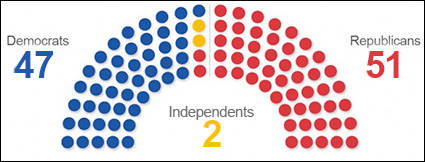
US Senate makeup

US Senate makeup

Sept. 24, 2018 — Today we continue our look at the most competitive 17 US Senate contests with our second and final installment. To take a look at our Part I recap, please see our writeup this past Friday at: Senate Recap – Part I.


NEVADA

Sen. Dean Heller (R) is embroiled in an intense re-election battle with freshman Rep. Jacky Rosen (D-Henderson) as the two compete for a toss-up Senate seat. Heller won here in 2012 by a single percentage point over then-Rep. Shelley Berkley (D-Las Vegas), but that was in the election when President Obama carried Nevada, 52-46 percent.

Polls go back and forth between the senator and congresswoman, but neither leads beyond the margin of polling error. Since the beginning of September three polls have been released, and the average spread between the contenders is just two points. This is a pure toss-up election and, as a Republican defense seat, one of the most important campaigns in the nation.


NEW JERSEY

The Garden State is often a teaser for Republicans, meaning polls routinely suggest their candidates will fare better than actual results portend. The Senate race between incumbent Bob Menendez (D) and pharmaceutical CEO Bob Hugin (R) is likely no exception. Though several polls have indicated the race is competitive, it is probable that Sen. Menendez will pull away and score a comfortable win.

Polling has been scarce. The most recent survey was released in mid-August from Quinnipiac University (Aug. 15-20; 908 registered New Jersey voters) and projects the senator to be leading Hugin, 43-37 percent. Obviously, Menendez corruption trial that ended in the case against him falling apart and being dropped has taken a toll on his favorability index, but it is doubtful that even a 29:47 percent positive to negative personal approval rating (aforementioned Q-Poll) would cost him the election.


NORTH DAKOTA

If polling were the only factor in determining race outlook, then North Dakota would be the Republicans’ best conversion opportunity. Though polls have been anything but plentiful, those that have been published find at-large Rep. Kevin Cramer (R-Bismarck) leading incumbent Sen. Heidi Heitkamp (D).

The most recent study came in early September from Fox News (Sept. 8-11; 701 likely North Dakota voters) and finds Rep. Cramer holding a 48-44 percent advantage. This is the first survey release since the beginning of July.

The North Dakota race is a strong Republican conversion opportunity, but though Cramer appears to have a discernible edge right now, this contest is far from over.
Continue reading

The Crystal Ball Comparison

By Jim Ellis

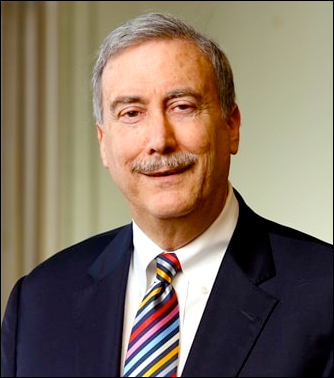
Professor Larry Sabato, University of Virginia

Professor Larry Sabato, University
of Virginia

July 31, 2018 — Last week, University of Virginia professor Larry Sabato released his latest “Crystal Ball” ratings of the current US House races and declared that the Democrats are a “soft favorite” to assume the majority in the coming November elections. There’s more to the story, however.

Dr. Sabato supports his claim for several basic reasons. First, he sites the historic trends that a new president’s party loses seats in the first midterm election, and traces this electoral pattern all the way back to the Civil War era. Second, he turns to the typical polling regularly released that places President Trump’s approval ratings in what he terms “the low 40s”, and includes the generic House ratings, along with the “enthusiasm” analysis. Third, is the Democrats’ record in the current cycle’s federal and state special elections, and fourth is their second quarter fundraising “advantage.”

There are counter arguments that need mentioning for each of these points.

It is questionable to compare electoral trends developed during the 1800s to the elections of today because the world has changed so much. Bringing the analysis to at least the 20th Century and looking just at the post-World War II patterns (from President Harry Truman, inclusive, to today), we find that the average seat loss in the House during a new president’s first midterm is 26 seats. But, this average combines the six Democratic presidents losing 32 seats, and the five Republicans’ dropping 15 districts. Just three elections, 1966 (Johnson; -47 seats), 1994 (Clinton; -54), and 2010 (Obama; -63) have substantially upped the overall average.

Continue reading

Gauging the Enthusiasm Gap

By Jim Ellis

i-vote-i-countJuly 13, 2018 — Much has been written over the past few elections cycles about voting enthusiasm and whether it is a predictive political factor. It has been seemingly apparent that the party members most interested in participating in an election, most particularly for a midterm or special election vote, generally see its candidates enjoy the greater success.

Yesterday, we looked at the extensive just-released Survey Monkey-Axios Media data that covered 13 US Senate races. The combined number of states also hosts a minimum of 15 competitive US House races. To re-cap, while the Survey Monkey analysts posted results under various turnout models in each of the tested states, it generally became clear about which candidate has the current advantage from the Senate contests in question.

Democrats were performing well in the Midwest and Mid-Atlantic regions, where incumbents in Pennsylvania, Michigan, Wisconsin, Ohio, and West Virginia all held substantial leads over their Republican opponents.

The GOP held the upper hand in Indiana and North Dakota challenge races. In the South, Republican Gov. Rick Scott looks to be topping Florida Sen. Bill Nelson, and US Rep. Marsha Blackburn (R-TN) has opened a substantial lead over Tennessee former Gov. Phil Bredesen.

Turning to the West, Democrats are moving ahead in both Arizona and Nevada and securely lead in Montana.

The Missouri contest between Sen. Claire McCaskill (D) and Attorney General Josh Hawley (R) stretches from a five-point Democratic lead all the way to a five-point Republican advantage depending upon the turnout model.

The Survey Monkey pollsters tested voter enthusiasm in all 13 states. They asked the following question:

Continue reading

US Senate: 13 Telling Polls

By Jim Ellis

capitolJuly 12, 2018 — The Survey Monkey organization polling for the Axios Media news and information website went into the field during the June 11 – July 2 period to test US Senate campaigns in 13 different states. All of the most competitive races were studied, including the 10 Trump states where a Democratic senator is standing for re-election this year.

The cumulative result actually brings some good news to both parties, but Republicans fare better because the representative predictive models suggest the GOP is in position for a net gain of at least one seat even while falling behind in their two key defense states of Arizona and Nevada.

Though the survey sampling period is long, the three-week time frame is the period consumed to survey all 13 states. Survey Monkey begins with a regular sampling universe of 3,000,000 individuals who have agreed to participate in their polls. For this project, 12,677 registered voters participated from a high of 1,280 in Arizona to a low of 457 from North Dakota. The sample size in the largest state tested, Florida, was 1,080. All of the surveys were weighted to reflect the demographic and political trend history for each state. The polling error factor for each place ranged between 4.5 and 5.5 for all states but North Dakota. In the latter, the error factor was 7.5.

There are several bright spots for both parties. Democrats fare better on the question of voter enthusiasm, which is consistent with data results recorded in virtually every poll conducted over the past year. Regarding intent to vote across the board in these Survey Monkey polls, however, both parties record about equal numbers. Overall, President Trump’s job approval scores have greatly improved. Looking at the combined 13-state universe, the president scored a 50:49 percent job approval ratio, going from a high of 60:39 percent in Tennessee to a low of 44:55 percent in Pennsylvania. But, even his lowest rating is an improvement from where he stood earlier in the election cycle.

According to the SM numbers, Democrats are in position to convert both the Arizona and Nevada races. Rep. Kyrsten Sinema (D-Phoenix) leads all three individuals competing in the Republican primary. Her strongest opponent, unsurprisingly, is US Rep. Martha McSally (R-Tucson). In the various modeling scenarios, Sinema posts leads of between one and six percentage points over Rep. McSally and far greater margins over the other two GOP candidates.

Continue reading

Recapping the US House Open Seats — Part II: Nevada Through West Virginia

By Jim Ellis

the-primariesJuly 9, 2018 — With the election of Republican Michael Cloud (R-Victoria) to fill the vacant southeast Texas district (TX-27; Farenthold resignation) the total number of open House seats was reduced from 65 to 64. Within that group, 42 seats are currently Republican held, 21 are Democratic; one seat is new, created by Pennsylvania redistricting and left open when Rep. Conor Lamb (D-Pittsburgh) decided to run in a paired incumbent race with Rep. Keith Rothfus (R-Sewickley) instead of opting for the new Republican-dominated western Pennsylvania CD-14.

Among the 63 House members who have either passed away, resigned, lost their primaries, or are not seeking re-election, 23 chose to run for another office. Some of their political fates are decided, while others remain active campaigners. We we’ll look at those who became candidates for other offices and report on their current status. On Friday we examined Arizona through Minnesota. Today we’ll review Nevada through West Virginia.

NEVADA (NV-3): Freshman Rep. Jacky Rosen (D-Henderson) is skipping her first re-election campaign and instead enters the US Senate contest to challenge Sen. Dean Heller (R). Both she and Sen. Heller easily won their respective party nominations on June 12. The latest Gravis Marketing poll gave Rosen a 45-41 percent general election lead. The Senate race is expected to remain as a toss-up campaign all the way to Election Day.


NEW MEXICO (NM-1 & 2): Reps. Michelle Lujan Grisham (D-Albuquerque) and Steve Pearce (R-Hobbs) oppose each other in the open governor’s race after both became their respective party nominees on June 5. The first two post-primary polls staked Grisham to leads between 9-13 percentage points.


NORTH DAKOTA (ND-AL): After Rep. Kevin Cramer (R-Bismarck) announced he would seek re-election, he suddenly decided to change course and pivoted into a Senate challenge against incumbent Heidi Heitkamp (D). Both won unanimous party convention support, which paved the way for easy June 5 nomination victories. The first post-primary poll actually places Rep. Cramer three points ahead of Sen. Heitkamp in what promises to be a hard-fought general election.


Continue reading

Examining The Tuesday Turnout

By Jim Ellis

the-primariesJune 29, 2018 — In continuing the effort to monitor primary turnout as a potential indicator of how the general election may unfold and whether a Democratic wave is forming, today we examine the preliminary participation numbers from the June 26 primaries.

Previously, in the 26 states where primaries were held, it appears that a normal turnout pattern had developed. Generally, more Democrats were voting in the states that typically vote Democratic, while more Republicans participated in those places where Republican candidates win the greater number of offices. In the five pure primary (non-run-off) states that held primaries on Tuesday, such a pattern continued. Utah was not included in the following analysis because the state did not feature any political contest where both Democrats and Republicans held a primary vote.

Democrats decisively turned out more people in Maryland (the Senate Democratic primary attracted 560,477 votes while the Republicans only produced 169,047), as one would expect, since the Free State is one of the strongest Democratic entities in the country. Conversely, more Republicans than Democrats voted in the Oklahoma primary (452,194 to 395,038 in the gubernatorial race), and that ratio, too, was anticipated.

Colorado, generally considered a swing state but one moving toward the Democrats in most elections, again saw more Democrats participating in Tuesday’s election. In the open governor’s race, 627,839 Democrats voted in the gubernatorial primary as compared to 493,445 Republicans. Once more, these numbers are predictable and represent a rather normal voter turnout pattern.

While talk of a “blue wave” continues and polls continue to show that more Democrats are interested and enthused about the coming midterm elections in the fall, such is not apparent in actual voting behavior within the two largest and most prolific Democratic states. In California, as we previously reported, while more Democrats than Republicans voted in the statewide jungle primary, in the seven targeted congressional districts more people voted for Republican candidates in six of those seven.

Continue reading

The Primaries Through May:
Setting November, Part II

the-primariesBy Jim Ellis

May 25, 2018 — With primaries having been completed in 13 states we review the key run-off and general election pairings that these primaries produced. Today we’ll look at Ohio, Oregon, Pennsylvania, Texas and West Virginia. Yesterday we reviewed Arkansas, Georgia, Idaho, Illinois, Indiana, Kentucky, Nebraska and North Carolina.


Ohio: A competitive open governor’s race is underway, featuring Attorney General and former US Sen. Mike DeWine (R) and ex-Attorney General Richard Cordray (D). Sen. Sherrod Brown (D) begins the general election in the favored position over Rep. Jim Renacci (R-Wadsworth). A special election in the 12th District between state Sen. Troy Balderson (R) and Franklin County Recorder Danny O’Connor (D) occurs on Aug. 7. Rep. Steve Chabot (R-Cincinnati) defends his seat against Hamilton County Clerk of Courts Aftab Pureval. Former NFL football player and businessman Anthony Gonzalez (R) is heavily favored to succeed Rep. Renacci in the open 16th District.


Oregon: The only competition here is occurring in the governor’s race, where incumbent Kate Brown (D) runs for her first full term against state Rep. Knute Buehler (R-Bend). The governor is a clear favorite for re-election.


Continue reading