By Jim Ellis — Wednesday, September 16, 2026
Polling
 A new co/efficient Republican poll (Sept. 14-15; 833 likely Minnesota general‑election voters; live interview and text) finds a surprising result: both the Republican gubernatorial and Senatorial candidates are within a point or two of their Democratic opponents.
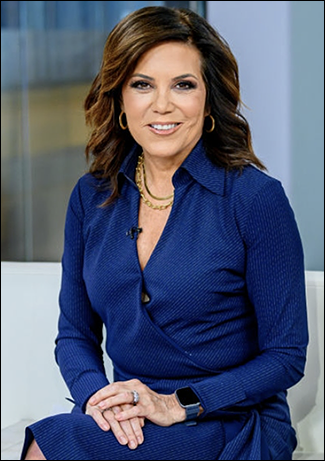
According to the co/efficient numbers, Sen. Amy Klobuchar (D) leads the gubernatorial race over state House Speaker Lisa DeMuth (R‑Cold Spring) by only a 47-45 percent margin. In the Senate race, Lt. Gov. Peggy Flanagan (D) holds a narrow one‑point edge over former national sports broadcaster Michele Tafoya, 43-42 percent.
Given Minnesota’s status as the most loyal Democratic state in presidential elections, these results are eye‑opening and suggest the poll could be an outlier. In reality, however, the co/efficient numbers are not far from what other pollsters have recently reported.
A Quantus Insights survey (Sept. 8-10; 720 likely general election voters) found Lt. Gov. Flanagan ahead 48-44 percent. Just before that, TIPP Insights (Aug. 31-Sept. 2; 1,201 likely general election voters) projected an almost identical result to co/efficient: Flanagan leading 44-42 percent.
The gubernatorial race is a different story. The co/efficient survey shows the closest margin, but because Klobuchar is widely viewed as a prohibitive favorite, the contest has not been polled often. The previously mentioned TIPP survey included the governor’s question and found Klobuchar holding a 50-40 percent lead over Speaker DeMuth.
There is ample reason to view Minnesota as a solidly Democratic domain. The last Republican presidential nominee to carry Minnesota was President Richard Nixon in 1972. The state legislature, however, tells quite a different story. Democrats were elected to a bare 34-33 majority in the state Senate, and the parties began the current legislative session in a 67-67 tie in the state House of Representatives, leading to DeMuth’s Republican speakership.
Another notable finding from the co/efficient poll involves the “most important issue” question. In virtually every recent survey, cost of living, affordability, or the economy ranks first. In this study, however, the most frequently mentioned issue is government corruption.
This is plausible given Minnesota’s multi‑million‑dollar transfer payment scandal, in which fraudsters exploited weak bureaucratic and legislative oversight. The scandal has received extensive local and national media attention, and Tafoya has made it a centerpiece of her campaign.
Irrespective of tightening poll numbers, it remains difficult to envision Klobuchar losing the open governorship, though the final weeks of the campaign may prove more challenging than she anticipated when initially launching her 2026 bid.
The Senate race, on the other hand, is becoming a legitimately competitive open seat contest. Tafoya is well known in the state through her years of covering Minnesota sports before moving to the national arena, and she posts a stronger favorability rating than Lt. Gov. Flanagan. According to the co/efficient poll, Tafoya’s positive‑to‑negative ratio is 36:32, while Flanagan is significantly underwater at 33:42.
Minnesota voters have experienced substantial upheaval in recent years – from George Floyd’s death in 2020, to ICE‑related demonstrations and fatalities, to the major government fraud scandal – leaving the electorate unsettled. Reactions to these events differ sharply between rural Minnesota and the Twin Cities, helping explain why the 2026 statewide campaigns may be closer than usual.
While Democrats see emerging opportunities in traditionally Republican states such as Nebraska and Kansas, Republican Senate candidates are making clear inroads in Democratic strongholds like Minnesota and New Hampshire.
Therefore, as November approaches, it is possible that we will witness unique and surprising electoral outcomes once ballot counting begins on election night.