Tag Archives: Iowa

Re-Capping the Senate

Current Senate makeup

Current Senate makeup

With last week’s announcement that Rep. Tom Cotton (R-AR-4) would challenge Sen. Mark Pryor (D), thus setting the Arkansas field for 2014, it is a good time to check the national US Senate picture.

In 2014, 35 Senate races are on tap, including campaigns in Hawaii and South Carolina to affirm political appointments. Of the 35, the following 18 senators currently have little or no pending opposition for 2014:

Jeff Sessions (R-AL), Mark Udall (D-CO), Chris Coons (D-DE), Jim Risch (R-ID), Dick Durbin (D-IL), Pat Roberts (R-KS), Susan Collins (R-ME), Ed Markey (D-MA), Thad Cochran (R-MS), Jeanne Shaheen (D-NH), Tom Udall (D-NM), Jim Inhofe (R-OK), Jeff Merkley (D-OR), Jack Reed (D-RI), Tim Scott (R-SC), Lamar Alexander (R-TN), John Cornyn (R-TX), and Mark Warner (D-VA).

Alaska:
Despite the potential of former Gov. Sarah Palin (R) running here, the likely 2014 pairing is first-term incumbent Sen. Mark Begich (D) and Lt. Gov. Mead Treadwell (R). This will be a tight race, but Alaskans don’t often unseat incumbents.

Arkansas: The match is already set – Sen. Mark Pryor (D) vs. Rep. Tom Cotton (R). Arkansas is now trending Republican, but unseating an incumbent – especially one who ran unopposed in the previous election – is never easy.

Georgia: Michelle Nunn (D), the daughter of former Sen. Sam Nunn (D), will be her party’s nominee. The Republican side is a free-for-all among five candidates, all of whom could conceivably win the nomination. The Republican general election candidate should have the advantage, but this primary battle could turn nasty.

Hawaii: Appointed Sen. Brian Schatz is drawing serious Democratic primary opposition from Rep. Colleen Hanabusa. The Dem primary, which must be rated a toss-up, will determine who wins the  Continue reading >

A 2014 Senate Re-Set?

As we’re just coming through the off-election year July 4 break, it’s a good time to examine the progression of the current Senate and House political picture. Today, we look at the Senate landscape.

As we know, the current Senate’s party division stands at 54 Democrats and 46 Republicans, with the GOP “renting” the New Jersey seat until voters in the Oct. 16 special election choose a permanent replacement for the late Sen. Frank Lautenberg (D). Though Gov. Chris Christie (R) appointed Republican Jeff Chiesa to serve in an interim capacity, the fact that the new senator didn’t choose to run for the seat leaves the GOP prospects to also-ran candidates who don’t have a realistic chance of defeating the eventual Democratic nominee. This being the case, in order for the Republicans to overtake the Democratic majority, a conversion swing of six seats still is necessary.

Of the 35 Senate seats that comprise the 2014 election cycle, we can segment the competition into three groups of three and two groups of two, for a grand total of 13 political situations that will determine the new majority’s complexion. Right now, the remaining 22 campaigns appear to be safe for the incumbent senator, or his party in the case of open New Jersey and Nebraska (Republican Sen. Mike Johanns retiring).

The three groups of three contain the nine Democratic seats that are fielding varying degrees of competition. All should be strong conversion opportunities, but only six realistically appear that way today.

First Group of Three: D to R

The first group contains the seats most likely to move from Democrat to Republican. The open contests in West Virginia (Sen. Jay Rockefeller retiring) and South Dakota (Sen. Tim Johnson retiring) look to be locks to move Republican in the persons of Rep. Shelley Moore Capito (R-WV-2) and former Gov. Mike Rounds (R-SD). Democrats have yet to recruit a West Virginia candidate and they are already into the second tier in South Dakota. The third state in this category is the open Montana seat (Sen. Max Baucus retiring) where Republican prospects are growing. Though he could quickly up and enter the race without any pre-announcement fanfare, former Gov. Brian Schweitzer (D) is  Continue reading >

Senate Questions

capitol

Within the last week, no fewer than four major potential senatorial candidates have decided not to run. Three sitting members of the House, representatives John Barrow (D-GA-12), Steve King (R-IA-4), and Tom Price (R-GA-6), and one former congresswoman, Stephanie Herseth Sandlin from South Dakota, each announced that they will be doing something other than running for the United States Senate in 2014. With so many potential candidates content to allow their current opportunity to evaporate, what now is the status of the various Senate races?

Both the Republicans and Democrats have, so far, experienced recruitment failures. Democrats see two seats that they currently hold, Jay Rockefeller’s post in West Virginia and Tim Johnson’s position in South Dakota, going by the wayside. Currently, they have no candidate willing to challenge GOP Rep. Shelley Moore Capito (R-WV-2) in the Mountaineer State, and their two strongest South Dakota potential contenders have taken a pass. While they do have a former aide to Sen. Tom Daschle (Rick Weiland) now in the race, it is apparent that he is no match for Republican former Gov. Mike Rounds.

Republicans have yet to field a candidate in Iowa where Sen. Tom Harkin (D) is retiring.  Continue reading >

King Won’t Run for Senate; SC-1

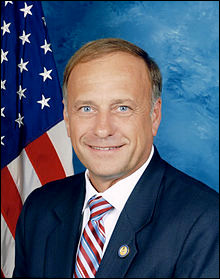
Rep. Steve King (R-IA)

Rep. Steve King (R-IA-4)

Via Twitter, as seems to be today’s norm for declining to run for political office, Rep. Steve King (R-IA-4) announced yesterday that he will not seek Iowa’s open Senate seat next year.

“I will not run for Senate in 2014. A Senate race takes me out of urgent battles in Congress that can’t wait until 2015,” King tweeted. “Many thanks to all.” Obviously, the message is an indication that he will continue his congressional service in the House, and is at least a tacit indication that he will seek re-election.

The move is likely a politically intelligent one for the congressman, even though he was virtually assured of the Republican nomination. Polling was explicit that the conservative King was the top choice of Iowa GOP primary voters. But, it was also obvious that he was fighting major head winds in the general election, and not just from Democrats.

Prior to Sen. Tom Harkin’s (D) announcement earlier in the year that he would not seek re-election in 2014, former George W. Bush political chief Karl Rove announced the formation of his Conservative Victory Project, which is designed to unite the Republicans around a winnable general election candidate. It was made painfully clear upon Sen. Harkin’s announcement that Rove does not believe King can win statewide, leading to him making public overtures for Rep. Tom Latham (R-IA-3) to run.
 Continue reading >

Schwartz is in; Is King Committed?

Pennsylvania

As expected, Rep. Allyson Schwartz (D-PA-13) yesterday announced that she will challenge Pennsylvania Gov. Tom Corbett (R), but the opposite situation may be happening in Iowa. Rep. Steve King (R-IA-4), who is also expected to run statewide, made some surprising statements suggesting that he is not committed to a run for his state’s open US Senate seat.

Rep. Schwartz has been viewed as a probable statewide candidate since before last November’s election. It was originally believed that she would match up with Sen. Pat Toomey (R) in 2016, but when rumors surfaced pairing her with Gov. Corbett she did not dissuade the talk. With her formal announcement yesterday, Schwartz is now an official gubernatorial candidate and her safe Democratic congressional seat will yield a highly competitive party primary early next year.

Gov. Corbett’s favorability ratings have been poor during the past several months, and that provides a clear indication of vulnerability for next year. But, Schwartz is unlikely to have a clear path to the Democratic nomination. Already in the race is state Department of Revenue director Tom Wolf. Poised to enter is state Treasurer Rob McCord. Former Rep. Joe Sestak (D-PA-7), who held Sen. Toomey to a 51-49 percent victory margin in 2010, is said to be a potential gubernatorial candidate.

Iowa

Like Schwartz, King has been viewed as the presumptive Republican nominee to vie for retiring Sen. Tom Harkin’s (D) seat ever since fellow GOP Rep. Tom Latham (R-IA-3) announced that he would not run statewide. Democratic Rep. Bruce Braley (D-IA-1) is already an announced senatorial candidate. Statements King made this weekend, however, suggest he may be leaning against such a run.
 Continue reading >

Daschle Drafting Johnson

It’s within a different generation, but the Daschle family is again supporting a member of the Johnson clan for statewide South Dakota political office. Nathan “Nate” Daschle, former Senate majority leader Tom Daschle’s (D) son, is leading an organized effort to draft Brendan Johnson for the US Senate. The prospective candidate’s father, Tim Johnson, is the incumbent senator who announced last week that he would not seek re-election in 2014. Brendan Johnson is South Dakota’s US Attorney, and has been mentioned as a possible Democratic Senatorial candidate.

In a published open letter to Brendan Johnson, Daschle writes, “it’s time for a new generation of leadership in South Dakota, and Brendan Johnson has the smarts, vision, and compassion to move this state forward. You won’t find anyone more committed to South Dakota’s future than Brendan. His candidacy would re-ignite our state’s great potential, and I think we would be lucky to have him serve in the U.S. Senate.”

The fact that a member of the Daschle family would publicly come forth so quickly to promote Johnson likely tells us something about the Democrats’ other top potential candidate, former representative Stephanie Herseth Sandlin. It is unlikely that Daschle would commit this early to Brendan Johnson if he, and the Democratic establishment, actually believed the ex-congresswoman was planning to run. Furthermore, of the two, Herseth Sandlin is obviously the stronger campaigner, making Daschle’s action even more indicative.

The Republican nominee is likely to be former Gov. Mike Rounds, who has been running since the 2012 election concluded and figures to be the favorite for the general election.

IA-3: The First Drop-out

Several weeks ago, wealthy investor Michael Sherzan (D) announced a challenge to Iowa Rep. Tom Latham (R) in the Des Moines-  Continue reading >

The Senate “Sweet” Sixteen

In the spirit of the NCAA College Basketball Tournament that has proceeded to the quarter-final round that they commonly call “the Sweet Sixteen,” it’s a good time to review the 16 most competitive 2014 Senate, House and gubernatorial races. Today, we start with the Senate:

Alaska: Sen. Mark Begich (D) defends his seat in what could become a must-win campaign for the GOP, if they are to have any chance of wresting the Senate majority away from the Democrats. Lt. Gov. Mead Treadwell (R) is an announced candidate. Anchorage Mayor Dan Sullivan (R) is a possible candidate. Begich has the clear, early edge.

Arkansas: Sen. Mark Pryor (D) was unopposed in the 2008 election cycle, but already he has at least one opponent and maybe two. Lt. Gov. Mark Darr (R) is in the race. Freshman Rep. Tom Cotton (R-AR-4) is seriously considering becoming a candidate. This will likely be a competitive campaign, particularly if Cotton is the Republican nominee. Pryor must be favored, however.

Georgia: Sen. Saxby Chambliss’ (R) retirement has led to what will be a major Republican primary battle. Rep. Paul Broun (R-GA-10) is already in the race. Rep. Phil Gingrey (R-GA-11) will likely join him toward the end of this week. Reps. Jack Kingston (R-GA-1) and Tom Price (R-GA-6) are possible candidates. Democratic Reps. John Barrow (D-GA-12) and Sanford Bishop (D-GA-2) are potential candidates. It is unlikely that both will run, however. The eventual Republican nominee will be rated as at least a slight favorite in the general election, but this is one race that could lead to a Democratic upset. Rep. Barrow, in particular, is a good fit statewide and could make the general election highly competitive.

Hawaii: This seat will likely remain in Democratic hands, but an ensuing party primary fight is a distinct possibility. Appointed Sen. Brian Schatz could be facing a Democratic primary challenge from Rep.  Continue reading >