New Jersey Getting Closer

By Jim Ellis — Thursday, Oct. 30, 2025

Governor

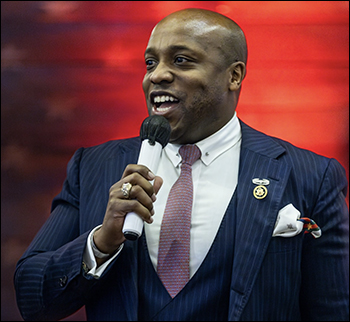
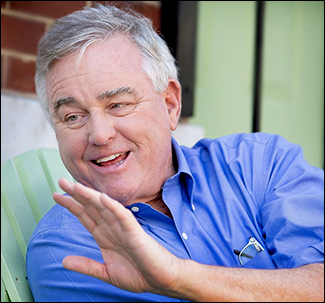
(L-R) New Jersey gubernatorial candidates Jack Ciattarelli (R) and Mikie Sherrill (D)

With Garden State early voting just getting underway in earnest, the three latest publicly released New Jersey Governor polls are all showing a tightening contest between Democratic Rep. Mikie Sherrill (D-Montclair) and Republican gubernatorial nominee Jack Ciattarelli.

The three polls were conducted between the Oct. 23-27 period from a trio of individual survey research entities. The margin between the two candidates ranged from one to four percentage points. While the margin has closed, Rep. Sherrill continues to post a lead in virtually every survey.

The most recent study, from Quantus Insights (Oct. 26-27; 1,380 likely New Jersey voters), sees the Sherrill lead at 49-46 percent. The co/efficient firm (Oct. 23-27; 995 likely New Jersey voters) projects an even closer 48-47 percent. Within the same time realm, A2 Insights (Oct. 24-26; 812 likely New Jersey voters) shows the four-point spread for Sherrill at 51-47 percent.

These latest three studies show a significant closing of the race when compared with the three surveys released days before. Each of those found Sherrill holding a much more substantial lead.

The previous set of three polls were conducted during the Oct. 3-20 period, though the final two were fully sampled between Oct. 16-20. The Rutgers-Eagleton poll (Oct. 3-17; 795 likely New Jersey voters) featured a long sampling period that consumed the predominant portion of the sampling time listed above. The R-E results found Sherrill topping Ciattarelli, 50-45 percent.

The other two polls were from Concord Public Opinion Partners (Oct. 16-18; 605 likely New Jersey voters) and GQR Research, the latter formerly known as Greenberg Quinlan Rosner Research but now has two new principal partners (Oct. 15-20; 1,000 likely New Jersey voters). While Concord saw a nine-point Sherrill advantage at 49-40 percent, GQR projected an even wider Sherrill margin at 52-40 percent.

Therefore, among the six polls commissioned throughout the preponderance of October’s days, we see a net six-point swing in Ciattarelli’s favor. This suggests the important closing momentum may be turning in his direction.

Additionally, keep in mind that the polling history involving political campaigns with Ciattarelli on the ballot has woefully underestimated his electoral strength. In his 2021 challenge to Gov. Phil Murphy (D), polling pegged Ciattarelli posting an average of approximately 43 percent support. His actual vote total was 48.0 percent.

The 2025 Republican primary election provided even more stark evidence of under-assessing a candidate’s strength. While the polls leading up to the June primary election found Ciattarelli with high-water final polling marks of 54, 50, and 44 percent within the five-candidate primary election field, Ciattarelli’s actual percentage was 67.8, and far beyond what pollsters cumulatively predicted.

Therefore, if past polling history is any indication of what may happen in Tuesday’s final result, we could see a very close finish or even a Ciattarelli upset.

Despite New Jersey being a reliably Democratic state in federal and national elections, a single party has not won three consecutive gubernatorial elections since a pair of Republican Governors together served 10 consecutive years in office from 1944-1954.

Should Sherrill win next week, giving the Democrats three consecutive terms counting outgoing Gov. Murphy’s two election wins, she will have broken the alternating streak that has remained intact for 71 years.

Indiana Joins Redistricting Battle

Current Indiana US House Congressional Districts map / Click on image to go to interactive version on Dave’s Redistricting App.

By Jim Ellis — Wednesday, Oct. 29, 2025

Redistricting

It appears we are seeing another state poised to join the mid-decade redistricting wars as an active participant.

Indiana Gov. Mike Braun (R) summoned the legislature back into session on Monday to work several issues and congressional redistricting is expected to be among them. It is now clear that Indiana will play a major role in how the new redistricting wave unfolds.

Developments favorable to Democrats in certain other states have now put selected Republican state leaders under further political pressure to attempt to neutralize those projected gains.

Indiana is one such place. Reports have been in the public domain for weeks saying that the White House, including Vice President J.D. Vance, who has met with Hoosier State legislative leaders on more than one occasion, have been overtly working to convince reluctant legislators to move forward. Gov. Braun has been supportive of the effort from the beginning.

Now, it appears we will see movement. The current Indiana congressional map features seven Republicans and two Democrats, but some believe the legislature could draw a 9R-0D map. Whether they go that far remains to be seen.

The Republicans’ obvious first target will be northwestern Indiana Congressman Frank Mrvan (D-Highland/Gary). His 1st District has become more competitive as evidenced by his lower than expected 53 percent average in his last two elections. Additionally, the Republican who ran strongly against Rep. Mrvan in 2022, retired US Air Force officer Jennifer-Ruth Green, is reportedly open to running again in a more favorable district.

The state’s other Democratic member is Rep. Andre Carson (D-Indianapolis), who has served nine full terms and part of another. Carson’s current 7th District is solidly Democratic (Dave’s Redistricting App partisan lean: 67.9D – 29.0R) meaning the new map would have to break his district into segments in order to create another Republican seat.

If the map-drawers pursue such a course, the pie-shaped format might be overlayed into the Indianapolis region. The pie-shape concept brings contiguous districts into a metro area sometimes for partisan reasons, though many point out that such a draw gives a particular metropolitan area more representation and thus the region has a stronger presence in Congress.

Should the Indiana legislators adopt such a strategy, Districts 4 (Rep. Jim Baird-R), 5 (Rep. Victoria Spartz-R), and 6 (Rep. Jefferson Shreve-R), would likely be fundamentally reconfigured. It is probable all of these districts would come into Marion County (only Rep. Shreve’s District 6 does now) to take a piece of Indianapolis city and non-city precincts, thereby stretching the 7th CD into more rural Republican areas.

Polling is now suggesting the California redistricting referendum will pass on Nov. 4 (latest released California survey: Emerson College — Yes 57, No 37). Therefore, Democrats could be in position to gain five Golden State seats according to the party’s projections.

Additionally, the Utah courts have ordered a redraw of that state’s congressional map because of a ruling saying the legislature, when constructing the current plan in 2021, ignored map construction criteria that voters approved in the previous decade. As a result, Democrats are likely to gain one seat from the Beehive State.

Therefore, Democrats will potentially gain six seats in California and Utah, and possibly one more if Maryland decides to redistrict.

There is also public discussion occurring indicating that Virginia could join the redraw fray if former Congresswoman Abigail Spanberger (D) wins the Governor’s race on Nov. 4. Even with a Democratic trifecta (Governor, state Senate, and state House of Delegates, which would occur with a Spanberger victory), redistricting would be no sure thing.

Virginia now has a hybrid redistricting commission composed of elected officials and citizens that have map drawing power. Therefore, the legislature will have to change the state’s redistricting structure in order to replace the current map. If they find a way, however, the Democrats could certainly make gains in the state since Republicans now hold five of Virginia’s 11 congressional districts.

Republicans would still come out ahead toward their goal of expanding the GOP Conference despite the aforementioned Democratic gains, however. It is probable that five seats would come from Texas, one on Missouri’s new map, one from North Carolina, all of which are complete, and further possible additions from Indiana as discussed, Florida, and Ohio (gaining two in each state). Louisiana and Alabama would likely follow suit if the Supreme Court eventually upholds the lower court ruling on the case currently before the justices.

Surprising Early Voting in Virginia

By Jim Ellis — Tuesday, Oct. 28, 2025

Early Voting

The statisticians at the Virginia Public Access Project (VPAP) have been tracking the available early vote numbers and their excellent reports are finding an unexpected trend.

Through Oct. 24, early voting in Virginia is running ahead of its 2021 statewide pace. In 2021, 1,194,252 people voted before Election Day. Through Oct. 24 of this year, 898,559 have voted, or 75.2 percent of 2021’s early participants. In ‘21, a total of 36.3 percent of Virginia voters cast their ballots before Election Day.

According to VPAP, the 2025 totals are running almost 45% higher than the 2021 early voting pace. At this point in time four years ago, 619,738 individuals had voted 11 days before the election. This means almost half (48%) of the ’21 early voters cast their ballot in the last week prior to Election Day.

The most surprising early trend, however, is that the five Republican congressional districts are outperforming all six Democratic districts in terms of comparing their own 2021 early vote turnout figures to the present numbers.

According to the Oct. 24 VPAP report, District 9 (Rep. Morgan Griffith-R) has already seen more early voters this year (73,655) than it did in all of 2021 (72,503). According to the Dave’s Redistricting App statisticians, the 9th is the Republicans’ strongest Virginia congressional district (69.7R – 29.1D), meaning the early vote number appears to be good news for the three statewide ballot nominees.

The district with the most early voters so far (125,257) is Rep. Rob Wittman’s (R-Montross) 1st CD. The current raw number represents 98.4 percent of the 1st District’s total 2021 early votes. In the previous Virginia election from four years ago, VA-1 ranked third in early voting participation. The 1st has a partisan lean of 54.1R – 44.1D (Dave’s Redistricting App calculations).

Another related surprising trend is that all five Republican congressional districts have also exceeded the statewide early vote participation benchmark figure of 75.2 percent based upon 2021’s final early vote total. None of the six Democratic congressional electorates have individually reached the 75.2 percent early vote participation percentage this year.

Conversely, Northern Virginia’s early vote turnout, the heartland of Democratic strength in the state, is performing well below its previous pace.

In 2021, the top early voting district in the state was CD-10 (Rep. Subhas Subramanyam-D) with a final early vote total of 139,806 individuals. This year, District 10 ranks 5th in early vote turnout percentage when compared to its previous 2021 final number. The 10th’s 2025 turnout percentage is 59.0 percent based upon the 2021 final performance figure.

The district with the largest drop-off so far when compared to its 2021 performance is the Alexandria/Arlington-anchored 8th CD (Rep. Don Beyer-D). In 2021, the 8th District had the fourth highest early voting raw number participation in the state, but this year it ranks 10th of the 11 Virginia congressional districts. Through Oct. 24, the 8th District has seen only 58.1 percent of its early voting number from 2021 come to the polls. This percentage ranks last in the state.

The best performing early voting northern Virginia district to date is District 11 (Rep. James Walkinshaw-D), yet its 66.1 percent early turnout rate when compared to 2021 performance only ranks 9th in the state, down from sixth.

The biggest position gainers among the 11 congressional districts are VA-5 (Rep. John McGuire-R) and VA-6 (Rep. Ben Cline-R). Both have moved up five slots when compared to their 2021 performances with 94.4 and 88.0 percentages, respectively.

The change in the early voting numbers, which have previously been strong indicators of eventual election outcome, obviously favor the Republicans at this point and suggests the party has an advantage relating to the enthusiasm gap. It is important to remember, however, that almost half of the 2021 early vote came during the period’s last week, which means these preliminary 2025 early vote numbers and trends could still dramatically change.

It is further noteworthy to remember that Republicans won the 2021 election, meaning Democrats must exceed their vote totals and trends from that year. At this point in the voting cycle, it appears the Democrats have a sizable, but not impossibly high, mountain to climb during the last week of early voting and on Election Day itself.

Surprising Maine Polling

By Jim Ellis — Monday, Oct. 27, 2025

Senate

Graham Platner

A just released University of New Hampshire’s Pine Tree State Poll (Oct. 16-21; 1,094 Maine residents; 1,015 likely Maine voters; 510 likely Maine Democratic primary voters; online) delivers some unexpected ballot test results in two key Maine races.

The biggest surprise is how badly Gov. Janet Mills fares in a Democratic gubernatorial primary. Gov. Mills recently announced for Senate after being the top recruit prospect for the national Democratic leadership. Yet, in this UNH poll, she trails businessman Graham Platner by a whopping 58-24 percent clip.

Platner is the choice of the party’s Bernie Sanders wing and carries the Vermont Senator’s endorsement. The poll was conducted, however, before damaging information came to light against Platner including the presence of a skull and crossbones tattoo on his chest, which has been tied to Nazi police, and past disparaging remarks made about key Democratic constituencies. Chances are good that the next released Maine survey will show Platner substantially falling.

Irrespective of Platner’s current standing, Gov. Mills performs poorly against a first-time candidate within her own party. While the Governor records a favorable personal approval index (65:16 favorable to unfavorable), she managed to post only a 24 percent vote preference on the related ballot test before the same Democratic sampling universe. This is largely due to her poor job approval rating of 43:55 percent favorable to unfavorable.

The pollsters apparently did not test the general election featuring Sen. Susan Collins (R) individually against the Democrats, but the fact that Gov. Mills fares this poorly in her own primary suggests her standing statewide would be below par.

House

The second surprise comes in the state’s 2nd Congressional District where Rep. Jared Golden (D-Lewiston) is facing a challenge from former two-term Gov. Paul LePage (R).

While other polls have found the two locked in a virtual dead heat, the UNH data sees LePage pulling five points ahead of the four-term incumbent, 49-44 percent, which is beyond the stated polling margin of error for this survey (plus or minus 3.1 percent).

From the LePage perspective, the ballot test result should not be considered an unusually positive outlier. In his three statewide races – 2 victories and 1 defeat, the latter at the hands of Gov. Mills in 2022 – LePage carried the 2nd District. Additionally, ME-2 is the most Republican district in the country where the electorate sends a Democrat to the US House.

What is troubling for Rep. Golden and his allies are the responses to the re-elect questions. When asked if Rep. Golden deserves to be re-elected, only 26 percent answered affirmatively while 57 percent said no.

Most of the negative number comes from Republicans, 75 percent of whom said Rep. Golden does not deserve re-election. Such is to be expected, however, in this age of political polarization. A major negative for the Golden camp, however, is that 66 percent of Independents and more than a third (36 percent) of Democrats also say the Congressman “doesn’t deserve re-election.”

The fundraising totals favor Rep. Golden, however. The Congressman has raised over $2.3 million for his 2026 campaign and holds just under $1.7 million cash-on-hand. LePage has attracted $917,000 for the campaign and holds less than half of Golden’s treasury figure at $716,000.

The ME-2 race will be a national campaign and one of the Republicans’ top conversion opportunities. Therefore, it is reasonable to assume that LePage will correct the resource imbalance as compared to Rep. Golden’s financial totals either through enhanced national fundraising or with non-connected outside groups coming into the northern Maine district to aid the former Governor’s congressional efforts.

It is clear that both the Maine Senate and 2nd District House campaigns will draw a great deal of national attention during 2026 political prime time. Both eventual winners will be significant players in determining which party will control the legislative power levers in the 120th Congress.

North Carolina Redistricts

North Carolina redistricting map / Click on image to go to interactive version on Dave’s Redistricting App.

By Jim Ellis — Friday, Oct. 24, 2025

Redistricting

The Tar Heel State of North Carolina has joined the redistricting wars as members in both the state House of Representatives and state Senate voted this week to adopt a new congressional map.

Republican legislative leaders saying the need to protect President Trump’s agenda and counter what states like California are doing to help Democrats became the impetus for the North Carolina legislators’ action of revising their state’s federal district plan.

Since North Carolina law gives only the legislature the power to redistrict, Democratic Gov. Josh Stein had no role in the process. Therefore, upon passing each chamber –the House followed the Senate’s lead and voted favorably yesterday – the new map became law.

The 2025 congressional plan shifts 10 counties between Reps. Don Davis’ (D-Snow Hill) 1st District and Greg Murphy’s (R-Greenville) 3rd CD. The shift makes the 1st District — which President Trump carried in 2024 before the electorate switched back to Rep. Davis — more Republican while the overwhelmingly Republican 3rd District becomes more Democratic.

The Republicans’ political mark is clearly Rep. Davis. In November, the incumbent was re-elected with only a slim 49.5 – 47.8 percent margin over Republican nominee Laurie Buckhout. With such a small Democratic congressional win in a district that President Trump carried, and bordering a solidly Republican district to the south, made the 1st District an easy GOP target.

The 1st CD begins at the Virginia border and covers most of northeast North Carolina. To make it more Republican, the map drawers drove the district further south along the coast to annex additional GOP counties. This forced Rep. Murphy’s 3rd CD to move west and further inland. The remaining dozen Tar Heel congressional districts remain untouched.

The changing counties transform the 1st from one where President Trump defeated Kamala Harris 51-48 percent, into a seat where the electorate would have posted a 55-44 percent Republican margin. Conversely, the Trump percentage in District 3 would recede from 57.9 to 53.5. While Rep. Murphy’s district clearly becomes more competitive, he will still have enough of a partisan margin to win comfortably in a region that is likely to grow more Republican as the decade progresses.

Rep. Davis took to social media, according to the Down Ballot political blog reporters, to indicate that he would seriously consider remaining in the District 1 race even though his hometown of Snow Hill in Greene County would move to CD-3.

The Congressman said, “as we look at new congressional districts, I am considering every option, drawing on my local roots, experience in the military, and commitment to education,” in deciding what political move to make. Davis’ problem is there are no other available offices for which he can compete in 2026.

Though North Carolina has a dozen statewide offices, only one, Sen. Thom Tillis’ (R) open seat, is on the ballot next year. Since Democratic former Gov. Roy Cooper is already in that race and a consensus candidate, Davis has virtually no other political option than to run for the US House in a more difficult district.

With Buckhout accepting a job in Washington with the Trump Administration, she will not return for a 2026 rematch. In the race are Rocky Mount Mayor and former congressional candidate Sandy Roberson and state Sen. Bobby Hanig (R-Currituck).

Lenoir County Commissioner Eric Rouse (R) recently announced his congressional candidacy, but Lenoir County moves to the 3rd District under the new redistricting plan. It is unclear whether Rouse will continue now that his home political base is no longer in the 1st District.

Redistricting is nothing new in North Carolina. In the previous decade, the maps kept changing almost every election cycle. The reason was the dispute between the Republican legislature and the Democratic state Supreme Court. The preponderance of members in each body held different redistricting legal opinions. When the Republicans captured the court majority in the 2022 election, a unified redistricting approach was adopted.

We can expect lawsuits to be filed over the new map, but the chances of overturning the plan clearly drawn for partisan and not racial reasons means the 2025 version will very likely be the footprint upon which the candidates will run next year.

The Pelosi Challenge Deepens

By Jim Ellis — Thursday, Oct. 23, 2025

House

California state Sen. Scott Weiner

Early this year, former Alexandria Ocasio-Cortez campaign manager Saikat Chakrabarti announced that he would challenge 20-term California Representative and former US House Speaker Nancy Pelosi (D-San Francisco) in the state’s 2026 jungle primary. A new development makes this challenger race more interesting.

Aside from Chakrabarti, who is independently wealthy and loaned his campaign $755,000, a new challenger is coming forward. Three-term state Sen. Scott Weiner (D-San Francisco) is now saying that he too will join the race to unseat Pelosi, who can be described as a national Democratic political icon.

Weiner, who was elected to the San Francisco City and County consolidated Board of Supervisors in 2010, ran for and was elected to the state Senate in 2016. Under California election law, state legislators may serve six two-year terms in the state Assembly, or three four-year terms in the state Senate. Should one run for the Assembly and then move to the Senate, the time of service carries over from one house to the other.

While Sen. Weiner can remain in his present position through 2028, he no longer is eligible to seek re-election; therefore, his political situation instills greater impetus to become a congressional candidate.

It has long been surmised that Sen. Weiner would run for Congress as soon as Pelosi retired. Their constituencies almost perfectly overlap, though California state Senate seats are approximately 30 percent larger than US House districts. Many expected the Congresswoman to retire from politics after she left the Speakership, but she has twice been re-elected to the House since publicly deciding to leave her leadership position.

The 2026 11th District congressional race now becomes intriguing. The California jungle primary law requires two individuals to move into the general election regardless of political party affiliation or vote percentage attained. With an overwhelmingly large Democratic CD-11 constituency (a percentage beakdown of 63.5D – 7.5R) it is quite possible for two Democrats to advance into the general election.

Because her political longevity is fundamentally based upon maintaining a strong base at home, Pelosi would assuredly clinch one of the general election slots. With his own strong vote history, one would surmise that Sen. Weiner would be the betting favorite to clinch the second slot. Should such occur, we would see Pelosi facing a competitive opponent for virtually all of calendar year 2026.

Regardless of who eventually runs, Rep. Pelosi must be considered the favorite for re-election even against strong opponents. As we know, she has dominated San Francisco politics for four decades, and rarely has even drawn a credible opponent.

This being the case, why would Sen. Weiner want to enter a race that he would lose especially with so few policy differences existing between he and the former House Speaker? Positioning may be the answer.

Because Sen. Weiner has a four-year term, he can run for Congress in 2026 and not risk his state Senate seat. Secondly, taking advantage of Chakrabarti already spending money against Pelosi, a Weiner entrance may encourage the Congresswoman to retire in order to avoid a competitive campaign at her advanced age. If so, Sen. Weiner becomes the candidate to beat in an open seat situation.

Third, should the former Speaker remain in the race and Weiner loses, he is virtually guaranteed to fare better than any other person to have ever challenged her. Thus, he would be well positioned as the heir apparent when she eventually retires, which could be as soon as the 2028 election assuming she runs again next year.

Fourth, Weiner can begin to prepare a congressional campaign now but then decide to run only if Pelosi does not. In California, if an incumbent does not officially file for re-election, the candidate filing period is extended for five additional business days. Therefore, Weiner would have an opportunity to file even if the Congresswoman decides to retire right before the candidate filing period expires.

While a Weiner congressional candidacy would make interesting political news copy, he is likely merely testing the waters for a future run. There is a good chance the final decision as to whether he runs would occur at the candidate filing deadline.

In 2026, California candidates must fulfill filing requirements by March 6 for the June 2 jungle primary, or March 13 should the incumbent not seek re-election.

Competitive Senate Finance – Part II

By Jim Ellis — Wednesday, Oct. 22, 2025

Senate

Continuing from yesterday’s update, the Federal Election Commission has released new Senate campaign finance numbers, which help us preview the resource standing of the key 2026 US Senate contests. Today’s installment covers the most competitive contests from Massachusetts through Texas.

Massachusetts

Just in the past week we see a Democratic primary emerging between Bay State Sen. Ed Markey and Rep. Seth Moulton (D-Salem). Both men have equivalent cash reserves ($2.7M for Markey; Moulton: $2.1M) but it is clear that Sen. Markey begins as the favorite.

Rep. Moulton will try to make the incumbent’s age (Markey will be 80 years old at the time of the next election) an issue, but it is unlikely that such an attack will dissuade a majority of Democrats from voting for the veteran politician who first came to Congress in 1976.

This primary challenge is a very long shot but the Massachusetts primary cycle is lengthy, and much can change. The nomination election is not scheduled until Sept. 1, 2026.

Michigan

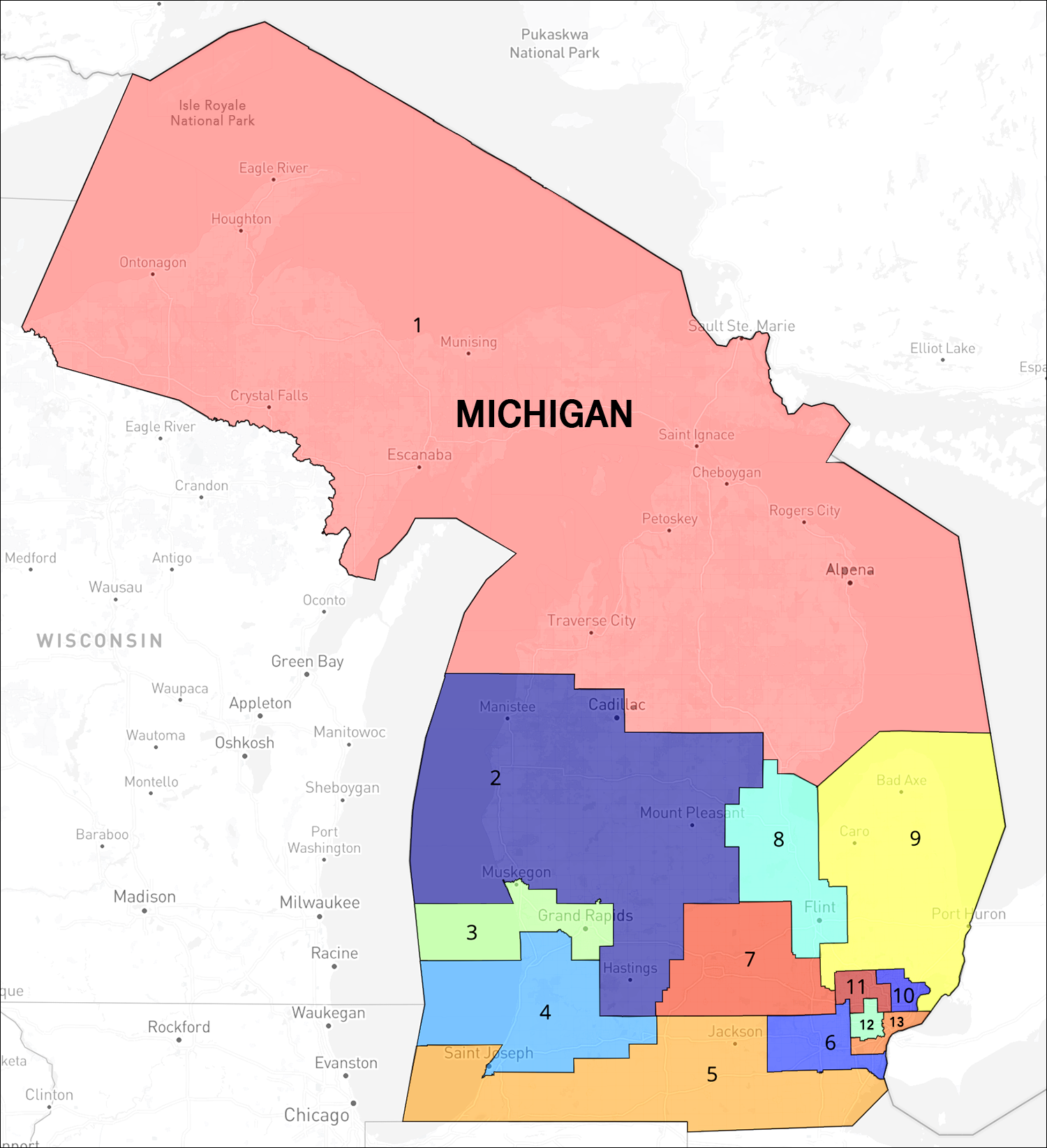
The open Michigan Senate race will be one of the top national contests next year. Republicans have successfully given former US Representative and 2024 US Senate nominee Mike Rogers a clear path to the nomination which helps solve one of their key past problem areas: fundraising. The fact that Rogers does not have to spend much to secure the nomination means virtually all fundraising assets will be directly applied to the general election. At this point, Rogers holds $2.7 million in his campaign account.

The Democrats, on the other hand, are embroiled in a tough primary that won’t be decided until Aug. 4. The three major candidates have equivalent resources. Rep. Haley Stevens (D-Birmingham) holds $2.6 million, state Sen. Mallory McMorrow (D-Royal Oak) reports $1.4 million cash-on-hand, and former Wayne County Health Director Abdul El-Sayed has also proven himself a strong fundraiser. His campaign account reports $1.8 in available resources.

The Democratic primary is a toss-up at this point. Expect a tough campaign before a nominee is crowned and financial resources will be exhausted. Democrats are adept fundraisers, however, so the winner’s campaign treasury will be quickly replenished after the party unites post-primary.

Minnesota

The Land of 10,000 Lakes also features a competitive Democratic Senate primary. In this case, the candidates are vying to replace the retiring Sen. Tina Smith (D). Today, it appears the nomination contest is evolving into a two-way affair between Lt. Gov. Peggy Flanagan and Rep. Angie Craig (D-Prior Lake).

In Minnesota, the state political party endorsements are very influential. Usually, a candidate not obtaining the party endorsement withdraws from the race but is not required to do so. For this Senate primary, it is likely that both of these candidates will advance into the Aug. 11 primary irrespective of the party endorsement process.

According to third quarter (Q3) financial reports, Craig has a significant fundraising advantage. She posts $2.9 million cash-on-hand as compared to just under $836,000 for Lt. Gov. Flanagan.

Nebraska

In 2024, Independent Dan Osborn became the election cycle’s surprise Senate candidate when he took several polling leads over Nebraska Sen. Deb Fischer (R). In the end, Sen. Fischer claimed a six-point win, but Osborn’s strong fundraising effort and populist appeal turned what should have been an easy Fischer win into a competitive contest.

Now, Osborn returns for another Senate campaign, this time against Sen. Pete Ricketts (R). Once again, Osborn is likely to enjoy Democratic Party official support; therefore, the party won’t field its own candidate. Sen. Ricketts is still a strong favorite, but this contest is likely to again draw national attention.

The Q3 financial disclosure reports show Sen. Ricketts holding $1.2 million in his campaign account while Osborn posts just under $517,000.

New Hampshire

Democratic Rep. Chris Pappas (D-Manchester) has successfully defined himself as the consensus party candidate to replace retiring Sen. Jeanne Shaheen (D).

Republicans are likely to soon see a new entry, possibly later this week. Former Sen. John E. Sununu, the son of former Governor and White House chief of staff John Sununu and brother of former four-term Gov. Chris Sununu, is likely to enter the campaign very soon. At this point, the leading Republican is former Massachusetts Senator and 2014 New Hampshire Senate candidate Scott Brown.

Early polling puts Sununu in position to tighten the race against Rep. Pappas, while the Congressman appears poised to easily defeat Brown. Rep. Pappas reports $2.6 million in his campaign account as compared to just under $803,000 for Brown. Since Sununu is not an official candidate, he is not yet required to file a disclosure report.

North Carolina

In what promises to be one of the defining national Senatorial contests, the general election candidates in the Tar Heel State are unofficially set: Democratic Gov. Roy Cooper and former Republican National Committee chairman Michael Whatley are virtually unopposed for their respective nominations.

Cooper has a major fundraising advantage. He already holds $8.6 million in his campaign account. Whatley, who started later, has just $1.1 million. Expect this race to go down to the wire. All North Carolina statewide races are tight, and this one will be no exception.

Ohio

The Ohio special election is another race where the general election is virtually set. Appointed Sen. Jon Husted (R) will run to serve the final two years of the current term. Opposing him will be former Sen. Sherrod Brown (D), who lost his seat in 2024.

This will be an expensive race, since then-Sen. Brown raised over $100 million for his last campaign. At this point, Brown has $5.9 million in cash-on-hand. Sen. Husted posts a similar $5 million. While Sen. Husted has the advantage because Ohio has been moving decidedly rightward in recent elections, we can count on seeing a very competitive contest here next year.

Texas

The Texas Senate situation has recently changed. With Rep. Wesley Hunt (R-Houston) joining the Senate Republican primary, the race is no longer solely a battle between Sen. John Cornyn and Attorney General Ken Paxton. The chances of the Republicans heading to a post-primary runoff are now high.

For the Democrats, former Congressman and 2024 Senate nominee Colin Allred is no longer a lock for the 2026 party nomination. Polling shows him dropping. Announced candidate James Talarico, an Austin state Representative, is making significant gains. Rep. Jasmine Crockett (D-Dallas), while not an announced candidate, is the clear polling leader. Not only is the Republican primary in a state of flux, but now the Democratic nomination battle is as well.

On the financial front, Sen. Cornyn is the strongest among all candidates. He holds $6.0 million in his campaign account, which compares favorably against AG Paxton ($3.2M) and Rep. Hunt ($1.5M).

For the Democrats, it is Talarico who possesses the most money at $4.9 million. Rep. Crockett, again not officially in the race, has $4.8 million, and Allred finds himself trailing in this category too, with $1.8 million. In 2024, Allred was one of the top Democratic fundraisers in the country.

The Texas Senate race will be a race to watch from the March 3 primary until the campaign concludes on Election Day, Nov. 4, 2026.