Category Archives: Retirement

Washington Rep. Newhouse to Retire

By Jim Ellis — Friday, Dec. 19, 2025

House

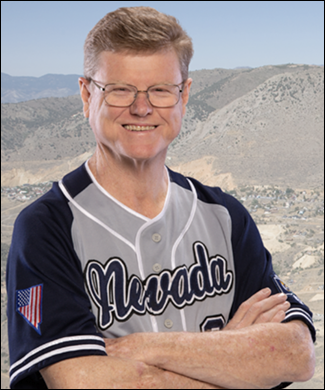
Washington Congressman Dan Newhouse (R-Sunnyside) / Facebook photo

Central Washington Congressman Dan Newhouse (R-Sunnyside) announced that he will not seek a seventh term next year. Rep. Newhouse’s retirement decision increases the House open-seat count to 48.

Newhouse was originally elected to Congress in 2014 after serving as Director of the Washington Department of Agriculture. His career in electoral politics began with winning a seat in the state House of Representatives in 2002, where he served three-plus terms before being appointed to the agriculture position.

The Congressman averaged 59.3 percent of the vote in his six federal general elections, but under Washington’s jungle qualifying election system three of those contests were opposite another Republican. Rep. Newhouse’s 4th Congressional District is one of two safe Republican seats in Washington; hence, he faced a Republican opponent in three general elections, two when he was first elected and re-elected, and the last one in 2024.

As one of just 10 Republicans to vote in favor of impeaching President Trump in early 2021 over the Jan. 6 situation at the Capitol, Newhouse did face pressure from Republican contenders in both the 2022 and 2024 elections. Of the group of 10 House Republicans, only Rep. Newhouse and California Congressman David Valadao (R-Hanford) remain in office.

While Newhouse fared well in the general election, he did rather poorly in the associated qualifying elections under the jungle system. In the last two such votes, Newhouse only averaged 24.5 percent of the vote within crowded multi-candidate fields.

In 2024, the Congressman finished a full ten percentage points behind Trump-endorsed Republican Jerrod Sessler in the August qualifying election, but he managed to rebound to score a 52-46 percent win in the November general election. Retirement rumors were prevalent regarding Newhouse during the 2024 election cycle, so seeing him not seeking re-election in 2026 is unsurprising.

The 4th District of Washington lies in the central part of the state and stretches from the Canadian border to Oregon. The district contains six counties and parts of two others. In the 2024 presidential election, the WA-4 electorate voted for President Trump over Kamala Harris with a 59.0 – 38.3 percent margin, making it the strongest Trump district in Washington. The major population centers are the cities of Yakima, Kennewick, and Richland, all located in the CD’s southern sector.

We can expect a large Republican field to form with the possibility of again seeing the voters send two party members into the general election. Sessler, who ran in the last two elections, previously announced that he will return for a third campaign and must be viewed as a strong contender to qualify for the general election. Yakima County Commissioner Amanda McKinney (R) had also previously announced her intention to run.

Republican Tiffany Smiley, who challenged Sen. Patty Murray (D) in the 2022 general election and for a time was viewed as having upset potential, eventually lost in a 57-43 percent result. She then entered the 2024 jungle primary to challenge Rep. Newhouse. Smiley finished third in the jungle primary with 19 percent of the vote, thus failing to qualify for the general election. Therefore, it is possible that she will return to again compete for the congressional post. Without Rep. Newhouse in the field, Smiley would be viewed as another potentially strong candidate.

In terms of the national open-seat count, we now see 48 open seats headed to the next election with three special elections coming in late January (TX-18; replacing the late Rep. Sylvester Turner-D), February (NJ-11; replacing Gov-Elect Mikie Sherrill-D), and March (GA-14; replacing soon-to-resign Rep. Marjorie Taylor Greene-R). The remaining 45 open seats will all be filled in the regular 2026 election cycle.

From the 48 open seats, a total of 25 Republican members are not seeking re-election, 18 are Democrats, with five new seats created in California and Texas under those states’ new redistricting maps.

Within the subset of 42 serving members who are departing, a total of 15 are opting to retire from elective politics, another 14 are running for Governor of their respective states, 12 are US Senate candidates, and one is competing in an open state Attorney General’s contest, while one member passed away.

46 Open US House Seats With Rep. Nehls’ Retirement Announcement

By Jim Ellis — Tuesday, Dec. 2, 2025

US House

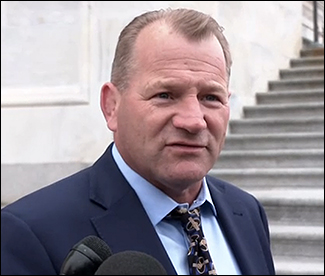
Texas Rep. Troy Nehls (R-Richmond) / Photo: abc13.com

After what will be only three terms in Congress, Texas Rep. Troy Nehls (R-Richmond) surprisingly announced last weekend that he will not seek re-election next year.

Though Nehls is under a House Ethics Committee investigation under allegations that he used some of his campaign money for personal gain, there was unsurprisingly no mention of that situation in his retirement announcement. Now that Rep. Nehls has indicated he won’t seek re-election, it is possible the probe will be dropped.

With Rep. Nehls’ 22nd District now coming open, a total of 10 Texas US House districts will have no incumbent for the 2026 election, assuming the 2025 map remains in place. As you will remember during the past 10 days, a three-judge federal panel, on a 2-1 vote, declared the new map a racial gerrymander. Immediately, however, Supreme Court Justice Samuel Alito, administrator for the 5th Circuit Court of Appeals where Texas lies, placed a temporary stay on the lower court ruling.

It is unclear what further action the high court will take, but the odds are strong that the 2025 map will be in place at the Texas candidate filing deadline, which is Dec. 8.

Under the new map, the 22nd remains a Republican district. The 2025 draw encompasses parts of the CD’s traditional three counties, Brazoria, Ft. Bend, and Harris. According to the newly calculated partisan lean from Dave’s Redistricting App, the district yields a reliable Republican calculation of 60.0R – 38.0D. The partisan lean tracks with President Trump’s 2024 performance as he carried the district over Kamala Harris with a 59-39 percent margin.

Immediately upon the Nehls’ retirement announcement becoming public, the Congressman’s twin brother, former County Constable and retired US Army Colonel Trever Nehls, announced his candidacy.

Prior to winning election to Congress in 2020, Rep. Nehls served for eight years as the Ft. Bend County Sheriff. Before earning the Sheriff’s position in 2012, Nehls was himself one of four Ft. Bend County Constables, a position he held from 2004 to 2012.

An interesting phenomenon has unfolded among the Texas open seats. Of the 10 districts where no incumbent is running, assuming the 2025 map receives favorable action from the Supreme Court, a total of six of the districts feature no state legislator and few local officials venturing forth to become a congressional candidate. The number does not include what might happen with a developing open TX-22 field.

Some Texas observers believe this unusual situation is because many legislators believe they can accomplish more remaining in the state House or Senate rather than as a freshman US Representative in a tightly divided chamber within a highly partisan atmosphere. Regardless of the reason, we will see a large number of freshmen Texas US House members coming to Washington at the beginning of 2027 with very little legislative experience.

Nationally, the Nehls retirement decision brings to 46 the number of open seats headed to the next election. On Tuesday, the open-seat race in Tennessee was decided, thus reducing the open seat contingent to 45. Of that latter group, 23 of the open seats are currently Republican held and 17 Democratic, with five new seats created from the 2025 redistricting maps in California and Texas.

Of the 46 open seats after tomorrow, 14 of the departing members are running for Governor of their respective states, 13 are retiring from elective politics, 11 are announced US Senate candidates, five new districts were created in redistricting including forcing two California incumbents to seek election in different districts, and one seat each from a member who is running for another office (Texas Attorney General), resigned (Rep. Marjorie Taylor Greene; R-GA) and passed away (Rep. Sylvester Turner; D-TX).

Two New Special Elections

By Jim Ellis — Wednesday, Nov. 26, 2025

This is our last update for the week. We’ll take a pause for Thanksgiving and pick up again Monday, Dec. 1. Wishing all a very Happy Thanksgiving!


House

Governors in two states are making moves to calendar elections to fill new congressional vacancies in their states. With Rep. Mikie Sherrill (D-NJ) resigning her congressional seat to prepare for her swearing in as the Garden State Governor, and Rep. Marjorie Taylor Greene (R-GA) declaring that she will leave Congress on Jan. 5, two more districts will soon host special elections.

Since this Congress began, we have seen four seats filled in special elections; two more are scheduled, the first on Dec. 2 (TN-7) and the other Jan. 31 (TX-18), and now the Georgia-New Jersey pair open.

Three seats became vacant because the incumbent passed away — Reps. Raul Grijalva (AZ), Sylvester Turner (TX), Gerry Connally (VA); one accepted an appointment from President Trump, Rep. Mike Waltz (FL); three resigned for other opportunities, Reps. Matt Gaetz (FL), Greene (GA), Mark Green (TN); and one, Sherrill, won election to a different office.

NJ-11

Rep. Mikie Sherrill being elected New Jersey Governor on Nov. 4 creates a new vacancy in the Garden State congressional delegation. The 11th District lies in the northern part of the state and is reliably Democratic.

Under previous redistricting plans in the early part of the century, the 11th, which now includes parts of three counties, Essex, Morris, and Passaic, and the population centers of Morristown, Parsippany-Troy Hills, and Gov-Elect Sherrill’s hometown of Montclair, was a Republican district.

The Dave’s Redistricting App partisan lean for the current NJ-11 shows a 55.6D – 42.5R ratio. Kamala Harris carried the district 53.3 – 44.6 percent. Therefore, the stats show that Gov-Elect Sherrill’s successor will very likely be determined in the special Democratic primary.

Gov. Phil Murphy (D) just announced that the District 11 special partisan primaries will be held on Feb. 5, with the special general scheduled for April 16. Candidates must file right after Thanksgiving, on Dec. 1.

A total of 14 Democrats have announced their candidacies, including former 7th District Congressman Tom Malinowski. In 2022, Malinowski, who saw his district become a touch more Republican in 2021 redistricting largely to make the 11th and now-Sen. Andy Kim’s (D) former 3rd District more Democratic. Then-Rep. Malinowski would lose to current Rep. Tom Kean, Jr. (R-Westfield) as a result.

Beyond Malinowski, the Democratic field includes former Lt. Gov. Tahesha Way, five local officials from various townships, and former Obama White House aide Cammie Croft. Only one Republican is in the race, Randolph Town Commissioner and Mayor Joe Hathaway.

GA-14

Rep. Marjorie Taylor Greene’s (R-Rome) surprise resignation means an ensuing special election will be held in northwest Georgia. Reportedly, sources close to Gov. Brian Kemp (R) say he is leaning toward scheduling a March primary.

Under Georgia election law, when special elections are held all candidates are placed on the same ballot regardless of political party affiliation. If a contender receives majority support in the first election, the individual is elected. If no one reaches such a level, the top two finishers, again regardless of political party affiliation, advance to a runoff election within 28 days of the initial vote.

With an overwhelming Republican partisan lean (Dave’s Redistricting App: 69.2R – 28.9D), meaning the 14th District is the safest Georgia Republican congressional district, the possibility of two Republicans advancing to the runoff is relatively high.

A total of six state Senate seats and 17 districts in the state House contain part of the 14th CD. Encompassing all or part of 10 counties, a multitude of Republican state and local officials are likely to enter the congressional campaign.

State Senate Majority Leader Jason Anavitarte (R-Doraville) and state Sen. Colton Moore (R-Trenton), who for a time was in this year’s US Senate campaign, are viewed as potentially strong candidates.

The field will form once Rep. Greene resigns after the first of the year and Gov. Kemp officially calls the special election.

Texas Rep. Jodey Arrington to Retire

By Jim Ellis — Wednesday, Nov. 12, 2025

House

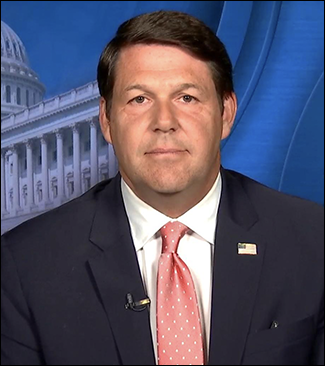
Texas Rep. Jodey Arrington (R-Lubbock)

The number of US House members announcing they won’t seek re-election next year is beginning to form a cavalcade.

Five-term Texas Rep. Jodey Arrington (R-Lubbock), chairman of the House Budget Committee, yesterday announcing that he won’t seek re-election next year, increased the number of retirement decisions to six in just the past 10 days.

In his retirement announcement, Rep. Arrington said, “I believe, as our founding fathers did, in citizen leadership – temporary service, not a career; and, it’s time to do what George Washington did, and to ride off into that big, beautiful West Texas sunset, and to live under the laws that I passed.”

Since 2010, we have seen the number of House open seats fall to anywhere between 48 and 64 in each election cycle. This year the pace of those voluntarily leaving Congress was slower until recently.

Now, the open-seat count, adding the newly drawn seats in Texas and California but not including the vacant districts in special elections (TN-7; TX-18) and the soon-to-be open seat in New Jersey (NJ-11; Governor-Elect Mikie Sherrill), lies at 40 with others to follow once candidate filing deadlines begin to appear on the political horizon.

We are about to see other seats open in California once members decide where they will run under the new map. We have already seen two Golden State members, Reps. Ami Bera (D-Sacramento) and Ken Calvert (R-Corona), switch districts.

In northern California, Rep. Bera is eschewing his Sacramento County 6th District, where he would be the lone incumbent, to challenge 3rd District Republican Rep. Kevin Kiley (R-Rocklin/ Sacramento) in a district that now favors the Democrats.

Speculation is underway that Rep. Kiley may depart his 3rd District for another seat, possibly even challenging fellow Republican Rep. Tom McClintock (R-Elk Grove) in the new 5th CD that stretches from the Sacramento suburbs south into the San Joaquin Valley of Central California.

In Southern California, Rep. Calvert found his 41st District broken into several pieces, thus forcing him into new District 40 to challenge fellow Republican Young Kim (R-La Habra). Other Los Angeles County members could be shifted to other seats as well and we may see Rep. Linda Sanchez (D-Whittier) run in what is now a Democratic version of District 41. Expect to witness several interesting political musical chairs moves once the California redistricting dust begins to settle.

Of the 40 open seats, counting the three newly created seats from Texas redistricting, we see Rep. Arrington becoming the 12th exiting House member to retire from elective politics. Eleven are running for the Senate, an additional 11 have entered their state’s gubernatorial campaign, two are running for election in a different congressional district than the one they currently represent, and one, Texas Rep. Chip Roy (R-Austin), is running for state Attorney General.

In terms of the two special election districts, a new poll was released for the TN-7 race in the western Tennessee district from which four-term Rep. Mark Green (R) resigned to accept a position in the private sector.

A Workbench Strategy survey (Oct. 15-19; 400 likely TN-7 special election voters; 100 oversample of Democratic voters; live interview & text) found Republican former state cabinet official Matt Van Epps leading state Rep. Aftyn Behn (D-Nashville) by a 52-44 percent count.

A segment defined as “the most motivated voters” found the two candidates tied. This suggests that the Democrats have an enthusiasm edge, meaning this Dec. 2 general election could be closer than the Republican historical voting patterns would suggest.

The TX-18 race will go to a double Democratic runoff between Harris County Attorney Christian Menefee and former Houston City Councilwoman Amanda Edwards. When the final totals become official, Gov. Greg Abbott (R) will schedule the runoff election, likely for a date in January.

With New Jersey Rep. Mike Sherrill (D-Montclair) being elected Governor last week, expect her to resign her congressional seat in mid-January just before taking the oath of office. She will then schedule a special election for voters to choose her successor.

NJ Rep. Coleman to Retire; Rogers Up in Michigan; Allred Down in Texas

By Jim Ellis — Tuesday, Nov. 11, 2025

A congressional retirement announcement from New Jersey, ex-US Rep. Mike Rogers (R) taking the lead in a new Michigan Senate general election poll, and a Texas Senate survey that finds 2024 US Senate nominee and ex-Congressman Colin Allred again trailing in the Democratic primary, are outlined in this round up. These are the top political stories coming from the early part of the Veterans Day weekend. Also, overnight, Republican House Budget Committee Chairman Jodey Arrington (TX-19) announced that he will not seek re-election in 2026. Arrington has served for nearly a decade in the US House. More on his retirement in an upcoming post.

NJ-12

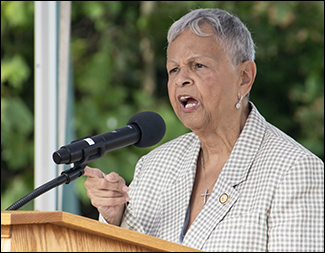
New Jersey Rep. Rep. Bonnie Watson Coleman (NJ-12)

Yesterday, saying “it’s time to pass the torch,” six-term Rep. Bonnie Watson Coleman (D-Ewing Township/Trenton), 80, announced that she will not seek re-election next year.

Prior to her election to the US House in 2014, she served 17 years in the New Jersey General Assembly, four years as Majority Leader. From 2002-06, Watson Coleman chaired the New Jersey Democratic Party.

The Garden State’s 12th District, which includes the capital city of Trenton, Princeton University; and North, East, and South Brunswick; is reliably Democratic. The Dave’s Redistricting App statisticians calculate a 56.5D – 43.5R partisan lean.

The central New Jersey district was at one time a Republican domain but redistricting and a change in voting patterns have yielded Democratic representation since the beginning of 1999. Therefore, Rep. Watson Coleman’s successor will almost assuredly come from winning what promises to be a hotly contested Democratic primary.

The Watson Coleman retirement means 39 seats will be open in 2026, not counting the CDs headed to special elections in Tennessee and Texas, along with New Jersey’s 11th District seat when Gov-Elect Mikie Sherrill (D) resigns from the House.

From the group of 2026 open seat members, Rep. Watson Coleman becomes the 15th Democrat not to seek re-election and the 11th to retire from politics. The other 28 are seeking a different office or moving to a congressional district other than the one they currently represent.

Michigan Senate

The Rosetta Stone polling organization released the results of an independent poll that finds Republican former Rep. Mike Rogers polling ahead of all three Democratic US Senate contenders.

Rogers, who served seven terms in the House before retiring, returned to enter elective politics with his run for the Senate in 2024. In an open-seat battle with then-Rep. Elissa Slotkin (D), Rogers came within 19,006 votes from just under 5.6 million votes cast of winning the race, a percentage margin of 48.6 – 48.3.

The Rosetta Stone poll, released over the weekend, (Oct. 23-25; 637 likely Michigan general election voters) finds Rogers, who is virtually unopposed for the Republican nomination, ahead beyond the polling margin of error individually against each of the Democrats: Rep. Haley Stevens (D-Birmingham), state Sen. Mallory McMorrow (D-Royal Oak), and former Wayne County Health Director Abdul El-Sayed.

Opposite Rep. Stevens, Rogers leads 47-40 percent. If Sen. McMorrow was his opponent, the Rogers edge would be a similar 46-39 percent. The Rogers’ advantage grows if El-Sayed becomes his general election opponent. Under this scenario, the former Congressman posts a 45-31 percent margin.

Other polls have shown this race much closer, but this is the first publicly released statewide poll since June.

Rosetta Stone tested the Democratic Senate primary, but the sample size of only 287 likely Democratic primary voters indicates the results should be considered statistically insignificant in a state the size of Michigan.

Texas Senate

New polling in the Texas Senate Democratic primary again shows trouble for 2024 Senate nominee Colin Allred.

The Impact Research survey conducted for the James Talarico Senate campaign (Oct. 23-29; 836 likely Texas Democratic primary voters; live interview & text) finds state Rep. Talarico taking a 48-42 percent lead over Allred.

In a late September survey from the University of Houston and Texas Southern University, the academic pollsters found Allred lagging in last place if the Democratic field consisted of he, Rep. Jasmine Crockett (D-Dallas), former El Paso Rep. and statewide candidate Beto O’Rourke, and state Rep. Talarico. For her part, Rep. Crockett says she is considering the Senate race. Crockett has led several Democratic statewide polls.

It has been known for some time that the Republican Senate primary would be a hard-fought contest between four-term incumbent Sen. John Cornyn, Attorney General Ken Paxton, and recently entered Rep. Wesley Hunt (R-Houston). Now, however, analyzing the available polling data leads to the conclusion that the Democratic primary appears just as competitive as the Republican contest.

Rep. Nancy Pelosi to Retire

Nancy Pelosi announced yesterday that she will not seek re-election to Congress. Watch the video on X here: Nancy Pelosi announces retirement. (Or click on the image above to see the video posted to her X account. Her announcement comes at 4:45 in the video.)

By Jim Ellis — Friday, Nov. 7, 2025

House

Former House Speaker Nancy Pelosi’s announcement yesterday morning that she will retire when the current Congress ends has taken center stage, politically.

Nancy Pelosi was first elected to Congress back in 1987 when she won a special election to replace the late Rep. Sala Burton (D-San Francisco). Burton ran for and was elected to the seat in 1983 when her husband, then-Rep. Phil Burton (D) suddenly passed away.

Before coming to Congress, Pelosi had been the California Democratic Party chair. She grew up, however, in Baltimore, where her father, Thomas D’Alesandro, was the city’s Mayor. Therefore, her introduction to elective politics came at a young age.

At the end of next year, Rep. Pelosi will have served 39 years in the House, and eight of those as Speaker. She became the first, and only, woman to hold that post when the Democrats regained the House majority in 2007 after a 12-year hiatus from power.

Rep. Pelosi would then take a step back to Minority Leader in 2011 when Democrats lost control of the House. She returned to the body’s top post in 2019 and held the Speakership until the Democrats again lost the majority in 2023. At that point, she retired from the House leadership but remained as a regular member.

This year, Rep. Pelosi’s political outlook back home became more challenging. While she’s had opponents in every election none had been substantial, meaning she was able to record landslide wins every two years.

When Sakat Chakrabarti, who quarterbacked Alexandria Ocasio-Cortez’s (D-NY) upset win in 2018, announced his intention to challenge the former Speaker in the 2026 Democratic primary most believed he was not a substantial threat to defeat Pelosi. His personal wealth and track record with AOC’s upset campaign, however, gave him a modicum of credibility that no other Pelosi opponent had commanded.

The political situation became even more intriguing last month when three-term state Sen. Scott Weiner (D-San Francisco) announced that he would also enter the race, presumably to challenge Pelosi. The move was a surprise since it was assumed that Sen. Weiner, who represents even more of San Francisco than does Pelosi because California state Senate seats are bigger than congressional districts, would wait until she retired to run for Congress.

Some believed the Weiner move was a ploy to encourage the Congresswoman to retire. Most believed he would have backed off of the challenge should she have decided to run again. Had Weiner moved forward, and with Chakrabarti also in the race with the goal of building himself a local political base, the campaign would have become significant.

A race against this pair, even though her chances of achieving victory were high, promised to be a difficult political run that would have taken a toll.

Because there is little disagreement regarding the issues among Pelosi and her two opponents, much of the campaign would have concentrated on her age (86 at the time of the next election), and that San Francisco needed a new Representative who could build seniority for the long term.

Whether he was forcing the retirement issue or would have truly challenged her, the end result spun in Sen. Weiner’s favor, and he is now the heir apparent for the seat.

All things considered, the time appeared right for Pelosi to exit the political stage and begin her retirement after a very long career in the public eye.

With Rep. Pelosi leaving the 11th District, it means that there will be 38 open US House seats for the 2026 election to date, after the two special elections in Tennessee and Texas are filled. Like almost all other opens from both parties, CA-11, which changes little under the new California map, will be another safe seat for the incumbent party.

Considering that California employs the jungle primary system where the top two finishers advance to the general election irrespective of political party or percentage attained, we could easily see two Democrats advancing from the state’s June 2nd open primary.

Rep. Michael McCaul to Retire

By Jim Ellis — Wednesday, Sept. 17, 2025

House

Congressman Michael McCaul (R-Austin)

The House retirement list continues to grow. Late last week we saw Texas US Rep. Morgan Luttrell (R-Magnolia) announce that he would not seek a third term, and now a veteran Lone Star State Congressman, Michael McCaul (R-Austin), will also retire once this Congress adjourns.

Over the weekend during a television interview, Rep. McCaul announced that he would not seek a 12th term in the House. He was originally elected in 2004 and rose to chair two full committees, the Committee on Homeland Security and House Foreign Affairs.

McCaul served his full term-limited allotment of six years heading the Homeland Security Committee. Though he chaired the Foreign Affairs panel for only two years, he was the Ranking Minority Member for the previous four. Under Republican House Conference rules, the combined position of Chairman and Ranking Member cannot exceed six years.

Congressman McCaul had been thought of as a potential Texas statewide candidate over the years but never launched such a campaign. He now plans to pursue interests outside of elective politics when his current congressional term ends at the beginning of 2027.

The combined retirement announcements of Reps. Luttrell and McCaul mean that at least seven of Texas’ 38 congressional seats will be open for the 2026 election. Rep. Lloyd Doggett (D-Austin) is retiring, assuming the new Texas map survives legal challenges, and Rep. Chip Roy (R-Austin) is running for state Attorney General. The Houston-anchored 18th District is vacant due to the death of Rep. Sylvester Turner (D). The new redistricting map created three new open seats, Districts 32 and 33 centered in Dallas County and District 35, anchored in San Antonio.

Overall, the McCaul retirement announcement moves the national open House seat count to 32, including 18 Republican held seats, 11 Democratic, and the three new Texas map districts. Though the open list is expanding, the general election competition within these districts remains light. Still, only two opens, MI-10 (Rep. John James-R) and NE-2 (Rep. Don Bacon-R), can be ranked in the toss-up category. Competitive primaries, however, will occur in all congressional openings.

The open-seat list will soon recede to 29 once special elections are held in Arizona (7th District; Sept. 23), Tennessee (7th District; Oct. 7 special primary; Dec. 2 special general election), and Texas (18th District; Nov. 4 jungle primary; runoff to be scheduled after it becomes clear that no one receives majority support in the initial vote).

The new TX-10 District begins in western Travis County, where McCaul resides, and then moves through a strip in northern Travis where it connects to the rest of the district. Moving east, the new 10th annexes 10 whole counties and part of Warren County all located east of Waco and north of the Houston metro area. Included within this group is Brazos County, which houses Texas A&M University.

We can expect a crowded 10th District Republican primary with the winner claiming the seat in November of 2026. The new 10th is rated safely Republican. President Trump carried the region over Kamala Harris with a 60-38 percent margin according to calculations from The Down Ballot political blog statisticians.

The Texas candidate filing deadline is Dec. 8 for the March 3, 2026, Lone Star State primary. Should no candidate secure a majority in the initial election, which is likely for all of the state’s seven open congressional seats, a runoff contest between the top two finishers is scheduled for May 26, 2026.