Category Archives: Polling

GOP VP Polling Results; CO-8 GOP Nomination; Bowman Trails Badly in NY-16; Washington Governor’s Race

By Jim Ellis — Monday, April 8, 2024

President
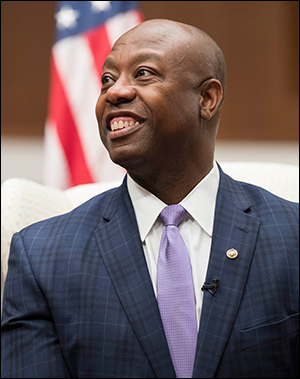
South Carolina Sen. Tim Scott (R) leading the VP pack in polling.

YouGov Poll: Tests Enthusiasm & Trump VP Choices — International online pollster YouGov, again polling for the Economist publication as they do on a regular basis, included questions about enthusiasm for President Joe Biden and former President Donald Trump, as well as favorability rating for eleven potential Republican vice presidential choices.

On the enthusiasm questions, as we have seen from primary turnout numbers across the country, President Biden has a major problem. Among self-identified Democrats in the latest YouGov national survey (March 30-April 2; 1,813 US adults; online) only 38 percent responded affirmatively that they are enthusiastic about Biden’s candidacy. Another 21 percent said they are dissatisfied with the president’s candidacy, with an additional six percent of Democrats confirming they are “upset” with the status of his campaign. A final 37 percent said they are satisfied with Biden, but not enthusiastic.

Compared with former President Trump, 57 percent of Republicans said they are enthusiastic about his candidacy, six percent dissatisfied but not upset, eight percent upset, while 26 percent say they are satisfied but not enthusiastic.

On the vice presidential front, 11 prospects were tested. They are (alphabetically):

  1. Texas Gov. Greg Abbott
  2. former HUD Secretary Ben Carson
  3. Florida Gov. Ron DeSantis
  4. ex-Congresswoman Tulsi Gabbard
  5. former UN Ambassador Nikki Haley
  6. South Dakota Gov. Kristi Noem
  7. former presidential candidate Vivek Ramaswamy
  8. Arkansas Gov. Sarah Huckabee Sanders
  9. Sen. Tim Scott (R-SC)
  10. Rep. Elise Stefanik (R-NY)
  11. Sen. J.D. Vance (R-OH)

Rating the candidates equally on their favorability indexes and awarding individual points for standing in the high favorable, low unfavorable, and best ratio between the two scores, the top finishers were Sen. Scott and Dr. Carson. Finishing dead last among the group, and the only candidate viewed with an upside-down favorability index, is Haley. Though Gov. DeSantis is ineligible to serve as vice president because both he and Trump reside in the same state, he was still included in the poll and fared well, placing just behind Scott and Carson.

CO-8: GOP Nomination Virtually Secured — Colorado Republicans from the Denver suburban 8th Congressional District met in caucus and advanced state Rep. Gave Evans (R-Westminster) into the general election with 62 percent delegate support.

The other qualifier is state Rep. Janak Joshi, but he resides all the way south in Colorado Springs, far from the 8th District. Health insurance consultant Joe Andujo is now disqualified since he failed to reach the 10 percent threshold at the party convention. He was also circulating petitions to qualify, but those efforts are now discarded because he failed to reach the minimum delegate support threshold. Andujo then endorsed Rep. Evans at the convention.

Very likely, we will now see Evans advancing from Colorado’s June 25 primary election, where he will become the general election candidate to oppose freshman Rep. Yadira Caraveo (D-Thornton). The congresswoman, first elected in 2022 in what is Colorado’s newest congressional seat, scored only 48.4 percent of the vote, defeating her Republican opponent by less than a full percentage point. Count on this race becoming a major national GOP offensive target.

NY-16: Rep. Bowman Trails Badly in New Dem Primary Poll — Justice Democratic Congressman Jamaal Bowman (D-Yonkers), who unseated veteran Rep. Eliot Engel in the 2020 Democratic primary, appears to be in trouble as he seeks renomination for a third term. A new Mellman Group survey (March 26-30; 400 likely NY-16 Democratic primary voters; live interview & text) conducted for the George Latimer campaign finds the challenging Westchester County Executive leading Rep. Bowman by a whopping 52-35 percent margin as the June 25 primary comes into view.

Rep. Bowman aligns himself with the group that calls themselves “the Squad” that comprises the far left of the Democratic Conference. Latimer, prior to his election as county executive, served in both the New York Senate and Assembly. This race is now becoming another key primary campaign as several incumbents from around the country face stiff competition in their quest for renomination.

Governor

Washington: Ex-Rep. Reichert (R) Takes Lead in New Gov Poll — An Echelon Insights survey finds Republican former US Rep. Dave Reichert leading Democratic Attorney General Bob Ferguson in the open race for governor, thus providing more evidence that the Washington race is becoming much more competitive than originally projected.

Echelon Insights tested the Evergreen State electorate (March 18-21; 600 registered Washington voters; online, text & live interview) and sees Reichert grasping a 39-30 percent advantage over AG Ferguson in what is one of the most Democratic states in the country. Some suggest that the poll skews more Republican since Sen. Maria Cantwell (D) claims an underperforming 44-36 percent margin over physician and 2020 gubernatorial candidate Raul Garcia (R), and President Biden posts only a plurality number over Donald Trump, 48-37 percent.

While a skew may well exist, the poll is in the realm of other research findings and confirms that Reichert is a Republican candidate with staying power and capable of becoming a viable challenger.

Nebraska Moves to Change Electoral Vote Apportionment; Curious GOP Targeting in Alaska House Race; A Tie in CA-16?; Braun’s Lead in Indiana

Click on above map to go to interactive version. | 270towin.com

By Jim Ellis — Friday, April 5, 2024

President

Nebraska: Move to Change Electoral Vote Apportionment — With the support of Gov. Jim Pillen (R), a bill in the Nebraska unicameral legislature would change Nebraska’s electoral vote apportionment system, which allows each of the state’s three congressional districts to carry their own electoral vote and change the system to the more common winner-take-all option.

Nebraska and Maine are the two states where presidential candidates win two electoral votes for clinching the statewide vote and one each for every carried congressional district.

The move would help former President Donald Trump in this year’s presidential race, because he is a lock to carry the statewide vote but is the underdog in the Omaha-anchored 2nd Congressional District.

Though Republicans have a large majority in the ostensibly non-partisan state Senate, there is no guarantee the votes will be present to change the system. Doing so, however, would likely deliver an important electoral vote to the Trump candidacy.

House

AK-AL: CLF’s Curious Targeting — The Congressional Leadership Fund, the Republicans’ top House Super PAC, unveiled their first 20 targets for the upcoming general election. Nineteen of the supported candidates are not particularly surprising, but their choice in Alaska’s at-large CD does raise eyebrows. The CLF is supporting Lt. Gov. Nancy Dahlstrom (R) in the top-four contest, even though published research finds that Republican attorney and former candidate Nick Begich fares better against incumbent Mary Peltola (D-Bethel).

In a recently released poll (Data for Progress; Feb. 29-March 2; 1,120 AK-AL likely voters), Lt. Gov. Dahlstrom trailed Begich by 25 points and was 34 points down to Rep. Peltola on the initial multi-candidate ballot test. Once the hypothetical Ranked Choice Voting rounds were simulated, Begich finished at parity with Pelota with each garnering an equal 50 percent share. Therefore, it is curious that the CLF is bypassing Begich to support a weaker candidate.

CA-16: An Apparent Tie — It appears that all votes have finally been counted in California’s open 16th Congressional District and the long anticipated result for the second general election qualifying position has apparently ended in a flat tie. Both San Mateo County Supervisor and former state Sen. Joe Simitian (D) and Assemblyman Evan Low (D-Campbell) each have an unofficial 30,249-vote tally.

If this result becomes final both men will advance into the general election against former San Jose Mayor Sam Liccardo (D) who long ago secured the first qualifying position. This would lead to a three-way general election among a trio of Democrats, a rarity in a top two jungle primary system. The eventual winner of this race succeeds retiring Rep. Anna Eshoo (D-Atherton).

Governor

Indiana: Sen. Braun Continues with Significant Lead — Crossroads Public Affairs, polling for the Indy Politics campaign blog, released a new survey for the upcoming open Hoosier State Republican gubernatorial primary scheduled for May 7. The survey (March 24-25; 500 likely Indiana Republican primary voters) sees US Sen. Mike Braun leading the primary field with a 33-11-11-10 percent margin over Lt. Gov. Suzanne Crouch, businessman Eric Doden, and former Indiana Commerce Secretary Brad Chambers.

While still holding a strong lead, Sen. Braun’s advantage has decreased since the last published poll from Emerson College, which found him posting a 34-7-7-5 percent lead. Therefore, while the opponents have shown some collective gain in the past three weeks, the fact that the challengers are all so closely bunched will allow Sen. Braun to capture the gubernatorial nomination even if he only attains plurality support.

The Relevancy of RFK Jr.

By Jim Ellis — Thursday, April 4, 2024

Presidency

Presidential candidate Robert F. Kennedy Jr. (I) Photo by Gage Skidmore

Stories are popping up in the political media about President Joe Biden seeing a resurgence of strength in recent national polls, but a bigger story is evolving.

The precursor to the election’s final outcome may prove to be Robert F. Kennedy Jr. and the minor party candidates garnering enough votes to the point where their support tips the electorate towards one candidate or the other.

Additionally, while President Biden and former President Donald Trump consistently find their approval ratings upside down in double-digit point margins that are routinely closer to 20 rather than 10, Kennedy is always viewed as the more popular figure. Though his favorability index is only in slightly positive territory for the most part, generally from three to five percentage points, his standing is far superior to that of the two presidents.

Even when his unfavorable perception slightly exceeds those who view him favorably, Kennedy never drops below the three to five-point negative range. The FiveThirtyEight data organization charts most polling firms daily and finds Kennedy’s average favorability index in positive territory consecutively from May 18, 2023, all the way to today.

As we all know, the national ballot test is irrelevant in forecasting the presidential outcome because it’s the electoral votes calculated in the states that determine the eventual winner. National polling, however, generally provides a good indicator of candidate strength.

Several polls have recently been released and the four most contemporary all find Kennedy now consistently in double-digit support territory. In two polls, HarrisX for Forbes Magazine, and Quinnipiac University, the addition of Kennedy and the minor candidates to the polling questionnaire changes the outcome after the respondents are presented the initial query of a choice between Biden and Trump.

HarrisX (March 26; 1,010 registered US voters; online) returns a 50-50 percent tie between Biden and Trump when the undecided respondents are pushed to make a choice. Yet, when Kennedy and the minor party candidates are added, the lead swings to Trump by a small two percentage-point margin.

Quinnipiac University (March 21-25; 1,407 registered US voters; live interview) sees Biden topping Trump 48-45 percent, but when Kennedy and the minor party candidates are added, Trump secures a one-point edge.

The most recent YouGov/Economist poll (March 24-26; 1,415 registered US voters; online) sees Trump also holding a one-point lead with Kennedy only in low single digits. The Trafalgar Group (March 29-31; 1,029 likely US general election voters; multiple sampling techniques) also finds a consistent result with the previous pollsters: Trump 43, Biden 40, Kennedy 11, Others three percent.

Therefore, we have several conclusions that appear to be correct. First, President Biden is improving his position against the field. Second, Trump appears in a long-term stagnant position, and third, Kennedy is gaining enough support to be a factor in tipping the race from one candidate to the other.

At this particular point in time, the data responses suggest that the Kennedy presence damages President Biden to a slightly greater degree than former President Trump. But, as the campaign progresses, this factor could certainly change.

We can expect to see national and swing-state polling varying from now until the election in a seesaw fashion between President Biden and former President Trump. The unanswered question revolves around Kennedy and just how well he will perform when actual votes are cast, and just who in the end will benefit more from his presence on the key swing state ballots.

Last Night’s Primary Results

By Jim Ellis — Wednesday, April 3, 2024

Primaries

We saw four more states vote yesterday and even though the presidential nominations are clinched in both parties, valuable information can still be extracted from last night’s reported results.

So far, presidential voting has occurred in 36 states, and 32 where both parties have comparable systems. In four states, Delaware, Florida, Idaho, and Mississippi, no votes were recorded in one of the party primaries because a major candidate ran without opposition.

Last night, voters in Connecticut, New York, Rhode Island, and Wisconsin had the opportunity of casting their presidential nomination ballots. To no one’s surprise, President Joe Biden and former President Donald Trump easily swept their respective elections and added to their delegate totals. Each man recorded enough bound delegate votes on March 12 to become the respective Democratic and Republican Party’s presumptive presidential nominees so the later primaries are simply providing “icing on the cake.”

The bigger story throughout the 32 comparable states may be the turnout pattern and what that might mean for the general election. If the turnout trends we have seen in the states where ballots have been cast are a precursor to what happens in November, then Trump is well positioned to unseat President Biden.

Though the Democrats had a good night yesterday as more of their party members voted in Connecticut, New York, and Rhode Island, overall, the Republican turnout has been far superior, and in some very surprising states.

At this point, counting the unofficial numbers from last night, we have seen just over 30 million people vote in the 32 comparable states. Of those, 57.1 percent have voted in Republican primaries. One may argue that the more competitive race was on the Republican side, and that could account for the imbalance between the two parties. While there is validity to this line of reasoning, Democratic turnout is running below the party’s historical participation average even in some of their strongest states, thus highlighting the unusual trend.

Out of these 32 states, more Republicans have voted than Democrats in 24 of the domains while the opposite trend occurred in only eight. Of the Democrats’ eight majority turnout states, only one, Utah, is a surprise. The Democratic primary preference share of only 53 percent in both Massachusetts and Washington, however, does raise eyebrows. The same for Republicans recording that same percentage split in Louisiana.

Republicans posted unexpected turnout advantages in Colorado, Hawaii, Maine, Minnesota, New Hampshire, Vermont, and Virginia. While none of these states are likely to be in serious play for Trump during the general election the turnout trends here are noteworthy, nonetheless.

What may be more troubling for the Biden campaign team is how the swing states performed in the primary participation race.

Here, again, Trump outperformed the president’s Democratic Party in Arizona (58.9 percent of the total turnout chose to vote in the Republican primary), Georgia (67.0 percent), Michigan (59.2 percent), Nevada (55.9 percent), North Carolina (60.7 percent), Ohio (68.2 percent), and last night in Wisconsin (51.7 percent). The substantial margins of individuals choosing to vote in the Republican primary is a clue that former President Trump has a chance to build a new coalition of voters in these most critical of states.

The Nevada Republican total is at least slightly skewed. The combined numbers from the non-binding primary and their delegate apportioning caucuses are tainted because voters could participate in both the primary and a respective caucus, which were held on different days. There is no available data suggesting what percentage of voters participated in both, but it appears from the totals associated with each event that a substantial number cast their vote in each election.

Figures Records Major Lead in Alabama Runoff; New Challenger in AZ-2; Rep. Kuster to Retire; Clear Leader Emerges in North Dakota

By Jim Ellis — Thursday, March 28, 2024

House

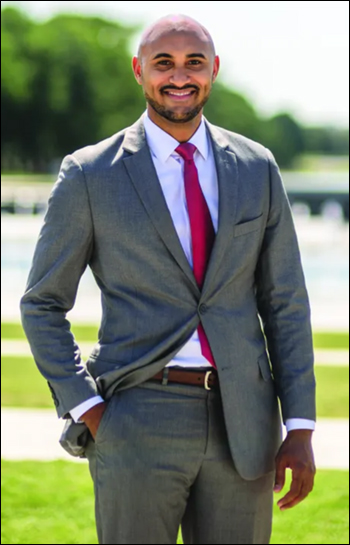
Former Obama Justice Department official Shomari Figures.

AL-2: Figures Records Major Lead in New Runoff Poll — Impact Research conducted a research study for the upcoming April 2 Democratic runoff election in Alabama’s new 2nd Congressional District anchored in the Montgomery and Mobile areas. The survey (March 14-18; 500 likely AL-2 Democratic runoff voters; interactive voice response system and text) sees former Obama Justice Department official Shomari Figures, who finished first in the March 5 primary with 43.5 percent of the vote, leading state House Minority Leader Anthony Daniels (D-Montgomery) by a whopping 59-24 percent margin.

The eventual Democratic nominee will be a heavy favorite in the general election. President Joe Biden carried this newly configured district with a 56-43 percent vote spread in 2020. The state’s congressional map was redrawn to comply with the US Supreme Court ruling in the Alabama racial gerrymandering case.

AZ-2: McCarthy Opponent Draws Primary Challenge — Freshman Arizona Rep. Eli Crane (R-Oro Valley), who is one of the eight Republicans who voted to oust then-Speaker Kevin McCarthy, has drawn a primary opponent. Yavapai County Supervisor Jack Smith (R) announced yesterday that he would follow through with a challenge to Crane after he filed a campaign committee weeks ago with the Federal Election Commission.

The 2nd Congressional District of Arizona covers the state’s northeastern sector and then stretches into Maricopa County, in and around the Phoenix metro area. The seat is safely Republican, so the true battle will be in the GOP primary scheduled for July 30.

NH-2: Rep. Kuster to Retire — Six-term New Hampshire US Rep. Annie Kuster (D-Hopkinton) announced yesterday that she will not seek re-election next year. Her departure paves the way for a competitive primary and general election season. Kuster averaged 53.3 percent of the vote in her six victorious elections, dropping below 50 percent in 2016 (49.8 percent) while scoring her strongest vote of 55.8 percent in 2022. She was first elected in 2012, defeating then-Rep. Charlie Bass (R) in that year’s general election.

NH-2 becomes the 49th open seat heading into the next election. Kuster becomes the 25th House Democrat not to seek another term. The FiveThirtyEight data organization rates the western New Hampshire seat as D+2, and the Daily Kos Elections site ranks NH-2 as the 21st-most vulnerable district in the Democratic Conference. President Biden, however, recorded a 54-45 percent victory over former President Donald Trump in 2020, thus exceeding the typical Democratic performance in this swing seat.

ND-AL: Clear Leader Emerges — As candidate filing in North Dakota closed, the race for the open at-large congressional district is becoming clearer. Former state Sen. Tom Campbell (R), viewed as a strong contender, decided not to file for the seat just after outgoing Gov. Doug Burgum (R) announced his Republican primary endorsement of state Public Utilities Commissioner Julie Fedorchak.

It appears that Fedorchak is becoming the favorite for the nomination. With the FiveThirtyEight data organization rating North Dakota as R+37 and former President Trump carrying the seat with a 65-32 percent margin, winning the Republican primary is typically tantamount to claiming the seat in the November election.

Three-term Congressman Kelly Armstrong (R-Bismarck) is running for governor. In addition to Fedorchak, former state Rep. Rick Becker and farmer and retired Air Force veteran Alex Balazs comprise the open-seat GOP primary field. For the Democrats, educator and 2022 Public Utilities Commission nominee Trygve Hammer is unopposed for the party nomination.

RFK Jr.’s VP Choice; Swing State Data; Casey’s Lead Diminishing; Cruz Polls Show Tight Texas Race

By Jim Ellis — Wednesday, March 27, 2024

President

Presidential candidate Robert F. Kennedy Jr. (I)

Robert F. Kennedy Jr.: VP Choice — Yesterday presidential candidate Robert F. Kennedy Jr. (I) announced that wealthy entrepreneur Nicole Shanahan, the founder of the ClearAccessIP legal technology company that she later sold, will be his vice presidential running mate. Shanahan is, like Kennedy, an environmental activist. She contributed $4 million to his campaign to help finance the Super Bowl ad that the Kennedy campaign ran to emphasize his family history. In the 2020 presidential race, Shanahan contributed to Democratic candidates Pete Buttigieg and Marianne Williamson.

Kennedy has qualified for the ballot in the state of Wisconsin but may have to re-start his petition drive in Nevada. RFK Jr. is reportedly qualified or in strong position to do so in eight states: Arizona, Georgia, Hawaii, Nevada, New Hampshire, South Carolina, Utah, and now Wisconsin. He may have problems in Nevada, however. The submitted petitions may be disqualified because Kennedy did not list a vice presidential running mate, which is a requirement under Nevada election law.

Of the eight states in which his name so far will appear, four are critical swing-state battlegrounds. Therefore, the Kennedy candidacy could affect the final result in the highly competitive entities of Arizona, Georgia, Nevada, and Wisconsin.

Morning Consult: Releases Latest Swing State Data — The Morning Consult organization released the latest data on their continuing swing state tracking project. This iteration shows improvement for President Joe Biden as he records a one-point edge in Wisconsin and is tied in Pennsylvania and Michigan. The tracking polls were conducted from October through March, and regularly surveyed at least 437 registered voters from each of the seven tested states.

The sampling universes in the remaining four states, Arizona, Georgia, Nevada, and North Carolina, continue to support former President Donald Trump. Unless one of the tied states (Michigan or Pennsylvania) falls Trump’s way, he cannot win a majority in the Electoral College even though he continues to poll ahead in the majority of swing states.

Senate

Pennsylvania: Casey’s Lead Diminishing — Two new polls are suggesting that the Pennsylvania Senate race is getting closer. Susquehanna Research just released a statewide survey completed in early March (Feb. 27-March 5; 450 likely Pennsylvania voters; live interview) that projects Sen. Bob Casey Jr. (D) to be leading former hedge fund CEO David McCormick (R) by a 48-42 percent margin. The result is virtually the same as the firm found in January (Casey leading 46-42 percent), but considerably different than the 12-point Casey advantage they detected in their survey from 10 months ago.

Emerson College, polling for The Hill newspaper (March 10-13; 1,000 registered Pennsylvania voters; multiple sampling techniques), sees an even tighter 52-48 percent margin when the undecided respondents are pushed for an answer.

While the current tendencies appear to give McCormick some momentum, the voter history, and legacy of the Casey family (aside from Sen. Casey winning three US Senate terms, the incumbent’s father, Bob Casey, Sr., served two terms as governor and eight years as attorney general) suggest upending the senator remains a very tall order.

Texas: Cruz’s Zig Zag Polling Pattern — The latest Texas statewide survey finds Sen. Ted Cruz (R-TX) leading US Rep. Colin Allred (D-Dallas) only by a relatively small margin. Marist College (March 18-21; 1,117 registered Texas voters; multiple sampling techniques) projects Sen. Cruz holding a 51-45 percent advantage over Allred. A month ago, the University of Texas found the senator holding a 12-point lead. In January, Emerson College saw Cruz claiming only a two-point edge.

It would not be surprising to see a similar zig-zag pattern continue through the bulk of the election period. Because Sen. Cruz’s favorability numbers tend to be below average for a two-term incumbent, the issue matrix within this campaign cycle, particularly in Texas, will favor the Republican office holder.

Though Rep. Allred is certainly a credible Democratic challenger it is difficult to see Sen. Cruz, or any Lone Star State Republican, losing. With President Biden leading the Democratic ticket and having to defend his energy and border policy stances in a state where his party hasn’t scored a major statewide win since 1994, it increases the difficulty factor for a Democratic upset at all political levels. Therefore, expect to see differing polls throughout the campaign cycle, but the actual election will likely culminate in a Cruz victory margin of at least five percentage points.

New Jersey First Lady Suspends Campaign; Gov. Justice Up in West Virginia Poll; Tight Voting Results in California; Michigan Senate Candidate Moves to House Race

By Jim Ellis — Tuesday, March 26, 2024

Senate

Tammy Murphy, New Jersey’s First Lady

New Jersey: First Lady Suspends Campaign — New Jersey First Lady Tammy Murphy (D), who had been fighting with Rep. Andy Kim (D-Moorestown) over county Democratic Party endorsements that yield favorable ballot placements, surprisingly has ended her campaign. Murphy said she didn’t want to spend money attacking another Democrat when the funds could be used to help defeat former President Donald Trump.

The more likely reason for her withdrawal decision is failing to see a viable victory path after falling behind Rep. Kim in early polling. Additionally, Kim’s lawsuit against the state for the county ballot placement system that awards a favorable line position might well be successful, thus derailing the advantage she gained by winning endorsements in several entities. The development makes Rep. Kim a prohibitive favorite for the Democratic nomination, which is tantamount to winning the general election.

West Virginia: Gov. Justice Way Up in GOP Primary Poll — Emerson College, polling for WOWK-13 television station in the Charleston-Huntington market (March 19-21; 735 likely West Virginia Republican primary voters; multiple sampling techniques), sees Gov. Jim Justice holding a commanding 54-17 percent lead over US Rep. Alex Mooney (R-Charles Town) with the West Virginia primary now seven weeks away on May 14. Without incumbent Sen. Joe Manchin (D) in the race, the eventual GOP nominee becomes a heavy favorite to convert the seat in the general election.

In the governor’s race, Attorney General Patrick Morrisey (R) also enjoys a GOP primary advantage according to the same poll. Morrisey holds a 33-16-14-6 percent advantage over businessman Chris Miller, former state Delegate Moore Capito, and Secretary of State Mac Warner, respectively. Miller is the son of US Rep. Carol Miller (R-Huntington), while Capito is Sen. Shelley Moore Capito’s (R-WV) son. Here, too, the eventual Republican nominee will be a virtual lock to win the general election.

House

California: CA-45 Set, Down to One Vote in North — With still 17 days remaining in the California election certification process, another congressional finalist has clinched a general election ballot position. With virtually all of the votes finally tabulated, Garden Grove City Councilwoman Kim Nguyen-Penaloza yesterday ended her fight for the second qualifying position, conceding the vote to attorney Derek Tran. The race came down to a spread of just 366 votes between the two candidates, or a percentage spread of 15.9 – 15.6.

US Rep. Michelle Steel (R-Orange County), on the ballot for a third term, easily captured the first general election ballot position with a 54.9 percent showing. While Rep. Steel is in good position to begin the general election campaign, the 45th CD leans Democratic at D+5 according to the FiveThirtyEight data organization. Therefore, plan for a highly contested congressional battle here in political prime time.

A few more votes were released in the nip-and-tuck open 16th Congressional District and San Mateo County Supervisor and ex-state Sen. Joe Simitian (D) saw his lead over Assemblyman Evan Low (D-Campbell) shrink from four votes to only one, 30,229 to 30,228. The eventual second-place qualifier faces former San Jose Mayor Sam Liccardo (D) who locked down first place with 38,464 votes or 21.1 percent of the jungle primary total. Should Simitian and Low end in a flat tie, both would advance into the general election, thus leading to a three-way general election campaign.

MI-8: Senate Candidate Moves to House Race — State Board of Education member Nikki Snyder (R), who was the first person to declare for the open Senate race after incumbent Debbie Stabenow (D) announced that she would retire, never saw her campaign generate excitement or significant support. Therefore, Snyder announced that she is ending her Senate quest and will instead enter the Republican primary for the open 8th Congressional District.

There, Snyder will join two time congressional candidate and former news anchor Paul Junge in the GOP primary. Snyder is also not the first candidate to switch from the Senate race to this congressional contest. Earlier, State Board of Education president Pamela Pugh (D) made the change soon after six-term incumbent Rep. Dan Kildee (D-Flint Township) announced that he would not seek re-election.

The 8th District will feature a hard-fought and tough election cycle. The FiveThirtyEight data organization rates the central Michigan 8th CD as R+1. President Joe Biden carried the district with a slight 50.3 – 48.2 percent margin.