By Jim Ellis — Friday, November 20 2026
In concluding the 2026 election cycle, it’s time to take our first glimpse at the 2028 Senate cycle campaigns that will feature 36 electoral contests.
As in 2026, we again will see two special elections to fill unexpired terms when Senators Amy Klobuchar (D-MN) and Marsha Blackburn (R-TN), both of whom won their state’s gubernatorial position on Nov. 3, will choose their own successors. Both appointees, assuming they want to continue serving, will then face the voters in 2028 to serve the balance of the current term. Each seat will next come in-cycle for the full six-year term in 2030.
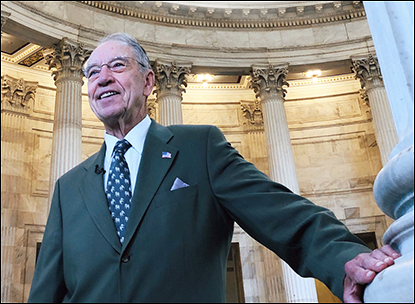
Iowa Republican Sen. Chuck Grassley, who will be 95 by Election Day 2028.
Age remains the clearest signal for possible retirement. Iowa Republican Sen. Chuck Grassley, who will be 95 by Election Day 2028, has said he has made a decision about running again but will consult with supporters and announce his plans sometime next year.
The only other Senators who will be 80 or older in 2028 are Democrats Richard Blumenthal of Connecticut and Peter Welch of Vermont. There is no public indication yet that either intends to retire.
Retirement speculation has also circulated around Republican Senators John Boozman (AR) and Jerry Moran (KS), as well as Democratic Sen. Patty Murray (WA). Of this group, Murray holds the most seniority, having first won election in 1992 at age 42.
Republican Sen. Ron Johnson (R-WI), who originally pledged to serve only two terms when he was initially elected in 2010, said he will make a decision in the coming months about whether to seek a fourth six-year term or retire.
Sen. Ron Wyden (D-OR), who will be 79 years old for the 2028 election has already said he fully intends to run for re-election.
The more consequential category may be Senators who could face serious primary challenges.
Leading this list is Pennsylvania Democratic Sen. John Fetterman. The Senator will have to make a decision about how he seeks re-election. If he chooses to stay in the Democratic Party, his path to renomination will be a difficult one considering his approval ratings among Pennsylvania Democrats are almost as poor as President Trump’s.
Pittsburgh area Rep. Chris Deluizio is frequently mentioned as a potential primary opponent. Running as an Independent could improve Fetterman’s general-election prospects given his relative strength with Republican and unaffiliated voters, but doing so would require a difficult strategic calculation.
Colorado Sen. Michael Bennet also appears vulnerable. He entered the 2026 open gubernatorial race as the heavy favorite but lost the Democratic primary to Attorney General Phil Weiser by a decisive 57-43 percent margin. That primary collapse has fueled speculation that he could face a competitive challenge for renomination in 2028.
In New York, continued discussion surrounds a possible primary challenge to Senate Leader Chuck Schumer from Rep. Alexandria Ocasio-Cortez. The Congresswoman’s first decision will be whether to pursue a presidential bid; the strong progressive performance in the 2026 midterms has improved the odds that a far left candidate could be highly competitive for the Democratic presidential nomination, which could reduce the likelihood of her launching a Senate primary challenge against Schumer.
In Alaska, Republican Sen. Lisa Murkowski could again face a strong Republican challenger under the state’s top-four primary and Ranked Choice Voting system. Outgoing Republican Gov. Mike Dunleavy has previously indicated he would consider opposing her in 2028.
Although Sen. Wyden has declared his intention to run again, he could still draw a primary challenge from one of several Oregon Democratic officeholders who have waited years for a Senate opportunity.
As is typical at the beginning of a cycle, many variables remain unresolved. Retirements, primary challenges, and recruitment decisions over the next 12-18 months will shape what is likely to be another competitive and unpredictable Senate map in 2028.