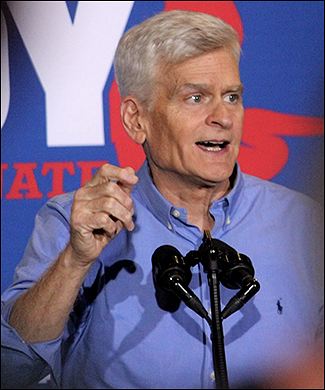
Will Iowa Sen. Joni Ernst Run in 2026?

By Jim Ellis — Friday, July 18, 2025

Senate

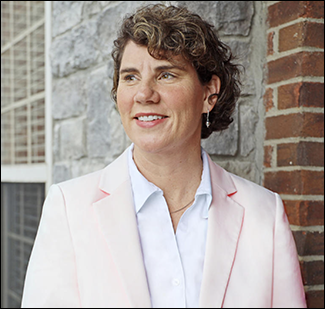
Iowa Sen. Joni Ernst (R)

There has been much public speculation as to whether two-term Iowa Sen. Joni Ernst (R) will seek re-election next year, and such talk has heightened because of circumspect actions emanating from the incumbent.

On a local radio show this week, however, Sen. Ernst appeared to tamp down the rumors, indicating that such talk is “titter tatter.” The Senator further said an announcement is “coming in the fall,” but stopped short of saying she would make a declaration of candidacy. For the record, she has hired a campaign manager for the ’26 election cycle.

Sen. Ernst was first elected in 2014 with a 52-44 percent win over then-Rep. Bruce Braley (D). Ernst, then a state Senator, began that race as an underdog but built a strong campaign, took advantage of a favorable Republican election cycle, and won going away.

Six years later, she was a Democratic target and faced Des Moines real estate business executive Theresa Greenfield, who had more in the way of campaign resources and led the Senator in polling throughout most of the race. In the end, Sen. Ernst again finished strong and pulled away to record a victory exceeding six percentage points.

Early this year when questions abounded whether she would support then-Defense Secretary designate Pete Hegseth, rumors were flying that President Trump’s Iowa leaders were attempting to convince Attorney General Brenna Bird to challenge Sen. Ernst in the Republican primary.

After Ernst announced for Hegseth, which seemed to be the key proclamation that tipped the confirmation process in his favor, such primary challenge talk died down. Sen. Ernst, as did most Republicans, then supported every other Trump Administration nominee.

As a result, and at least for now, it does not appear that Sen. Ernst is threatened with a serious primary challenge, though she does face several opponents considered as minor candidates.

Preparing for the 2026 general election, this year appears differently. While there is talk that her re-election could become competitive, she is nowhere near the top of the Democratic conversion opportunity list, nor do the Democrats have a candidate who should be considered top-tier at this time.

State Sen. Zach Wahls (D-Des Moines), state Rep. J.D. Scholten (D-Sioux City), and Chamber of Commerce executive Nathan Sage have announced for the Senate. Of the three, Sen. Wahls is viewed as the strongest (Scholten has previously lost two congressional campaigns) but the eventual party nominee will have to win a competitive June Democratic primary before being in position to develop a credible bid against Sen. Ernst.

A viable challenge may unfold, but the type of general election campaign that can seriously threaten a multi-term incumbent in a state where the most recent voting trends are in the incumbent party’s favor, such as in Iowa, appears improbable.

Some, though, are pointing to Sen. Ernst’s 2nd quarter fundraising. While she raised just over $720,000 according to a report in The Down Ballot political blog, that dollar figure is only about 65 percent of the amount she garnered in the 2020 race during the commensurate time frame. Her cash-on-hand, however, appears strong — over $3.4 million for a race in a state without an expensive media market.

The fundraising data can also be explained not as a clue toward incumbent retirement, but rather illustrating that in 2020 Sen. Ernst was running her first re-election campaign and was considered a top-tier Democratic target. Neither of those points are true today.

Should the Senator reverse what now appears to be a course toward re-election, the Republicans have an ace in the proverbial bullpen. Three-term Rep. Ashley Hinson (R-Marion/Cedar Rapids), a former local news anchor, has secured what had been a marginal political district featuring one of Iowa’s most Democratic metro areas. With more than $2.8 million in her own campaign account and not facing serious re-election pressure, Rep. Hinson is in position to quickly step in and fill the Senate void should Sen. Ernst ultimately retire.

In terms of the Hinson House seat, Republicans have a backup for this incumbent, too. Cedar Rapids Mayor Tiffany O’Donnell won her current position in the Democratic heart of Hinson’s 2nd Congressional District.

While speculation about Sen. Ernst’s future will continue until she makes a definitive re-election declaration, Republicans are in a very favorable position to hold the Iowa Senate seat regardless of the current incumbent’s eventual career decision.

Grijalva Wins in Arizona;
Cuomo Announces as an Independent

By Jim Ellis — Thursday, July 17, 2025

AZ-7

Adelita Grijalva / Photo by Kelly Presnell

Former Pima County Supervisor Adelita Grijalva and daughter of the late Congressman Raul Grijalva (D-Tucson), won Tuesday night’s special Democratic primary, easily defeating media influencer Deja Foxx and former state Rep. Daniel Hernandez. Grijalva’s victory is the first step toward replacing her late father in Congress. The 11-term Representative passed away in March.

Grijalva will now face painting contractor Daniel Butierrez, who won the Republican nomination as he did for the 2024 election. In last November’s result, Butierrez fell to Rep. Grijalva, 63-37 percent, and spent just over $76,000 on his campaign.

The 7th District of Arizona is strongly Democratic (Dave’s Redistricting App partisan lean: 65.5D – 32.3R), so Grijalva is now the prohibitive favorite to win the special general election on Sept. 23. At that point, she would be sworn into the House to complete the balance of the current term.

The Grand Canyon State’s vacant 7th District is anchored in Arizona’s second largest city, Tucson, and contains all of Santa Cruz County and parts of four other counties including Pima. The district’s voting age population is heavily Hispanic, 55.4 percent, as compared to 32.9 percent White.

The 7th is Arizona’s heaviest Hispanic district and stretches from just west of New Mexico all the way to the California border. In 2024, former Vice President Kamala Harris defeated President Trump here, 60.5 – 38.4 percent.

The Arizona vote was the first in a series of special elections. On July 20, Rep. Mark Green (R-TN) will resign from the House. Tennessee Gov. Bill Lee (R) will then have 10 days to set the special election calendar for the state’s 7th District (Dave’s Redistricting App partisan lean: 55.1R – 42.1D). At this preliminary point, we already see eight Republicans and four Democrats already declaring their candidacies.

On Sept. 9, Virginia’s 11th District (Dave’s Redistricting App partisan lean: 67.2D – 30.7R) voters will choose a replacement for the late Rep. Gerry Connolly (D-Fairfax). The party nominees are Fairfax County Supervisor James Walkinshaw for the Democrats and Republican former FBI agent Stewart Whitson.

The TX-18 seat (Dave’s Redistricting App partisan lean: 73.6D – 24.4R) will then hold its special jungle preliminary election to replace the late Rep. Sylvester Turner (D-Houston) concurrently with the Texas municipal calendar on Nov. 4. The crowded open contest will most likely produce two runoff participants. Such will occur if no candidate receives majority support, which is the most probable result. If so, Gov. Greg Abbott (R) will then schedule a special general election in order to fill the district’s vacant congressional seat.

New York City

Former New York Gov. Andrew Cuomo, who lost the New York City Democratic mayoral primary earlier this year, formally announced that he will return for the general election on the Independent ballot line. He joins the city’s incumbent Mayor, Eric Adams, as Independents. Controversial state Assemblyman Zohran Mamdani (D-New York City) won the open partisan primary election on June 24.

With a split field that also includes Republican nominee Curtis Sliwa, the most likely result is Mamdani winning a plurality victory in this most Democratic of municipalities. Though the Ranked Choice Voting process was used in the primary election, it is not a factor in the November general election.

Alabama’s Rep. Moore Schedules Announcement for Likely Senate Run

By Jim Ellis — Wednesday, July 16, 2025

Senate

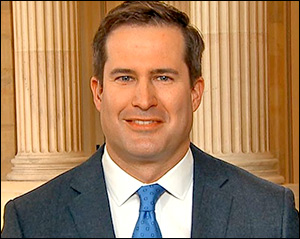
Alabama Rep. Barry Moore (R-Enterprise)

Alabama Rep. Barry Moore (R-Enterprise)

Alabama Rep. Barry Moore (R-Enterprise) has scheduled what he is terming “a Big Announcement,” for Aug. 15, and the supposition is he will declare his candidacy for the state’s open US Senate seat.

The major clue is the festival-type event he is holding in the city of Sylvania, which is in the northeastern sector and about as far from his southern Alabama congressional district one can get and still be within the state.

Assuming Rep. Moore runs for the Senate, his major Republican opponent, to date, will be Attorney General Steve Marshall, who is ineligible to seek a third term for his current position. Others are expected to join. The eventual Republican nominee will become the prohibitive favorite to win the general election.

The best potential Democratic contender would be the former Sen. Doug Jones, but he lost to now-Sen. Tommy Tuberville (R) by a 60-40 percent margin in 2020, and the chance for a Democrat to win a Senate seat against a credible Republican in 2026 appears slim at best.

Jones won the special Senate election in 2017 against a flawed Republican candidate, former state Supreme Court Justice Roy Moore, but was denied a full term in the succeeding regular election.

Jones, also a former US Attorney from the Northern District of Alabama, confirms he is considering returning to elective politics, but he may be leaning more toward running for the open Governor’s position and again facing Tuberville. He publicly states he is not fully committed to running for any office.

The Senate seat is open because incumbent Tuberville, the former Auburn University football coach who still prefers his “Coach” title, has already announced his gubernatorial bid. Incumbent Gov. Kay Ivey (R) is term-limited.

If Rep. Moore were to leave the House to run for the Senate, that would open up his southern 1st District that stretches from Mobile in the far southwestern corner of Alabama along the southern Alabama-Florida border all the way to Georgia. The 1st is solidly Republican carrying a Dave’s Redistricting App partisan lean of 76.5R – 22.0D.

If this scenario were to unfold, it is likely that we will see a political comeback attempt in an open 1st District. When the courts ruled the 2021 Alabama map a racial gerrymander, a new map was installed for the 2024 election and beyond. The result, in addition to creating a new majority minority district in the Montgomery-Mobile area, paired Republican incumbents Moore and then-Rep. Jerry Carl (R-Mobile) into a new 1st District.

In a tough early March 2024 Republican primary campaign, Rep. Moore proved victorious in a 52-48 percent result, a margin of 3,644 votes of 104,268 cast ballots.

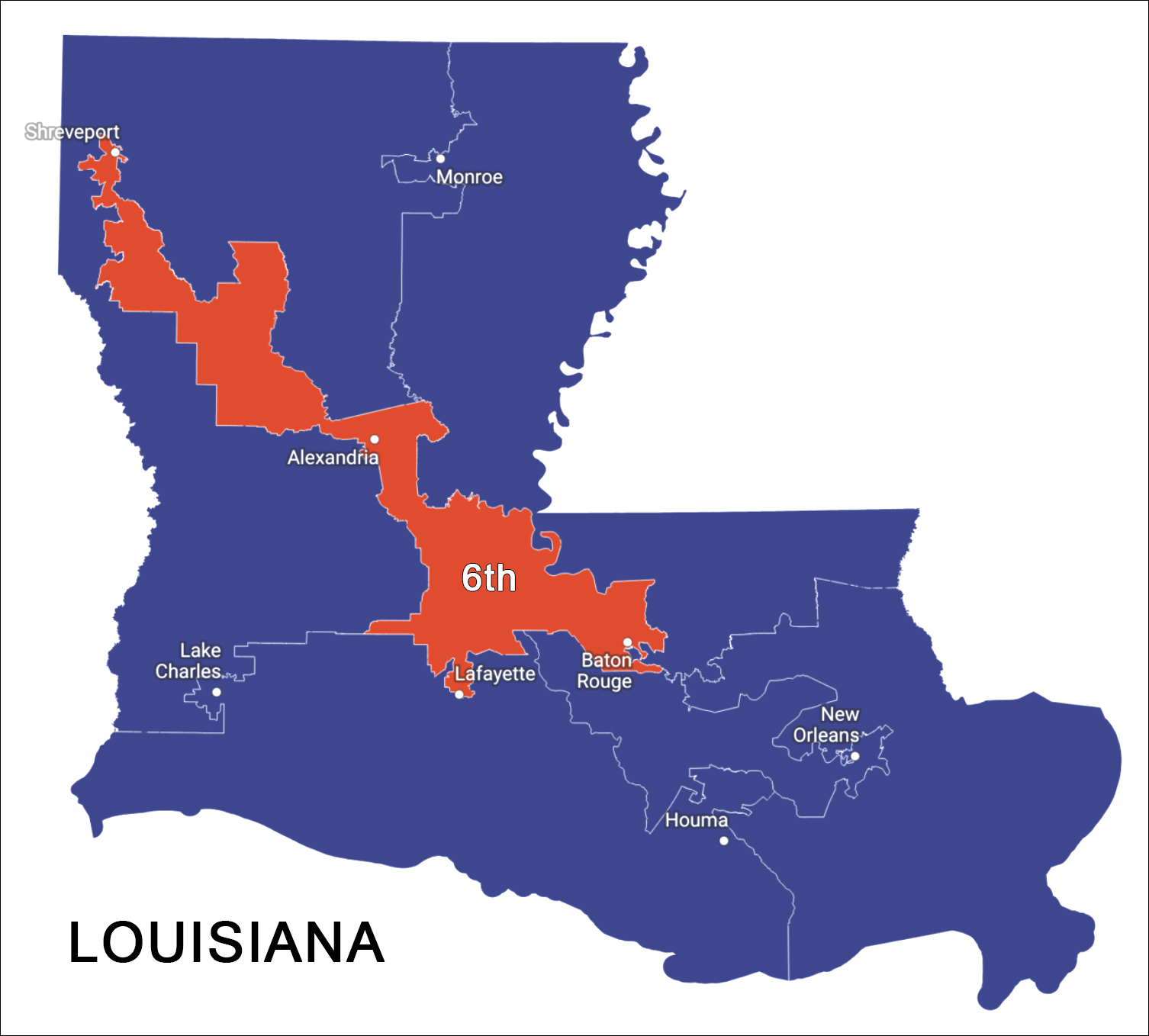
Since the election, former Rep. Carl has supported efforts to overturn the court-mandated map, but the US Supreme Court ordering new oral arguments on the Louisiana map, which has a similar issue to that in Alabama and would delay any redraw, suggests that odds are now strong that no new map will be installed in either place for the 2026 elections.

Carl had previously indicated he would run in the Mobile-anchored seat under a new map, so it is likely that he will return if the current 1st District becomes open. If so, we can expect a crowded 1st District Republican primary with the eventual nominee becoming a prohibitive favorite for the general election.

In terms of Rep. Moore’s Senate chances, should such a campaign materialize, at present he must be considered as a serious contender for the Republican nomination and therefore is a viable possibility as Sen. Tuberville’s successor.

Redistricting Action Continues:
Texas & Wisconsin

By Jim Ellis — Tuesday, July 15, 2025

Redistricting

A look at how things might play out in two key states — Texas & Wisconsin — in the redistricting tug of wars

Texas Gov. Greg Abbott (R), as expected, has added the congressional redistricting issue to the upcoming special session. The legislature is scheduled to reconvene on July 21. The session can last up to 30 days to handle the issues that the Governor places on the legislative call. Under Texas law, the Governor has the power to call an unlimited number of 30-day special sessions after the legislature adjourns for the biennial.

In Wisconsin, though the state Supreme Court justices recently said they would not hear the congressional redistricting case before them, a new lawsuit has been filed.

A group called the Wisconsin Business Leaders for Democracy filed the lawsuit claiming the current map is an “anti-competitive gerrymander,” distinguishing their claim from the partisan gerrymander lawsuit the Supreme Court refused to hear according to an Associated Press news story. An anti-competitive gerrymander refers to all incumbents rather than those of one particular party.

The Wisconsin suit was filed in before a Dane County circuit court where the plaintiffs will likely get a favorable ruling. The process, however, will be lengthy as appeals to any lower court ruling will occur before again reaching the state Supreme Court. Therefore, it may be a longshot to see the Wisconsin map redrawn before the 2026 midterm elections.

The Texas situation is much different, and Republican leaders may be able to produce a new map that increases the current plan’s 25R-13D split.

South Texas appears to attract the most attention in the special session. Using the Dave’s Redistricting App statisticians’ partisan lean calculations (methodology employed to develop the partisan lean figures can be found on the following “About Data” link from the DRA website: About Data – Dave’s Redistricting App), we generally see the Republicans overperforming in the region.

Under the current Texas plan, the DRA partisan lean calculation correctly projected which party would hold the particular congressional district in 37 of the 38 CDs. The only officeholder to win a congressional seat where the opposing party held the partisan lean advantage occurred in South Texas District 15 where two-term GOP Rep. Monica de la Cruz (R-McAllen) held her seat with a 57-43 percent majority. The DRA 15th District partisan calculation gives the Democrats a 4.1 percentage point advantage.

President Trump carried 27 of the state’s 38 CDs, including three seats where the partisan lean calculation favored the Democrats. In addition to District 15, Trump also topped Kamala Harris in District 28 (Rep. Henry Cuellar; D-Laredo) and 34 (Rep. Vicente Gonzalez; D-McAllen). All of these CDs are located in South Texas.

Thus, the Trump performance largely destroys part of the Democrats’ racial gerrymander argument because he carried these three districts that have overwhelming minority populations.

In District 34, the Voting age minority population figure is 90.5 percent and 88.5 percent Hispanic. Trump won the district with a 51.8 – 47.4 percent majority. In District 15, the minority Voting Age Population (VAP) figure is 82.4 percent with the Hispanic VAP at 78.9 percent. President Trump carried this district with a strong 58.5 – 40.7 percent majority. District 28 has a minority VAP of 80.7 percent with a Hispanic VAP of 72.9 percent. The Trump winning margin here is 53.2 – 45.9 percent.

There are 19 Texas districts where White voters are the majority of the Voting Age Population. Trump won 18 of the 19. The one exception that supported Kamala Harris was Rep. Lloyd Doggett’s (D-Austin) 37th CD that stretches from Austin to San Antonio down the I-35 corridor.

Eighteen of the Texas congressional districts feature majority minority populations. Of those, Trump won nine of the 18 seats and exceeded the Republican benchmark in all 18. Trump also exceeded the DRA partisan lean GOP benchmark in the nine majority minority seats that Harris claimed. These statistics, to a significant degree, at least partially spoil the Democrats’ Voting Rights Act racial gerrymandering arguments.

Regarding the partisan lean figures from all of the Lone Star State’s 38 congressional districts, Trump exceeded the Republican benchmark in 32 of the seats. In the 14 districts where Democrats hold the partisan lean advantage, Trump exceeded the Republican benchmark in all.

In six districts, the Trump performance failed to reach the Republican benchmark, even though he carried each of the seats. Those where the President finished below the GOP partisan mean were TX-2 (Rep. Dan Crenshaw-R), TX-3 (Rep. Keith Self-R), TX-22 (Rep. Troy Nehls-R), TX-24 (Rep. Beth Van Duyne-R), TX-26 (Rep. Brandon Gill-R), and TX-38 (Rep. Wesley Hunt-R).

In Wisconsin’s eight congressional districts, we see similar patterns relating to President Trump’s performance in reference to the DRA partisan lean figures.

There, President Trump carried six of the state’s eight districts on his way to a 49.6 – 48.7 percent statewide victory. His vote total exceeded the DRA partisan lean in six of the eight districts. The only seats where he underperformed in relation to the Republican benchmark were in District 5 (Rep. Scott Fitzgerald-R), which ironically is the most Republican district in the state, and District 4 (Rep. Gwen Moore-D), Wisconsin’s most Democratic seat.

Though redistricting is designed to be done once per decade, changes in laws and procedures along with unending legal challenges to the district plans have made map drawing a perennial issue.

Michigan: Tudor Dixon Out

By Jim Ellis — Monday, July 14, 2025

Governor

2022 Michigan Gubernatorial Nominee Tudor Dixon (R)

The Michigan Republicans got a break. Last week’s reported announcement from 2022 gubernatorial nominee Tudor Dixon that she would not run for either Governor or Senator saves the Republican leadership dealing with what could have been an expensive and potentially divisive nomination fight for one of the open statewide offices.

In 2022, Dixon won the Republican gubernatorial nomination defeating four lesser known GOP candidates after retired Detroit police chief James Craig was disqualified from participating due to insufficient petition signatures. She then lost 54-44 percent to Gov. Gretchen Whitmer (D) in the general election.

This year, Dixon was considered a possible contender again for Governor or possibly the US Senate, which are simultaneously both open races for the first time in modern Michigan electoral history.

The Republican leadership is sold on returning with former Rep. Mike Rogers in the Senate race, especially since he came within 19,006 votes (which was three-tenths of one percent) of upsetting current Sen. Elissa Slotkin (D) last November. Rep. Bill Huizenga (R-Holland) is still a possible Senate Republican primary contender, however.

If she were to return to the campaign trail it was more likely that Dixon would have entered the Governor’s race. In that open campaign, the party leadership wants to support Rep. John James (R-Farmington Hills), who has twice run close Senate campaigns and then held a politically marginal congressional district for two terms.

Early polling showed Rep. James and Dixon locked in a tight contest, thereby likely producing a weakened winner regardless of who would have prevailed in a drawn-out GOP statewide primary battle that won’t be decided until Aug. 4, 2026.

Without Dixon in the Governor’s race, Rep. James still faces former Attorney General Mike Cox, who was last on the ballot in 2010 when he placed third in the Republican gubernatorial primary behind eventual winner Rick Snyder and then-Congressman Pete Hoekstra. Snyder would then serve two full terms as Michigan’s chief executive.

Also in the 2026 Republican primary race are former state House Speaker Tom Leonard and state Senate Minority Leader Aric Nesbitt (R-Paw Paw), along with minor candidates. Within this candidate configuration, Rep. James is the clear favorite.

The Democrats also have a contested primary, featuring two of their statewide elected office holders, Lt. Gov. Garlin Gilchrist and Secretary of State Jocelyn Benson. Early polling gives Benson a substantial lead over Gilchrist, but this race has much time to develop, and the Lieutenant Governor has a strong Detroit political base.

The general election is interesting largely because of a strong Independent candidate’s presence and polling already detects a developing close race. Instead of running for Governor as a Democrat, three-term Detroit Mayor Mike Duggan is advancing directly into the general election as an Independent candidate. With his political strength coming from the state’s largest population center, Duggan makes the general election a tight three-way contest where all major contenders have a legitimate victory path.

One would expect Mayor Duggan to draw Democratic votes away from the eventual party nominee, but early polling shows him attracting equivalent numbers from both parties. This race is expected to drastically change once the primaries are complete. Though Mayor Duggan will not have a major party ballot line in the general election, he has the advantage of having to run only one campaign. Therefore, he can bank his financial resources until political prime time.

Without Dixon and her substantial right flank political base coming into the Senate race, and if Rep. Huizenga can be convinced to run for re-election instead of statewide, and the Democrats fall into a divisive nomination battle, former Rep. Rogers would see a dream scenario unfold for his November 2026 campaign.

The Democrats, largely in the persons of Rep. Haley Stevens (D-Birmingham) and state Sen. Mallory McMorrow (D-Royal Oak) along with state Rep. Joe Tate (D-Detroit) and former Wayne County Health Director Abdul El-Sayed, are potentially headed for such a contentious primary battle.

With Rogers’ now having national support and a proven track record in running a strong statewide campaign, his biggest problem that surfaced early in 2024 is likely solved. The former Congressman showed weak fundraising prowess at the beginning of the last election cycle, but such is not an issue for him in 2026, particularly if he gets a clean primary.

Polling will assuredly show this race as being close until the end, but Michigan Republicans, as they do in many other states, tend to outperform their polling support. Therefore, the Wolverine State, featuring tightly contested open Senate and Governor races, will be one of the premier political states for the 2026 election cycle.

Kentucky Senate: Off to a Nasty Start

By Jim Ellis — Friday, July 11, 2025

Senate

Republican businessman Nate Morris has fired the first salvo in the race to replace former Senate Majority Leader Mitch McConnell in his native state of Kentucky, and the main target appears to be the retiring incumbent himself.

Though Sen. McConnell will be exiting Congress after what will be 42 years of legislative service, he is still a focal point in Kentucky politics. No stranger to being attacked, Sen. McConnell in this race appears to be the subject of “friendly” fire, considering that the assault vehicle is a Republican primary ad.

Norris owns a business that, by his own description, is a “trash company,” and one of the largest in the country. He is running for office for the first time and putting seven figures behind a new introductory ad that literally “trashes” Sen. McConnell and his Republican primary opponents, Rep. Andy Barr (R-Lexington) and former Attorney General and 2023 gubernatorial nominee Daniel Cameron.

Since Morris has the financial wherewithal to communicate his message, it appears the Kentucky Republican Senate primary will have a nasty tone. The ad attempts to depict the refuse removal businessman as the only pro-Trump candidate in the field, and that both Rep. Barr and Cameron, should they be elected, will “trash” President Trump, just as McConnell has done, according to the Morris ad verbiage.

If Morris plans to continue this line of attack, and it’s obvious that he will, it will be a tough sell. To claim that Rep. Barr and former AG Cameron are not Trump supporters is quite a leap. Barr was the first Kentucky US House member to endorse Trump for the 2024 campaign and then became chairman of the Trump Kentucky campaign effort. Cameron was an early Trump-endorsed candidate when he ran for Governor in 2023.

The Kentucky Senate seat is one of seven that will run in an open context next year. Six of the departing members, Sens. Dick Durbin (D-IL), Gary Peters (D-MI), Tina Smith (D-MN), Jeanne Shaheen (D-NH), and Thom Tillis (R-NC) are, like Sen. McConnell, retiring from politics. Another, Alabama Sen. Tommy Tuberville (R), is leaving the Senate to run for Governor.

At the outset, the Kentucky race appears to be in the safe Republican column. That designation would change sharply if Democratic Gov. Andy Beshear were to enter the race. At this point, however, it appears Gov. Beshear has his sights set on a national run for President and is not considered a potential Senate candidate.

Democratic leaders are desperate to change Gov. Beshear’s mind because, if he were to reverse course, the Kentucky race would then become a toss-up for the general election. Keep in mind that the person Gov. Beshear defeated for re-election in 2023 (52.5 – 47.5 percent) was Cameron.

Therefore, should the former Attorney General and gubernatorial nominee again win the statewide party nomination, Beshear would have a very strong chance of winning the race and flipping the seat to the Democrats.

Should Rep. Barr face Gov. Beshear, the contest would become hard fought and very expensive with an ending difficult to predict.

The Kentucky primary is scheduled for May 19, and this Senate race promises to dominate the political coverage in the weeks before the vote especially if this early advertising theme is a preview of things to come.

Nebraska Senate:
Independent Osborn to Return

By Jim Ellis — Thursday, July 10, 2025

Senate

Nebraska US Senate candidate Dan Osborn (I)

Nebraska US Senate candidate Dan Osborn (I)

We’re about to see a partial rerun in the upcoming Nebraska Senate race.

For a time during the 2024 election cycle, Nebraska Independent US Senate candidate Dan Osborn looked like he might pull a stunning upset. Towards the end, the momentum fundamentally shifted, and he lost to Sen. Deb Fischer (R) by a 53.2 – 46.5 percent margin. Osborn announced on Tuesday that he would return for a second try, this time against Republican Senator and former two-term Gov. Pete Ricketts.

Throughout the previous campaign cycle’s latter stage, Osborn was posting strong poll numbers and attracting viable financial support in his race against Sen. Fischer. He was also the beneficiary of significant national political attention.

Though an Independent, he was the de facto Democratic nominee since the party did not file a candidate in the Fischer race, which obviously helped transform Osborn into a major contender. Osborn claimed, however, that he did not accept the Democratic endorsement.

Additionally, even his last name helped him for a time. In the early part of the 2024 cycle, there was confusion among some thinking that Osborn was, or is related to, Hall of Fame college football coach, former Congressman, and Nebraska legend Tom Osborne. An ad from Coach Osborne for the Fischer campaign clarified the matter.

Characterizing his new campaign against Sen. Ricketts as “The Billionaire Class vs. The Working Class,” Osborn formally announced that he would return to again campaign for the Senate in 2026.

In his ’24 race, the Osborn campaign reported total financial receipts of $15.13 million, largely from Democratic sources outside of the state. The Ricketts campaign was quick to jump on Osborn through spokesman Will Coup saying, “Dan Osborn is bought and paid for by his liberal, out-of-state, coastal donors. Dan Osborn will side with Chuck Schumer over Nebraska families and vote with Democrats to open the border, hike taxes, and stop the America First agenda.”

Osborn retorted saying, “I didn’t ask for that money. This time around, I’m not going to ask for it again. The Democrats are going to do what the Democrats do, and Republicans are going to do what the Republicans are going to do. And I just want to show the people that an Independent can win in a state like Nebraska or any state, for that matter.” Yet Osborn did not refuse to accept any of the Democratic money that came into the campaign and likely won’t this time, either.

Earlier this year, Osborn was assessing his chances in the state’s politically marginal 2nd Congressional District, a seat he carried against Sen. Fischer with a margin greater than 42,000 votes.

The Nebraska Democratic Party leadership, however, said the organization would not endorse Osborn in a 2nd District race because a Democratic nominee has a good chance of winning the congressional campaign. They would be open, however, to supporting him in a race against Ricketts or GOP Gov. Jim Pillen.

Considering how well Osborn performed in the 2nd District during the 2024 campaign, his decision to bypass the open House seat and run again for the Senate is curious. Even though he wouldn’t have Democratic Party support, it is reasonable to believe his chances of winning a competitive three-way race in the Omaha anchored US House seat are better than waging a long-shot challenge against Sen. Ricketts.

While Osborn will likely attract a significant amount of national political publicity based upon his previous campaign, and money will certainly come from national liberal individuals and sources, a race against Sen. Ricketts will be considerably difficult irrespective of how the national political climate might develop.

In his three statewide races since first being elected Governor in 2014, Ricketts has averaged 59.6% of the vote. This figure includes his 62.6 – 37.4 percent lone US Senate victory in 2024. Ricketts entered the Senate as the appointed replacement for incumbent Ben Sasse (R) when Sasse resigned to head the University of Florida. As such, Sen. Ricketts had to run in 2024 to fill the balance of the unexpired term and now must enter into another campaign to secure a full six-year stint.

The 2026 Nebraska Senate race again promises to launch some political fireworks, but it is highly likely that the end result will once again place Pete Ricketts in the winner’s circle on election night.