Category Archives: House

Senate Turnover

By Jim Ellis — Monday, Sept. 22, 2025

Senate

Without any incumbent losing in the 2026 election, it is possible we will see as many as a dozen new Senators come to Washington when the 120th Congress convenes. Obviously, the number will grow even higher should any incumbent fall to a challenger, and further retirements as state candidate filing deadlines begin to approach are of course possible.

At this point, eight Senators have announced they will not seek re-election, but the cycle’s wild card is potentially seeing five Senators running for Governor in their respective states. This unusually high number includes four Senators who are not in-cycle, meaning they would not have to risk their current position to enter the state race.

Currently, Sens. Tommy Tuberville (R-AL), Michael Bennet (D-CO), and Marsha Blackburn (R-TN) are announced gubernatorial candidates. Two more, Sens. Alex Padilla (D-CA) and Lisa Murkowski (R-AK), have made public statements admitting they are considering entering open Governor’s races in their states. From this entire group, only Sen. Tuberville is eschewing re-election to run for Governor.

Sen. Padilla said he will wait to determine if he will launch a gubernatorial bid until the special redistricting vote scheduled for Nov. 4. Just this week, Sen. Murkowski again said she “isn’t ruling out” running for Governor of Alaska and made the point of having the “luxury” of waiting until deeper in the election cycle to make a final decision.

All of the Senators running or potentially running for Governor have or would have a strong chance of winning. This means that all but one would have the opportunity of appointing their own successor to the Senate upon election. Already speculation is running high in places like Colorado and Tennessee as to who will be the chosen replacement. Alabama voters will choose their next Senator in the 2026 regular election.

Of the 35 Senate races in the ’26 election cycle, including the two special elections in Florida and Ohio, Republicans must defend 22 of the in-cycle seats as compared to just 13 for the Democrats. Today, it appears that only three are in the toss-up category, Georgia, Michigan, and North Carolina, with the remaining 32 being safe for the incumbent party or at least leaning in its direction.

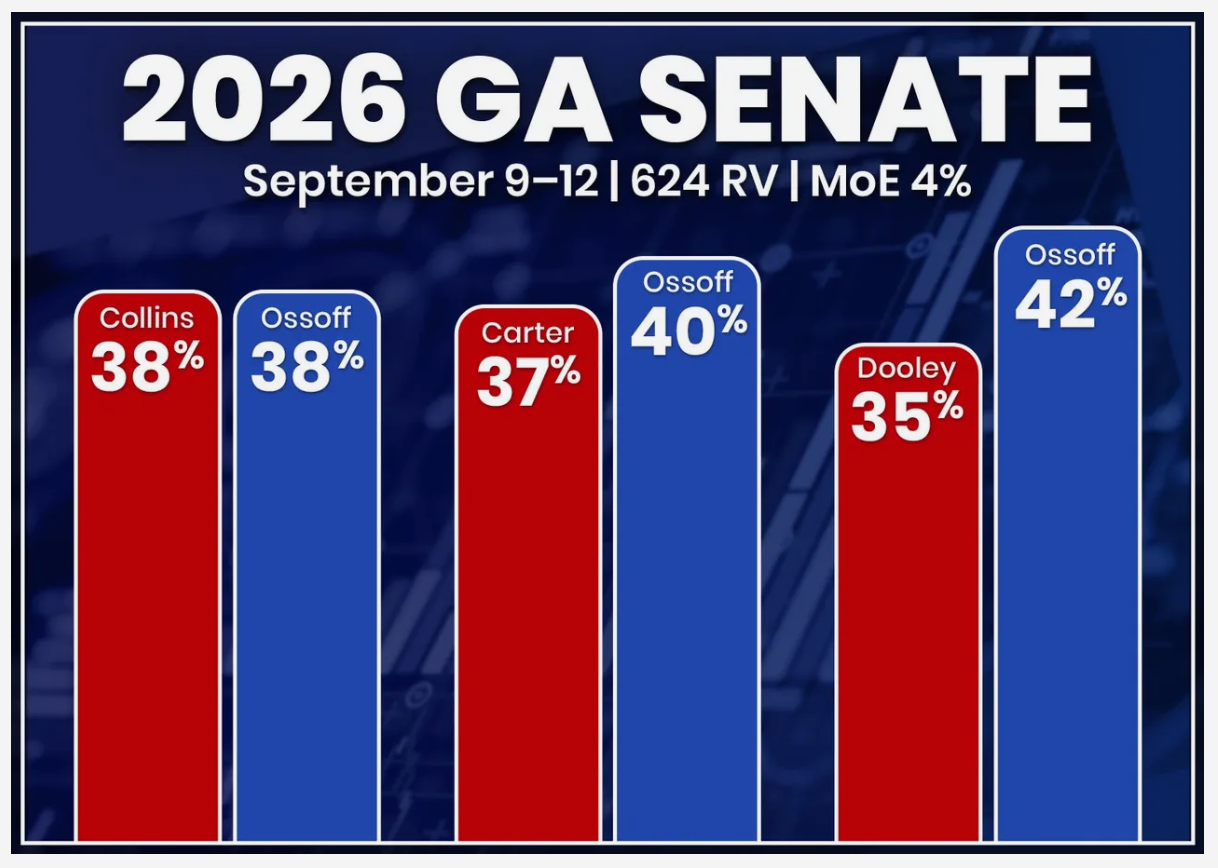
A Georgia poll released just this week (Quantus Insights; Sept. 9-12; 624 likely Georgia general election voters; online and text) projects Sen. Jon Ossoff (D) and Rep. Mike Collins (R-Jackson) locked in a 38-38 percent tie.

In the open Michigan race, Republican Mike Rogers, who lost the 2024 Senate contest by just 19,006 votes (three-tenths of a percentage point), has an unencumbered path to the Republican nomination, while the Democrats are embroiled in a three-way primary battle that won’t be decided until Aug. 4.

Recent North Carolina polling data (Change Research; Sept. 2-8; 855 likely North Carolina voters; online) finds former Gov. Roy Cooper (D) leading ex-Republican National Committee chairman Michael Whatley 48-41 percent in a race to replace retiring Sen. Thom Tillis (R) that is expected to be close through the entire campaign.

In the races involving Senators running for Governor, Sen. Tuberville to date faces no major Alabama Republican primary opposition in his open race. Incumbent Gov. Kay Ivey (R) is ineligible to seek a third term. A Democratic nominee will have a difficult time overcoming Sen. Tuberville in the general election. The party hopes to recruit former Sen. Doug Jones into the race, but he lost to Tuberville 60-40 percent in the 2020 Senate campaign. Therefore, Sen. Tuberville appears as a lock to win the Governorship next year.

Colorado Sen. Bennet would have little trouble in his state’s open Governor’s election as incumbent Jared Polis (D) is also term-limited in 2026. In the Democratic primary, Attorney General Phil Weiser remains in the race, and he is Sen. Bennet’s strongest potential opponent. The only published poll of this campaign came from the Global Strategy Group in June (June 9-11; 600 likely Colorado Democratic primary voters; live interview) and posted Sen. Bennet to a strong 53-22 percent advantage over Weiser.

Tennessee Sen. Blackburn faces GOP primary opposition in the person of Rep. John Rose (R-Cookeville). The latest poll comes from Quantus Insights (Aug. 5-7; 600 registered Tennessee voters; online & text) and posts Sen. Blackburn to a large 35-6 percent lead for the party nomination.

California Sen. Padilla would be a very formidable candidate, and likely the favorite, in the open Governor’s race to replace incumbent Gavin Newsom (D). A large jungle primary field awaits with no candidate so far even reaching 20 percent in any poll. The ostensible leader by a small percentage is former Rep. Katie Porter (D), but a Padilla entry would almost certainly allow him to advance into the general election. There, he would be a big favorite even in a two-way Democratic November campaign.

Sen. Murkowski, on the other hand, should she run for Governor, could face major general election opposition. Waiting in the wings is Democratic former at-large Rep. Mary Peltola. Even though she lost a close 2024 general election, Peltola remains a popular figure and would clearly be the Democrats’ best option to convert the Governor’s position away from the Republicans. As in other discussed situations, incumbent Mike Dunleavy (R) is ineligible to seek re-election.

The addition of multiple Senators running as candidates for Governor across the nation changes the 2026 Senate election cycle. Therefore, it is probable we will see several more freshman Senators in 2027 than the regular election will produce.
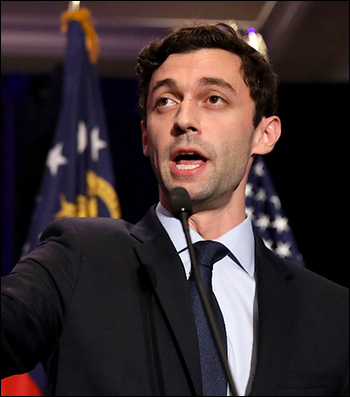
Georgia’s Sen. Ossoff in Dead Heat

See 2026 Georgia Senate poll results: Quantas Insights.

By Jim Ellis — Friday, Sept. 19, 2025

Senate

As we know, the swing state of Georgia will be one of the key battleground 2026 US Senate domains, and a new statewide poll released earlier this week confirms the race will present challenges for both sides.

Georgia Democratic Sen. Jon Ossoff

The Quantus Insights Peach State poll finds first-term Sen. Jon Ossoff (D) falling into a dead heat with one Republican US House member and leads another within the polling margin of error. Yet, as we have seen in some other places, the polling sample shows issue inconsistencies within the electorate.

According to the Quantus study (Sept. 9-12; 624 likely Georgia general election voters; online and text), Sen. Ossoff and Rep. Mike Collins (R-Jackson) are tied at 38 percent preference and Rep. Buddy Carter (R-Pooler/Savannah) trails the Senator, 37-40 percent. Former University of Tennessee football coach Derek Dooley, son of long-time University of Georgia football coach Vince Dooley, is definitively behind Sen. Ossoff trailing 42-35 percent.

While other polls have shown similarly close ballot tests, the Quantus survey is interesting in that it delves more deeply into issues and reveals that both eventual nominees will have challenges in attempting to forge a winning coalition.

For example, while President Trump scores a 49 percent job approval score, Sen. Ossoff posts 47 percent, yet the two are virtually diametrically opposed on the issue agenda. Furthermore, while Sen. Ossoff posts a 47:37 percent job approval index, only 36 percent of the same sampling universe believes he deserves re-election, and 49 percent believes it is “time for a change.”

In an overwhelming number (53 percent), the poll respondents cite the cost of living and inflation as the most important issue. Crime and public safety is second (13 percent), with jobs and the economy closely behind (12 percent). The number one response, however, for why costs are rising is President Trump’s tariffs and trade policies (41 percent). The Biden Administration economic policies were the second-most mentioned cause (27 percent).

When asked which party do the Georgia respondents trust more to handle the economic issues, 40 percent said the Democrats and only 39 percent answered Republicans. On bringing down the cost of living, it is again the Democrats holding a slight edge, 36-35 percent.

On crime, however, Republicans are more trusted, 42-29 percent. Same for immigration with a 48-28 percent Republican favorable split. By a 53-40 percent majority, the respondents favor the mass deportation policy, while only 31 percent support Ossoff’s border security position. A total of 76 percent support the crime prevention Laken Riley Act, a Republican bill that Sen. Ossoff supported.

An inconsistency appears when respondents are asked to list what they believe should be the next Senator’s priorities. In order, the responses were reducing taxes for working families (39 percent), cutting wasteful federal spending (24 percent), and reducing regulations that raise prices (21 percent). This is in line with the Republican message, but the sentiment is not fully translating to the Republican candidates, particularly among Independent voters.

While Sen. Ossoff is unopposed for the Democratic nomination, on the Republican side the Quantus poll found Rep. Collins leading Rep. Carter and Dooley, 25-20-7 percent. With a large undecided pool, this campaign will go down to the wire toward the May 19 primary. If no one receives 50 percent, the top two finishers will advance to a June 16 runoff election.

As a reminder for the general election, Georgia is one of two states that also features a runoff election if no candidate receives majority support in the November vote. The post-election runoff was forced in the past two Georgia Senate elections. If this situation presents itself again in 2026, the deciding runoff will be held on Dec. 1.

As is the case in virtually every election, messaging will be key. Republicans must find a way to relate what are typically Georgia voter issue positions directly to the party’s Senate candidate, while Sen. Ossoff must find ways to improve his electoral standing even though his job approval is relatively good. It is important to note that in this poll’s ballot tests, the Senator did not break 40 percent preference against any Republican.

Along with the Senate races in Michigan, North Carolina, and Texas, the Georgia Senate battle will be a premier 2026 electoral contest.

Challenging Kentucky Rep. Massie

By Jim Ellis — Thursday, Sept. 18, 2025

House

Congressman Thomas Massie (R-KY) / Photo by Gage Skidmore, Flickr

Kentucky Congressman Thomas Massie (R-Garrison) has made a name for himself as the House member most likely to oppose his own party. While self-described as a conservative budget hawk, Rep. Massie has angered the party leadership and President Trump on several occasions, the most recent being his opposition to the “Big Beautiful Bill.”

While saying he is a “constitutional conservative,” Massie has also caused Republican leaders to bristle at his consistent opposition to Republican budget. Furthermore, he is now teaming up with Rep. Ro Khanna (D-CA) to file a disclosure petition to force a floor vote pertaining to releasing the Epstein files.

The Congressman’s antics have spurred President Trump to publicly call for a Republican to come forward to challenge Rep. Massie in the party primary.

A report surfacing in The Down Ballot political blog states that Kentucky GOP leaders are now attempting to convince former Attorney General and 2023 gubernatorial nominee Daniel Cameron to abandon his US Senate race and instead challenge Rep. Massie in the May 2026 Kentucky GOP primary.

Cameron shot down the story as “fake news,” but such is often the case with potential candidates before they eventually make a race to which they originally rejected. That’s not to say, however, that Cameron has a long-term plan to switch campaigns. The former AG points out that he is leading in US Senate polls, thus rhetorically questioning why he would leave that campaign.

While the latest published US Senate Republican primary survey did find Cameron leading Congressman Andy Barr (R-Lexington), 37-29 percent (Public Opinion Strategies, Sept. 2-4; 600 likely Kentucky Republican primary voters; live interview), his margin is down from the 44-18 percent lead he posted in an April McLaughlin & Associates poll (April 13-15; 500 likely Kentucky Republican primary voters; live interview).

Additionally, Cameron is way behind in campaign resources. According to the June 30 Federal Election Commission campaign financial disclosure report, Rep. Barr possessed $6.1 million in the Cash-on-Hand category while Cameron’s campaign account had only $532,000. Therefore, the campaign momentum is shifting in Rep. Barr’s favor.

Looking at the complete picture, it would not be surprising to see Cameron look for other options since Rep. Barr soon taking the lead in their primary campaign appears likely.

Despite President Trump asking for potential Republican candidates to come forward to challenge Rep. Massie, no major contender has yet entered the race. Freshman state Sen. Aaron Reed (R-Shelbyville) had been mentioned as a possibility, but no candidacy has yet materialized. Same for state Rep. Kim Moser (R-Independence).

Yet, even if Cameron were to enter the congressional race, Rep. Massie is not an easy mark, even if an eventual challenger has the Trump endorsement.

Thomas Massie was first elected to the House in 2012, after winning the Lewis County Judge-Executive position in 2010. Lewis County is a small (just over 13,000 population) rural domain on the Ohio border in Kentucky’s northeastern region. In his initial local election, Massie defeated an incumbent in the GOP primary. Moving to his first congressional race two years later, Massie became the first person to win the 4th District hailing from eastern Kentucky in 45 years.

The Congressman is also a popular figure back home, even while being unpopular in Washington. In his seven congressional elections, Rep. Massie has averaged 70.7 percent of the vote including running unopposed in 2024. He has been challenged as an incumbent in three Republican primaries and averaged 77.4 percent of the vote in those elections.

In preparation for a potential primary challenge, Rep. Massie jumped out to a fast start. Since the beginning of the year, he has raised over $1 million and reports $1.7 million cash-on-hand. This figure is more than three times what Mr. Cameron has in his statewide account, for example.

Therefore, while Massie may be President Trump’s top GOP prospect for replacement, the early prognostication favors the intransigent incumbent to win yet again.

Rep. Michael McCaul to Retire

By Jim Ellis — Wednesday, Sept. 17, 2025

House

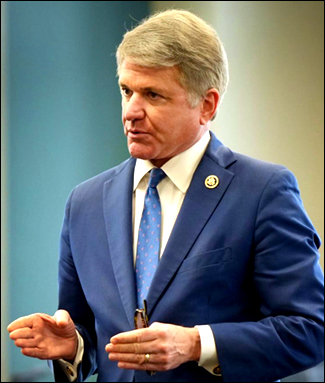
Congressman Michael McCaul (R-Austin)

The House retirement list continues to grow. Late last week we saw Texas US Rep. Morgan Luttrell (R-Magnolia) announce that he would not seek a third term, and now a veteran Lone Star State Congressman, Michael McCaul (R-Austin), will also retire once this Congress adjourns.

Over the weekend during a television interview, Rep. McCaul announced that he would not seek a 12th term in the House. He was originally elected in 2004 and rose to chair two full committees, the Committee on Homeland Security and House Foreign Affairs.

McCaul served his full term-limited allotment of six years heading the Homeland Security Committee. Though he chaired the Foreign Affairs panel for only two years, he was the Ranking Minority Member for the previous four. Under Republican House Conference rules, the combined position of Chairman and Ranking Member cannot exceed six years.

Congressman McCaul had been thought of as a potential Texas statewide candidate over the years but never launched such a campaign. He now plans to pursue interests outside of elective politics when his current congressional term ends at the beginning of 2027.

The combined retirement announcements of Reps. Luttrell and McCaul mean that at least seven of Texas’ 38 congressional seats will be open for the 2026 election. Rep. Lloyd Doggett (D-Austin) is retiring, assuming the new Texas map survives legal challenges, and Rep. Chip Roy (R-Austin) is running for state Attorney General. The Houston-anchored 18th District is vacant due to the death of Rep. Sylvester Turner (D). The new redistricting map created three new open seats, Districts 32 and 33 centered in Dallas County and District 35, anchored in San Antonio.

Overall, the McCaul retirement announcement moves the national open House seat count to 32, including 18 Republican held seats, 11 Democratic, and the three new Texas map districts. Though the open list is expanding, the general election competition within these districts remains light. Still, only two opens, MI-10 (Rep. John James-R) and NE-2 (Rep. Don Bacon-R), can be ranked in the toss-up category. Competitive primaries, however, will occur in all congressional openings.

The open-seat list will soon recede to 29 once special elections are held in Arizona (7th District; Sept. 23), Tennessee (7th District; Oct. 7 special primary; Dec. 2 special general election), and Texas (18th District; Nov. 4 jungle primary; runoff to be scheduled after it becomes clear that no one receives majority support in the initial vote).

The new TX-10 District begins in western Travis County, where McCaul resides, and then moves through a strip in northern Travis where it connects to the rest of the district. Moving east, the new 10th annexes 10 whole counties and part of Warren County all located east of Waco and north of the Houston metro area. Included within this group is Brazos County, which houses Texas A&M University.

We can expect a crowded 10th District Republican primary with the winner claiming the seat in November of 2026. The new 10th is rated safely Republican. President Trump carried the region over Kamala Harris with a 60-38 percent margin according to calculations from The Down Ballot political blog statisticians.

The Texas candidate filing deadline is Dec. 8 for the March 3, 2026, Lone Star State primary. Should no candidate secure a majority in the initial election, which is likely for all of the state’s seven open congressional seats, a runoff contest between the top two finishers is scheduled for May 26, 2026.

Rep. Morgan Luttrell to Retire

By Jim Ellis — Monday, Sept. 15, 2025

House

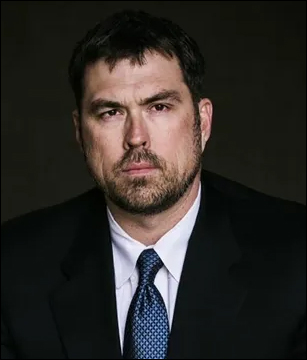
Two-term US Rep. Morgan Luttrell (R-Magnolia, Texas)

Just after a vacant seat is filled with newly elected Virginia Rep. James Walkinshaw (D-Fairfax) was sworn into office, another US House member has announced his retirement.

Two-term Texas Rep. Morgan Luttrell (R-Magnolia) announced his desire to return to the Lone Star State full-time and therefore will not seek a third term next year. In his retirement statement, Rep. Luttrell said, “I’m not walking away from service, and I’m certainly not walking away from the fight. I’m choosing a different path – one that allows me to stay rooted in Texas and focus on the people and places that matter most.”

The Luttrell surprise adds yet another open seat to the Texas 2026 election ballot, in a state that already has a great deal of political uncertainty. Both parties now are looking at a competitive US Senate primary, the new delegation redistricting map faces legal challenges, and several congressional incumbents, particularly on the Democratic side, are unsure of where, or even if, they will seek re-election.

In the Senate race, four-term incumbent John Cornyn faces a serious primary challenge from three-term Attorney General Ken Paxton in a race that is closing. Before, Sen. Cornyn was trailing badly. While it appeared that former Congressman and 2024 US Senate nominee Colin Allred would have an unencumbered path for the ’26 Democratic nomination, he must now face a serious primary challenge from Austin state Rep. James Talarico who is considered a major rising political star within the party.

On the congressional map, the delegation now sees six open seats from a total of 38 districts. Joining Rep. Luttrell in not seeking re-election is Rep. Chip Roy (R-Austin) who is running for state Attorney General. Their moves create open 8th and 21st District races next year.

Democratic Rep. Sylvester Turner passed away earlier in the year, and a special election will be held to replace him in November. Even this situation is not without confusion since the eventual special election winner will have to turn around and face veteran Rep. Al Green (D-Houston) in a Democratic primary election just weeks after winning his or her own seat in a new 18th CD where Mr. Green already represents two-thirds of the constituency.

Additionally, the new congressional map creates three new districts, in the Dallas area, Houston, and the San Antonio region. This leads to the potential pairing of several incumbents in each place.

In all, we are likely to see competition in either the primary or general election in at least 11 of the state’s congressional districts, the US Senate primary and general election, in addition to several open statewide races and Gov. Greg Abbott (R) seeking re-election to a fourth term.

In Rep. Luttrell’s 8th CD, we can expect to see a very crowded and competitive Republican primary. The 8th had typically been anchored in Montgomery County, a populous municipal entity located just north of Houston’s Harris County. Under the current map, less than half of Montgomery County is in the 8th with over half of the constituency in western Harris County.

Under the new map, the new 8th maintains about two-thirds of the current constituency but moves deeper into Harris County and adds some further rural regions. In both cases, the 8th will be a safely Republican seat and Rep. Luttrell’s successor will be determined in the succeeding Republican primary election.

Morgan Luttrell was first elected to Congress in 2022, which was his first run for public office. The Luttrell name became famous due to Rep. Luttrell’s brother, Marcus Luttrell and his military heroics. The book and movie, Lone Survivor, is Marcus Luttrell’s personal story as the sole survivor of Operation Redwing and the desperate battle in the mountains that led, at the time, to the largest loss of life in Navy SEAL history. Rep. Morgan Luttrell, Marcus’s twin brother, also served as a Navy SEAL for seven years until being medically retired in 2014 for a severe traumatic brain injury and spinal cord injury he sustained in a helicopter crash in 2009.

Comeback Members

By Jim Ellis — Thursday, Sept. 11, 2025

House

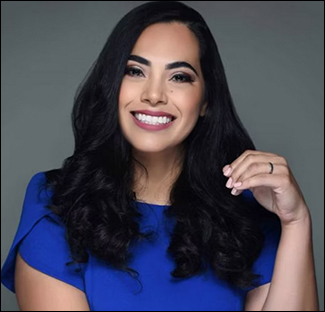
Ex-US Rep. Mayra Flores of Texas

Looking at the early congressional race announcements, we already see a number of former US House members either preparing or considering campaigns for the purpose of returning to their former position.

At this point, we could see as many as 10 ex-members embarking upon the campaign trail. Former Reps. Mayra Flores (R-TX), Jerry Carl (R-AL), Hilda Solis (D-CA), Rod Blum (R-IA), Melissa Bean (D-IL), Andy Levin (D-MI), David Trott (I-MI), Madison Cawthorn (R-NC), Chris Collins (R-NY), and Ben McAdams (D-UT) have all indicated they are either entering a 2026 congressional race or seriously considering doing so.

In south Texas, ex-Rep. Flores won a special election in 2022 but was defeated for the seat in the regular term. She subsequently lost a close comeback race in 2024. In the newly configured and more Republican 34th District, her chances against Rep. Vicente Gonzalez (D-McAllen) are greatly improved.

Jerry Carl served two terms from southern Alabama’s 1st District. He was denied renomination in 2024 when a court-ordered secondary redistricting map paired he and fellow Rep. Barry Moore (R-Enterprise). Moore won the primary but is now running for the Senate, thus providing Carl the opportunity of returning to Congress. In the early going, he appears to be a heavy favorite to win the Republican nomination and the seat in November of 2026.

Hilda Solis, an elected member of the Los Angeles County Board of Supervisors, said last week that she will seek the new 38th Congressional District if voters approve the Gov. Gavin Newsom-initiated congressional gerrymander to replace the California Citizens Commission map in retaliation for the Texas redistricting effort. Voters must approve a referendum in a Nov. 4 special election in order for the map to take effect.

Supervisor Solis, also a former US Labor Secretary under President Obama, served in the House from 2001-2009. The move to return to Congress would be a curious one because most people believe a seat on the five-member LA Board of Supervisors is more powerful than being a US Representative. In fact, Supervisor Janice Hahn gave up a seat in Congress to run for the Board in 2016.

Florida’s 19th District might be hosting the most interesting open race in the country. While it is not particularly unusual to see three former office holders running in a congressional primary, the fact that all three represented constituencies in different states makes this a unique battle.

Former Rep. Collins and ex-Illinois state Sen. Jim Oberweis are announced candidates. Collins served an Upstate New York district for three terms. He was convicted of insider trading and served three months in prison until President Trump commuted his sentence at the end of 2020. Oberweis ran three times for statewide offices in Illinois and three times for a congressional seat while twice being elected to the state Senate.

The newcomer in this scenario, Ex-Rep. Cawthorn, lost his western North Carolina seat because of ill-advised public statements and actions during his lone term in the House. He is not yet a candidate in the Florida seat but confirms consideration.

With candidate filing scheduled for April 24 for the associated Aug. 18 primary election, much time remains for potential candidates to make their moves. Several Florida local and state officials are considering entering, thus giving the voters choices among officeholders who even represent constituencies within their region.

Former Iowa US Rep. Blum was first elected to his eastern Iowa district in 2014, replacing Democrat Bruce Braley who ran unsuccessfully that year for US Senate. Blum was re-elected in 2016 but lost to then-state Rep. Abby Finkenauer in 2018. Two years later, then-state Rep. Ashley Hinson returned the seat to the GOP when unseating Rep. Finkenauer. Now that Rep. Hinson is a declared US Senate candidate, Blum is announcing that he will attempt to return to the House.

In Illinois, Rep. Raja Krishnamoorthi (D-Schaumburg) is risking his 8th Congressional District seat to run for the Senate. A large Democratic field is forming to replace the Congressman, and the succession battle will likely be decided next March in the Democratic primary. Ten Democrats have announced, but only one, Cook County Commissioner Kevin Morrison, has been elected to a significant post.

This opens the door for former Rep. Bean, who represented the 8th District for three terms before losing her seat to Republican Joe Walsh in 2016. Two years later, Krishnamoorthi unseated Rep. Walsh. Bean has yet to announce but confirms she is considering the race. With such a crowded field, and a plurality format in place, her victory chances clearly would be favorable.

Former Michigan Rep. Levin was paired in 2022 with Rep. Haley Stevens (D-Birmingham) because Michigan forfeited a congressional seat in reapportionment and he lost in a decisive margin. With Rep. Stevens now running for Senate, Levin is reportedly considering a comeback. The same for retired Rep. David Trott, in terms of consideration, though he would run as an Independent instead of a Republican.

Finally, if the new court-ordered redistricting map creates a Salt Lake City-anchored Democratic seat in Utah, former one-term Rep. McAdams, who lost his seat to current Rep. Burgess Owens (R-Salt Lake City) in 2020, says he would seriously consider making a return run.

Walkinshaw Wins in Virginia;
A Redistricting Check-Up

By Jim Ellis — Wednesday, Sept. 10, 2025

VA-11

Fairfax County Supervisor James Walkinshaw (D)

Last night, Fairfax County Supervisor James Walkinshaw (D) easily defeated Republican former FBI agent Stewart Whitson, 75-25 percent, in the safely Democratic seat to win the special congressional election. Walkinshaw will replace the late Rep. Gerry Connolly (D), who passed away in May. The Congressman-Elect will serve the balance of the current term and be favored to win again in the 2026 regular election.

Upon being sworn into the House, the partisan division will move to 219R-213D, with three vacancies. The next special election will be held on Sept. 23 in Arizona’s 7th CD where former Pima County Supervisor Adelita Grijalva (D) is favored to win the seat of her late father, Raul Grijalva (D-Tucson), who passed away in March.

Redistricting

It is getting to the point of not being able to keep track of the various congressional redistricting efforts ‘without a scorecard.’ Below, are the latest developments in states where redistricting is actively occurring or being discussed:

• Alabama: It is possible that the Alabama map could be redrawn depending upon the US Supreme Court’s ruling on the Louisiana case, since the two states have virtually identical pending litigation. If the high court upholds the lower court ruling for Louisiana, then it is possible Alabama could follow suit and redraw its map. A second Louisiana round of oral arguments is scheduled for Oct. 15. A redraw would likely add one seat to the Republican column.

• California: A referendum to replace the California Citizens Redistricting Commission map is on the statewide special election ballot for Nov. 4. If voters approve, a new congressional map will be in place for the 2026 election that is projected to give Democrats five more seats and take the state’s partisan division to 48D-4R.

• Colorado: An activist group will attempt to file a constitutional amendment initiative for the 2026 ballot to redraw Colorado’s congressional map. Under the state’s election laws, constitutional amendments must pass with a minimum 55 percent voter approval. The amendment would give the political leaders the power to replace the Colorado Independent Congressional Redistricting Commission map.

The proposed plan projects to a two seat gain for Democrats. If the activists are successful with the ballot approach, the earliest election a new map could take effect would be 2028.

Florida: It appears likely that the Florida legislature will consider a new congressional map when the new session begins in January. An interim legislative committee was constructed to draw the plan. Projections suggest Republicans would gain two seats in the delegation if a new map is enacted. Doing so would push the partisan division to 22R-6D.

Illinois: While Gov. J.B. Pritzker (D) was talking about a redraw of the Illinois map, doing so would not be practical. The Illinois map is already the most gerrymandered in the country with a partisan division of 14D-3R, and it is likely not conceivable for Democrats to do better. Chances are good that a redraw will not happen, especially with a fast approaching 2026 candidate filing deadline of Nov. 3.

Indiana: The White House continues to push for a Hoosier State redraw, but it is unclear whether the legislature will address the issue in their new session. The most extreme map would eliminate the state’s two Democratic seats and result in a 9R-0D plan. This situation has not yet solidified.

Kansas: Redistricting discussions are underway in Kansas, and there is talk that the legislature could move toward a special session. Since it is clear that Gov. Laura Kelly (D) will not call the legislature back, two-thirds of members from both houses must support the move for a special session.

Should a session be called and a 4R-0D map introduced, Republicans would realistically need two-thirds support for the legislation in both houses because Gov. Kelly is sure to veto what the legislature produces. Seeing a new Kansas plan being enacted is a long shot.

Louisiana: As discussed in the Alabama section above, the Louisiana racial gerrymandering case currently before the US Supreme Court has the potential of being a landmark case. We won’t see a ruling until later in the year, but this case could set the tone for the entire mid-decade redistricting cycle. In addition to Alabama, the decision could affect the new Texas map.

Maryland: Democratic legislators have introduced a bill that would allow the legislature to address changing their congressional map if other states successfully alter their boundaries. Any new map would target the state’s lone Republican House member, Rep. Andy Harris (R-Cambridge) and result in an 8D-0R delegation.

Missouri: The state House of Representatives just passed a map that changes Rep. Emanuel Cleaver’s (D) Kansas City-anchored 5th District into a Republican seat by stretching it into the rural areas. The state Senate is expected to follow suit, and Gov. Mike Kehoe (R) will reportedly sign the new map into law. Therefore, chances of Republicans gaining one seat in Missouri are high.

Ohio: Legislators are soon going to draw a new congressional map and must do so under state law. Because the 2021 congressional plan did not receive three-fifths vote in each legislative house, the map could only stand for two elections, those in 2022 and 2024. Therefore, the legislators must draw a new plan for 2026 and beyond.

Republicans hope to gain two seats in the re-map, those of Reps. Marcy Kaptur (D-Toledo) and Emilia Sykes (D-Akron). It remains to be seen exactly how the map will be configured, but creating a new congressional plan is a certainty.

Texas: The new Texas plan has been enacted, and the expected voting rights legal challenge has been filed in an El Paso federal court. Assuming the map stands, Republicans could gain as many as five seats but only if the Trump numbers among South Texas Hispanics translate to a Republican congressional candidate. Obviously, Texas will become one of the key states that determines the next US House majority.

Utah: A Utah court has struck down the current congressional map, saying the legislature did not have the authority to bypass voter approved redistricting guidelines. Therefore, the legislature is moving forward to draw a new plan. The decision could lead to a new Democratic urban seat in Salt Lake City. Thus, the current 4R-0D delegation could allow Democrats to gain one seat.

Wisconsin: Earlier in the year, the state Supreme Court rebuffed a move to redraw the congressional map. Activists have re-started the legal process, but reaching the state Supreme Court for reconsideration will be a lengthy process and likely won’t happen to affect the 2026 election.