Tag Archives: New York

Greene to Resign; Swalwell for Gov; Velazquez will Retire

Read Rep. Marjorie Taylor Greene’s full resignation letter on X.

By Jim Ellis — Tuesday, Nov. 25, 2025

US House

Three more US House seats became open late last week, from Georgia, California and New York.

GA-14

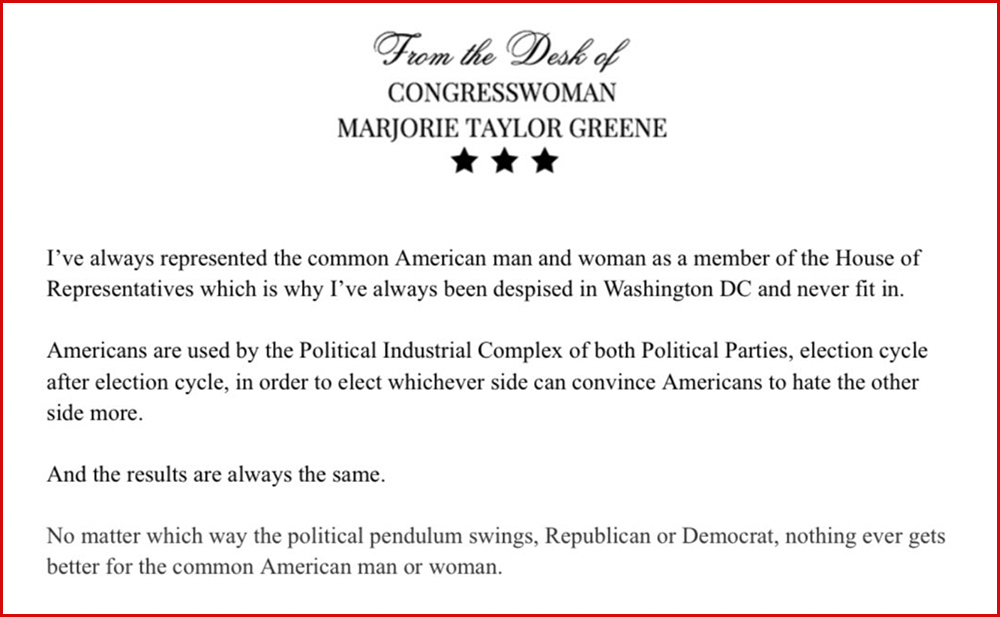
The recent feud between former staunch allies President Donald Trump and Georgia Rep. Marjorie Taylor Greene (R-Rome) has culminated with the latter resigning from office.

In her resignation announcement, Rep. Greene said, “I have too much self-respect and dignity, love my family way too much, and do not want my sweet district to have to endure a hurtful and hateful primary against me by the President we all fought for, only to fight and win my election while Republicans will likely lose the midterms.”

Rep. Greene indicates she will resign from the House effective Jan. 5. Once the abrupt resignation becomes official, Gov. Brian Kemp (R) will schedule a special election to fill the northwest Georgia vacancy.

The Dave’s Redistricting App partisan lean for GA-14 is 69.2R – 28.9D, which makes the 14th the safest Republican district in Georgia. The seat contains nine full counties and part of Cobb. The CD stretches from near the city of Marietta on the district’s southern border all the way to Tennessee, encompassing the area just south of Chattanooga.

CA-14

On the heels of billionaire Tom Steyer (D) entering the open jungle California gubernatorial primary, seven-term US Representative and former presidential candidate (2020) Eric Swalwell (D-Livermore) announced on the “Jimmy Kimmel Live” program that he will also run for Governor next year.

At this point, a total of 63 individuals, 24 Democrats, 20 Republicans, and 19 independents or minor party candidates, have announced their gubernatorial intentions. It remains to be seen how many actually petition to run by the state’s candidate filing deadline scheduled for March 11 (five days later than the official March 6 deadline because the incumbent Governor is not running). The official candidates will then go on to compete in the June 2 statewide jungle qualifying election.

Under California voting procedure, all candidates are placed on the same initial election ballot regardless of party preference. The top two finishers, irrespective of party preference or percentage attained will advance to the general election.

Therefore, in such a situation with several candidates who appear capable of qualifying for the general election, i.e., Democrats Steyer, former Rep. Katie Porter, ex-Los Angeles Mayor Antonio Villaraigosa, Health and Humans Services Secretary, ex-CA Attorney General, and former Congressman Xavier Becerra, and Republicans Steve Hilton, a former Fox News host, and Riverside County Sheriff Chad Bianco, it may be difficult to conceptualize Rep. Swalwell at least capturing second place in an expensive statewide campaign.

At the end of September, the Congressman reported only $520,000 in his campaign account, so he would certainly be considered well behind in the money chase for a California statewide campaign.

In any event, his 14th Congressional District now becomes an open seat, which is the fourth in California and the second from the San Francisco Bay Area.

The new CA-14 district, which covers the East Bay area south of Oakland and is fully contained within Alameda County, houses the cities of Fremont, Hayward, Livermore, and Pleasanton. The new partisan lean, according to the Dave’s Redistricting App statisticians, is 68.4D – 30.6R. Therefore, it is reasonable to believe that two Democrats could advance into the general election from the open June 2 jungle qualifying election.

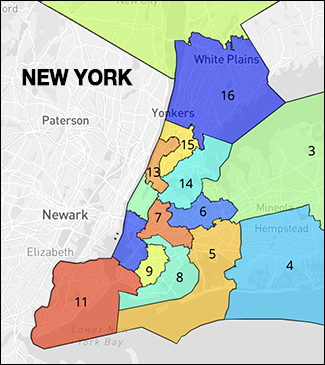
NY-7

Saying, “I love this work and I love my district, but I believe now is the right moment to step aside and allow a new generation of leaders to step forward,” Veteran Rep. Nydia Velazquez (D-NY) declared late last week that she will not seek re-election to an 18th term next year.

The Velazquez announcement means there will be over 40 open seats in the House for the 2026 election. Including Reps. Eric Swalwell (R-CA) and Velazquez, the total number of exiting Democratic members now rises to 15.

The exact open seat figure will be determined when the Texas redistricting saga finally ends, and a 2026 map is locked in place. The state of Texas immediately appealed to the US Supreme Court, asking for a stay of last week’s three-judge panel ruling that returned the state, at least temporarily, to the 2021 map.

Justice Samuel Alito, the administrator for the 5th Circuit Court of Appeals in which Texas lies, granted the state’s request. Therefore, last week’s three-judge panel decision is stayed, and unless the high court takes further action the 2025 map returns as the plan in place.

Velazquez is the ranking Democrat on the Small Business Committee, a panel that she chaired for four years during the period when her party last controlled the House majority. She will leave a Brooklyn-Queens congressional district that will remain safely under Democratic control.

New York’s 7th District finds 60 Perent of its population in Brooklyn and 40 percent in the Queens borough. According to the Dave’s Redistricting App statisticians, the NY-7 partisan lean is a whopping 85.7D – 11.5R, so the fight to succeed Rep. Velazquez will occur in the June 23 Democratic primary.

A Trio of US House Updates:
Stefanik, Calvert, Golden

By Jim Ellis — Monday, Nov. 10, 2025

House

Political moves are now coming fast and furious. We see an increase in retirements, members announcing for different offices, and a just-beginning round of California political musical chairs, because last Tuesday voters adopted the state’s new redistricting map.

Among the moves are the recently announced political plans from a trio of US House Representatives: Ken Calvert (R-CA), Jared Golden (D-ME), and Elise Stefanik (R-NY). Today, we take a look at each situation.

Stefanik: NY-21

Rep. Elise Stefanik / Photo by Gage Skidmore, Flickr

As has been expected for some time, six-term New York Rep. Elise Stefanik (R-Schuylerville) announced on Friday that she will challenge Gov. Kathy Hochul (D) in next year’s statewide race.

The announcement comes at an interesting time, however, just three days after Republicans suffered crushing defeats in California, New Jersey, New York City, and Virginia.

Though Gov. Hochul’s job approval numbers have been up and down over the course of her serving part of resigned Gov. Andrew Cuomo’s (D) final term and being elected once in her own right, Rep. Stefanik, and any other Empire State Republican, running statewide incurs a formidable challenge even under the best of circumstances. For example, the last GOP candidate to win a major New York statewide race was former Gov. George Pataki, who was elected to a third term in 2002.

Upon his re-election, President Trump nominated Rep. Stefanik as the United States Ambassador to the United Nations, but her nomination was withdrawn because the GOP House leadership did not want to risk another seat in a special election that might have threatened the party’s small majority. At that point, it became clear that a Stefanik for Governor move would soon be forming.

Democrats likely already have their 2026 open congressional race nominee. When it appeared that Stefanik would be headed to the UN, the local county Democratic Party chairs nominated dairy farmer Blake Gendebien, who has already raised $3.7 million for a congressional race and has just over $2 million in his campaign account.

The 21st District is reliably Republican, but the GOP lost the seat prior to Stefanik’s initial victory in 2014. Therefore, we can expect a competitive open general election next year.

Calvert: CA-41

One of the hardest-hit Republicans under the new California gerrymander, which is designed to neutralize expected GOP gains in Texas, is veteran Rep. Ken Calvert (R-Corona). The new California congressional map eviscerated Rep. Calvert’s desert 41st District, which had performed as a Lean Republican seat. The new plan places different parts of the current CA-41 in other surrounding Los Angeles/Riverside/San Bernardino area CDs.

Wanting to remain in Congress, Rep. Calvert announced that he will move to new District 40, where he will likely face a fellow Republican incumbent in a paired situation. It appears that Calvert and three-term Rep. Young Kim (R-La Habra) will compete for one of only four districts that now favor Republicans.

California members continue to survey their 2026 prospects, so we can expect to see other district moves in the coming days. Further incumbent pairings could soon be announced as the Golden State political musical chairs begins in earnest.

Golden: ME-2

Last week, Maine Rep. Jared Golden (D-Lewiston) announced that he will not seek a fifth term next year. The Pine Tree State’s northern 2nd Congressional District is the most Republican seat in the country that elects a Democrat to the House, and the Congressman indicated that ending his tenure after four terms is proper since Maine’s term limit for its state legislators is four two-year terms.

Had he remained, Golden would have faced a difficult political year. His general election opponent would certainly have been former Gov. Paul LePage (R) in a district that LePage carried all three times he ran statewide. Therefore, a Golden-LePage race would have been rated a toss-up.

Before getting to the general election, Golden was staring at a Democratic primary challenge from the ideological left in the person of State Auditor and ex-Secretary of State Matt Dunlap.

Because Maine elects its statewide constitutional officers through the state legislature and not the voters, Dunlap does not have the electoral experience that he would have in commensurate positions from most other states. Still, he would have been a formidable Democratic opponent to Rep. Golden and is now likely to be considered the front runner for the party nomination.

Speculation at the beginning of the year pegged Golden as a possible gubernatorial candidate, and while he would have been credible in the general election, his primary prospects would have been rated as difficult. Golden would have been a centrist campaigning before a very liberal primary vote base. Some speculation also suggested that he might challenge Sen. Susan Collins (R), but as a former staffer to the five-term incumbent, such an option was never seriously pursued.

Open Seats

With a spate of political announcements last week, including former House Speaker Nancy Pelosi retiring, we now see 38 open US House seats in addition to the special elections being conducted in Tennessee and Texas.

Of the 38, a total of 22 are Republican-held, 13 Democratic, with three new seats being created through the Texas redistricting project. Most of the 2026 races, however, will not feature competitive open general election campaigns, but all will host hot primaries. Of the 38 current open seats, it is reasonable to expect only nine competitive general election contests. The other 29 will safely or likely remain with the incumbent party.

New York Poll: Stefanik Over Hochul

By Jim Ellis — Friday, Oct. 31, 2025

Governor

Rep. Elise Stefanik / Photo by Gage Skidmore, Flickr

Unofficial 2026 New York gubernatorial candidate Elise Stefanik, the North Country (NY-21) Republican Congresswoman, has taken a small lead over Gov. Kathy Hochul (D) according to a Manhattan Institute survey. The poll (Oct. 22-26; 900 likely New York voters; live interview & text) finds Stefanik carrying a 43-42 percent edge over the Governor who is seeking a second full four-year term.

The margin is more significant than a simple one-point lead, however. The polling universe is over-sampled toward New York City. Of the 900 people in the sampling pool, only 300 are outside of New York City. The fact that Stefanik is even close, let alone virtually even with the Governor, when two-thirds of the polling sample comes from a population universe where only 11 percent are registered as Republicans is surprising to say the least.

The result is even more unexpected when the most recently released gubernatorial polls, from GrayHouse Polling (Sept. 20-26; 900 registered New York voters) and Siena College (Sept. 8-10; 802 registered New York voters) projected Gov. Hochul leading by five points (48-43 percent) and a whopping 25 points (52-27 percent), respectively.

It is highly unusual to see a poll such as the Manhattan Institute’s that would split their polling sample in a manner where two-thirds of the respondents are located in one area when such a region comprises only 46 percent of the state population.

To counter for the oversample, the Manhattan pollsters said they have weighted the responses to reflect the proper population dispersion geographically and demographically.

While the sample is unusual, the poll’s main objective was to survey the current NYC Mayor’s race. Relating to the local ballot test question, asked only of the New York City respondents, state Assemblyman Zohran Mamdani (D) leads former Gov. Andrew Cuomo (I) and Republican Curtis Sliwa, 43-28-19 percent.

The mayoral ballot test does, to an extent, help explain Stefanik’s vastly improved standing. While Assemblyman Mamdani leads the race and is likely to win the mayoral position with a plurality, the majority of the polling respondents, and likely the actual voters culminating on the Nov. 4 Election Day, appear to be voting for a different candidate.

With Gov. Hochul now publicly endorsing the self-proclaimed socialist Mamdani, it is not as surprising that the non-Mamdani voters might look beyond the incumbent in the next Governor’s race.

With Stefanik closing a gap of at least five percentage points, and arguably more in a short period (the 25-point lead that Siena College found in early September, however, is likely an outlier at least in the context of the present time), suggests something major has occurred to sway opinions.

It is reasonable to believe that the negative public talk and coverage describing how Mamdani’s policies would affect the New York City citizenry has certainly contributed to the political wind beginning to blow in Congresswoman Stefanik’s favor.

A Mamdani election victory will be transformational, but the negatives could conceivably outweigh the positives if the critics’ analyses prove accurate. Furthermore, the effects of what will be newly implemented policies involving the economy, housing, and policing, will be at least somewhat evident before voters again go to the polls in November 2026 to choose a Governor.

Considering this new gubernatorial election polling data, and assuming the Stefanik organization internal surveys are in sync with the public results, it is probable that we will see an official gubernatorial campaign announcement coming from the North Country Congresswoman after the mayoral election and before the end of the year.

With the Mamdani candidacy igniting new political fires for both liberals and conservatives, the 2026 New York Governor’s race will assume a much different posture, and one sure to have national political implications.

Review: House Open Seats

By Jim Ellis — Tuesday, July 1, 2025

House

US HOUSE

The next House election cycle will again conclude with few seats changing hands, and one party or the other controlling the chamber in 2027 with only a small margin.

Throughout the past decade and into the first two elections of the current decennium, we have seen an inordinately large number of open US House seats in each individual election cycle, usually between 48 and 63 seats; but not so for 2026.

To date, there are only 16 open House seats for the next election, and three of those are due to the incumbent member passing away. Therefore, the AZ-7 (Raul Grijalva), TX-18 (Sylvester Turner), and VA-11 (Gerry Connally) seats will be filled later this year in special elections.

Regarding the 13 announced open seats for the regular 2026 election (7R; 6D), only one, IL-9 (Rep. Jan Schakowsky-D), derives from a true retirement. The other dozen incumbents will leave the House to seek another elective office.

While the open seat number is sure to grow as candidate filing deadlines approach (beginning in December), we are still unlikely to see a plethora of House campaigns without an incumbent running in political prime time next year.

Therefore, the open count provides a further clue toward seeing a House election cycle that will again conclude with few seats changing hands, and one party or the other controlling the chamber in 2027 with only a small margin.

At this point, we see an additional five members who are soon to announce bids for other offices:

  1. MI-4: Michigan Rep. Bill Huizenga (R-Holland), against the wishes of the national and state Republican Party leadership, looks to soon announce that he will challenge former Representative and 2024 US Senate nominee Mike Rogers for the open Republican US Senate nomination.
     
    Huizenga would begin a Senate campaign in an underdog position for the primary, and his open southwestern Michigan congressional seat would become hotly contested in the general election.
  2.  

  3. NJ-11: Rep. Mikie Sherrill (D-Montclair) is the Democratic gubernatorial nominee for the 2025 New Jersey statewide election. If she wins, and the Congresswoman is rated as an early favorite for the November vote, her 11th CD will go to a 2026 special election. Should she lose the Governor’s race, Rep. Sherrill would be eligible to return and seek re-election.
  4.  

  5. NY-21: Rep. Elise Stefanik (R-NY), who was nominated as US Ambassador to the United Nations only to see her appointment pulled back in fear of the GOP losing her congressional seat in a special election, now looks perched to announce a bid for Governor.
     
    With incumbent Kathy Hochul (D) posting poor job approval numbers and facing at least one strong Democratic primary opponent, a credible Republican’s chance to win the Governorship, while still a reach, appears better than in most election cycles. Even if she runs and loses, Rep. Stefanik would likely then be in line for another Trump appointment.
  6.  

  7. SC-1: South Carolina Congresswoman Nancy Mace (R-Charleston) is close to making an official gubernatorial announcement.
     
    The three-term House member has been confirming for months that she is considering the open statewide race and when Attorney General Alan Wilson declared his gubernatorial candidacy earlier this week, Rep. Mace came out swinging, publicly attacking him as being “soft on crime.” Her swift response and comments are a discernible clue that she will soon officially enter the statewide campaign.
  8.  

  9. SC-5: Another South Carolina Congressman, Rep. Ralph Norman (R-Rock Hill), is scheduling a “special announcement” for July 27, which is a clear signal that he, too, will run for Governor.
     
    Assuming AG Wilson and the two House members all compete for the GOP nomination, a highly competitive Republican primary battle would transpire, culminating next June. Should no one obtain majority support in the June 11, 2026 primary, the top two finishers will participate in a runoff election two weeks later on June 25. The eventual GOP nominee will have the inside track to succeed retiring Gov. Henry McMaster (R).

There are several more members who have confirmed they are considering running for a different office but to date have yet to make any discernible move toward developing a statewide campaign. The Representatives in this category are:

  • Barry Moore (R-AL-1) — Senate
  • Rich McCormick (R-GA-7) — Senate
  • Mike Collins (R-GA-10) — Senate
  • Marjorie Taylor Greene (R-GA-14) — Governor
  • Darin LaHood (R-IL-16) — Governor
  • Ritchie Torres (D-NY-15) — Governor
  • Dan Meuser (R-PA-9) — Governor
  • Harriet Hageman (R-WY-AL) — Governor

In the past, the following members have been mentioned as possible statewide candidates but are now considered unlikely prospects:

  • Cory Mills (R-FL-7) — Senate
  • Jared Moskowitz (D-FL-23) — Governor
  • Carlos Gimenez (R-FL-28) — Mayor of Miami-Dade County
  • Mike Lawler (R-NY-17) — Governor

New York Gov. Hochul Challenged

By Jim Ellis — Thursday, June 5, 2025

Governor

NY Gov. Kathy Hochul (D) struggling in polls.

NY Gov. Kathy Hochul (D) is being challenged by her own hand-picked Lieutenant Governor.

Claiming there is “an absence of bold, decisive, transformational leadership,” New York Lt. Gov. Antonio Delgado, who Gov. Kathy Hochul appointed to his statewide position in 2022, announced that he will challenge the Governor in next year’s Democratic primary.

Immediately upon hearing the Delgado announcement, Rep. Elise Stefanik (R-Schuylerville) publicly noted that the Lieutenant Governor’s action underscores her own talking point. That is, that with Gov. Hochul’s hand-picked running mate turning on her, it is yet another indication that she is a failed state chief executive. Rep. Stefanik is expected to seek the Republican gubernatorial nomination.

The Delgado announcement may affect New York’s Democratic congressional delegation because Rep. Ritchie Torres (D-Bronx) is also considering entering the party’s gubernatorial primary.

In fact, the early Delgado announcement may be directed more at Torres than Hochul. Polling consistently shows both the challenger and potential challenger each taking between 10 to 13 percent of the Democratic vote against the Governor, thus splitting the anti-incumbent vote. Therefore, both entering the race would almost assuredly guarantee a Hochul plurality primary win.

Conversely, should Rep. Torres seek re-election, Lt. Gov. Delgado’s total support figure against the Governor could conceivably double as a result. Therefore, one credible challenger with a significant support base a full year before the state’s June 23 primary opposite an incumbent who generally posts mediocre job approval ratings has the makings of a serious race.

Additionally, we can now expect both the Governor and Delgado to soon make a strong pitch to obtain the Working Families Party ballot line. Doing so would be particularly important for Delgado, since being the Working Families Party nominee – candidates can appear on more than one ballot line in New York – would guarantee him a spot in the general election.

Having the WFP line would also be important to Gov. Hochul, since her appearing as that party’s standard bearer would shut out another Democrat or left-of-center candidate from advancing into the general election. With the power of the Governorship in her political toolbox, it would appear that Hochul is in a stronger position to obtain the minor party endorsement than Delgado.

Should Rep. Torres decide to enter the race, his likely strategy would be to concentrate on his New York City base, since both Gov. Hochul and Lt. Gov. Delgado hail from upstate New York, as well as building within the state’s substantial Jewish community. Rep. Torres has been a staunch and vocal supporter of Israel and thus has the opportunity of developing this coalition into a major support asset. Even with these advantages, Rep. Torres would still likely lag behind in a three-way race.

Rep. Stefanik, or the eventual Republican gubernatorial nominee, would see a best-case scenario from the GOP perspective with a close Hochul win from an internally divisive Democratic primary campaign.

Even a best-case Republican scenario, however, is unlikely to yield a statewide victory unless new trends are developed. While President Donald Trump saw a greater improvement in New York than any other state when comparing his 2024 performance with what he recorded in 2020 (up a net 10.6 percentage points), he still lost to Kamala Harris by a substantial 55-43 percent margin. EPA Administrator, former New York Congressman, and 2022 gubernatorial nominee Lee Zeldin finished stronger than any Republican candidate since George Pataki was last re-elected in 2002, but Zeldin still lost to Gov. Hochul, 53-47 percent.

Despite poor favorability ratings and a serious intra-party challenge, Gov. Hochul must still be rated as at least a slight favorite to win re-election next year. The campaign, however, does promise to become intriguing and one that will capture considerable national political attention.

NY Poll: Hochul and Stefanik in
Dead Heat in Governor’s Race

By Jim Ellis — Wednesday, May 28, 2025

Governor

NY Gov. Kathy Hochul (D) struggling in polls.

NY Gov. Kathy Hochul (D) struggling in polls.

A political survey that the New York Post recently covered found Rep. Elise Stefanik (R-Schuylerville) drawing into a virtual general election tie with New York Gov. Kathy Hochul (D) according to the study’s ballot test result.

No major Republican or Democratic candidate with the exception of the incumbent has yet announced for Governor. Yet, the data consistently shows that Rep. Stefanik, who was nominated as US Ambassador to the United Nations but withdrawn when it became evident that taking her from the House could have potentially cost the Republicans effective control of the legislative chamber, fares the best of any potential GOP contender against the politically vulnerable Governor.

Gov. Hochul also could face a contested Democratic primary. Both Lt. Gov. Antonio Delgado and Rep. Ritchie Torres (D-Bronx) have indicated they are considering launching a primary challenge to the Governor.

The co/efficient survey research firm conducted their New York poll in early May (May 1-2; 1,163 likely New York voters; live interview & text) and the results showed Gov. Hochul holding only a 43-42 percent lead over Rep. Stefanik, meaning a virtual dead heat. In a hypothetical Republican primary, co/efficient sees Stefanik leading Rep. Mike Lawler (R-Pearl River) and Nassau County Executive Bruce Blakeman (R), 56-9-8 percent. The Hochul job approval number stood at 44:46 percent favorable to unfavorable.

Siena College also released a poll conducted about two weeks later than the co/efficient study (May 12-15; 805 registered New York voters; live interview & text). The Hochul job approval score was in the same realm as co/efficient found, though slightly more positive. The Siena job approval index found the Governor in positive territory at 50:46 percent, though her personal approval is wholly consistent with the co/efficient job approval score of 44:46 percent positive to negative.

Though Siena did not test general election pairings, the pollsters did ask whether the respondent believes Gov. Hochul should be replaced. A total of 82 percent of Republicans and 64 percent of Independents said they prefer “someone else” to be the state’s next Governor. Even among Democrats, her standing is tepid. Only a bare majority of 51 percent said they are “prepared to re-elect her.”

Siena asked primary ballot test questions for both parties. While co/efficient found Rep. Stefanik holding a large lead in the GOP field, as referenced above, Siena sees a more competitive contest. According to this poll, Stefanik’s lead over Rep. Lawler and County Executive Blakeman was 35-22-11 percent, respectively.

On the Democratic side, Gov. Hochul maintains a substantial lead, but she remains below 50 percent even on the primary ballot test. Siena’s latest results project her holding a 46-12-10 percent advantage over Delgado and Torres.

While this margin is wide, it does suggest that her facing only one opponent could lead to an aggressive primary challenge. If both enter, Hochul would very likely win because the anti-incumbent vote would be split. Since New York recognizes plurality elections – New York City is using the Ranked Choice Voting system, but the state has not adopted the procedure – Hochul would prevail as the first-place finisher.

At this point, it appears likely that Rep. Stefanik will enter the Governor’s race since the early signs surrounding her proposed candidacy are relatively positive. Such is not the case for Rep. Lawler. He, therefore, will likely remain in the House race and enter what promises to be a hotly contested national congressional re-election campaign.

Without Lawler in the Governor’s race, it is possible that Blakeman would run and attempt to upset Stefanik in a one-on-one campaign, even though the early indicators heavily favor the Congresswoman for the party nomination.

On the Democratic side, Lt. Gov. Delgado and Rep. Torres would likely need to form an alliance, with only one challenging Gov. Hochul, for either to have a chance. If both enter the race, the prognostication would greatly favor a Hochul renomination. If one of the two challenges Gov. Hochul, such would yield a competitive Democratic primary campaign to be decided in late June of 2026.

Regardless of the nomination outcomes for both parties, it is probable that we will see a major general election New York gubernatorial campaign develop. While the state’s voting history clearly points to another Democratic victory in November of 2026, this race is likely to become much more interesting than would a typical New York statewide campaign.

House Overview – Part III

By Jim Ellis — Friday, April 25, 2025

House

Part III of our four-part House Overview analysis covers districts in Minnesota through New York. If a state is not listed, it means there are no major developments currently affecting the sitting incumbents.

Minnesota

MN-2 — Rep. Angie Craig (D-Prior Lake) is still reportedly contemplating entering the open Senate race but has yet to take any definitive action. Lt. Gov. Peggy Flanagan (D) continues to build party support, so if Rep. Craig is going to mount a challenge, she will have to make the decision in relatively short order. The Congresswoman raised over $1.2 million in the first quarter and has just over $1 million cash-on-hand. All that money would be transferable to a Senate race. Should she remain in the House, her re-election prospects would be strong in a moderately competitive 2nd District.

Nebraska

NE-2 — Five-term Rep. Don Bacon (R-Papillion/Omaha) holds a Nebraska district that is one of the most politically marginal in the country. Over his tenure, the Congressman has averaged 50.6 percent of the vote in five competitive campaigns with a high of 51.3 and a low of 48.9 percent. In the last two electoral contests, Rep. Bacon defeated then-state Sen. Tony Vargas (D-Omaha) with 50.9 and 51.3 victory percentages. Twice, including the 2024 election, Rep. Bacon has held the seat even when the Democratic presidential candidate (Joe Biden 2020; Kamala Harris 2024) carried the district.

Democrats have NE-2 high on their target list but are looking for another candidate since Vargas has twice failed. Ophthalmologist Mark Johnson (D) has announced, but it is unclear if the party leadership will fully back his candidacy. Independent Dan Osborn, who ran well in the 2024 Senate race before losing to incumbent Deb Fischer (R), is reportedly looking at a Bacon challenge, but the Democratic leadership has made it clear they want to field their own candidate for this race. Therefore, Osborn is unlikely to challenge Rep. Bacon. The NE-2 campaign will be a key factor in determining which party controls the House in the next Congress.

Nevada

NV-3 — Rep. Susie Lee (D-Las Vegas) will again face credible Republican competition when she seeks a fifth term next year. In 2024, the Congresswoman defeated first-time GOP candidate Drew Johnson 51-49 percent, in a district with a 51.7D – 43.7R partisan lean according to the Dave’s Redistricting App statisticians. The seat has run closer in House campaigns than this rating suggests, however. In her four victorious congressional races, Rep. Lee has averaged only 51.0 percent of the vote.

Already three Republican candidates, including 2024 contender Marty O’Donnell, have entered next year’s 3rd District campaign, while Johnson confirms that he is considering making a comeback attempt. This Las Vegas-anchored seat will once again be a major GOP target in the ensuing election.

NV-4 — Rep. Steven Horsford (D-Las Vegas) was originally elected in 2012 but was defeated in 2014 before regaining the seat four years later. Rep. Horsford will be favored for a sixth non-consecutive term next year, but he again may have already drawn significant Republican opposition. Three GOP businessmen have declared their candidacies, but it remains to be seen if any can mount a serious campaign.

The Dave’s Redistricting App statisticians calculate a 52.6D – 42.1R partisan lean, which appears accurate based upon the latest voting trends. In November, Horsford defeated former North Las Vegas Mayor John Lee (R), 53-45 percent.

New Hampshire

NH-1 — Rep. Chris Pappas (D-Manchester) has already announced his intention to run for the open Senate seat now that incumbent Jeanne Shaheen (D) has made public her intention to retire. The 1st District electorate, which defeated more incumbents than any district in the country from 2004 until Pappas secured the seat after his initial election in 2018, can certainly be characterized as one of the most politically marginal in the country. NH-1 will be a major target for both parties.

The candidate field will take some time to gel, but both parties can count on witnessing crowded primaries. The question looming over all potential candidates, however, is how will the election schedule change? Legislation is pending to move the state’s late September primary to either June, as Gov. Kelly Ayotte (R) supports, or August. The 2026 calendar will be decided before the legislature adjourns at the end of June.

New Jersey

Democratic Delegation — The current 2025 open Governor’s race could have a major effect on New Jersey’s Democratic congressional delegation since two of its nine members are in the statewide race. If either Reps. Mikie Sherrill (D-Montclair), who is staked to a tenuous lead in most polls, or Josh Gottheimer (D-Wycoff) wins the office, the victor’s current congressional seat will then go to special election upon the incumbent’s resignation.

The party primary is scheduled for June 10, so we will know much more after that election. The Democratic nominee will at least be a slight favorite in the general election presumably against 2021 GOP gubernatorial nominee Jack Ciattarelli.

NJ-7 — Rep. Tom Kean, Jr. (R-Westfield) was re-elected in November from his politically marginal north-central New Jersey congressional district with a 52-46 percent victory margin. Already, seven Democrats have announced their candidacies, which features several businessmen, local officials, and activists. The eventual Democratic nominee will have to spend heavily in order to secure the party nomination in June of 2026. Rep. Kean will certainly have another tough fight on his hands, and NJ-7 will again host a national congressional race that could be a bellwether in deciding the next House majority.

NJ-9 — Veteran state legislator Nellie Pou (D-Borough of North Haledon) succeeded the late Rep. Bill Pascrell (D-Paterson) who passed away during the campaign season. Her victory was not a surprise, but her small 51-46 percent victory over sales consultant Billy Prempeh was much closer than expected. Prempeh spent less than $50,000 on his campaign and attracted no national support. The GOP nominee is running again, and it remains to be seen if the National Republican Congressional Committee will target this budding re-match.

New York

NY-4 — It appeared that we would see the third iteration of the Laura Gillen (D) vs. Anthony D’Esposito (R) campaign, but the latter man accepting a federal appointment from President Donald Trump means the Republicans must now find a new candidate. In 2022, D’Esposito scored the surprise election win of the night in defeating Gillen, then a town supervisor. She returned in 2024 to unseat D’Esposito who immediately announced he would seek a re-match.

The 4th District favors the Democrats (Dave’s Redistricting App partisan lean: 53.4D – 45.8R), but the last few elections have proven the seat can be highly competitive. Long Island’s 4th CD will appear on the GOP target list, but the race will be defined once Republicans recruit a viable candidate.

NY-15 — The Bronx anchored 15th CD is not competitive in the general election (Dave’s Redistricting App partisan lean: 86.4D – 12.9R), but it may host a hotly contested Democratic primary if incumbent Rep. Ritchie Torres (D-Bronx) decides to launch a challenge to Gov. Kathy Hochul (D) in her bid for renomination. State Assemblywoman Amanda Septimo (D-South Bronx) has announced her congressional candidacy in anticipation of Torres running statewide. This primary contest will become defined once the Congressman makes a final determination about entering the Governor’s race.

NY-17 — GOP Rep. Mike Lawler (R-Pearl River) has twice won this Democratic district, but he may not be on the ballot for a third term. Lawler is exploring a run for Governor, but it remains unclear whether he will enter the statewide contest or seek re-election. If the latter, a pool of five well-heeled Democrats await him. The Democratic primary will be a fight with the winner crowned in late June of next year. Rep. Lawler is clearly a formidable campaigner, so if he decides to run for re-election we can expect another strong effort. Should this become an open seat, Democrats will have the inside track toward returning NY-17 to their column.

NY-21 — Since a special election was supposed to occur in this district because incumbent Rep. Elise Stefanik (R-Schuylerville) was originally nominated for the position of US Ambassador to the United Nations but then withdrawn, Democrats find themselves with a very well-funded candidate for next year’s campaign.

Though the North Country’s NY-21 is a Republican seat (Dave’s Redistricting App partisan lean: 58.5R – 40.2D), Democratic dairy farmer Blake Gendebien, who the local Democratic Party county chairmen chose as their nominee for what they thought was an impending special election, has already raised just over $3 million with a touch north of $2 million remaining in his campaign account.

Therefore, the NY-21 general election has the potential of becoming competitive but mainly if Rep. Stefanik does not seek re-election. The Congresswoman is said to be considering a run for Governor and could certainly receive another appointment from President Trump, since Republicans figure that holding her seat in a regular general election is easier than for a stand-alone special.