Texas Redistricting:
Doggett/Casar Paired in New TX-37

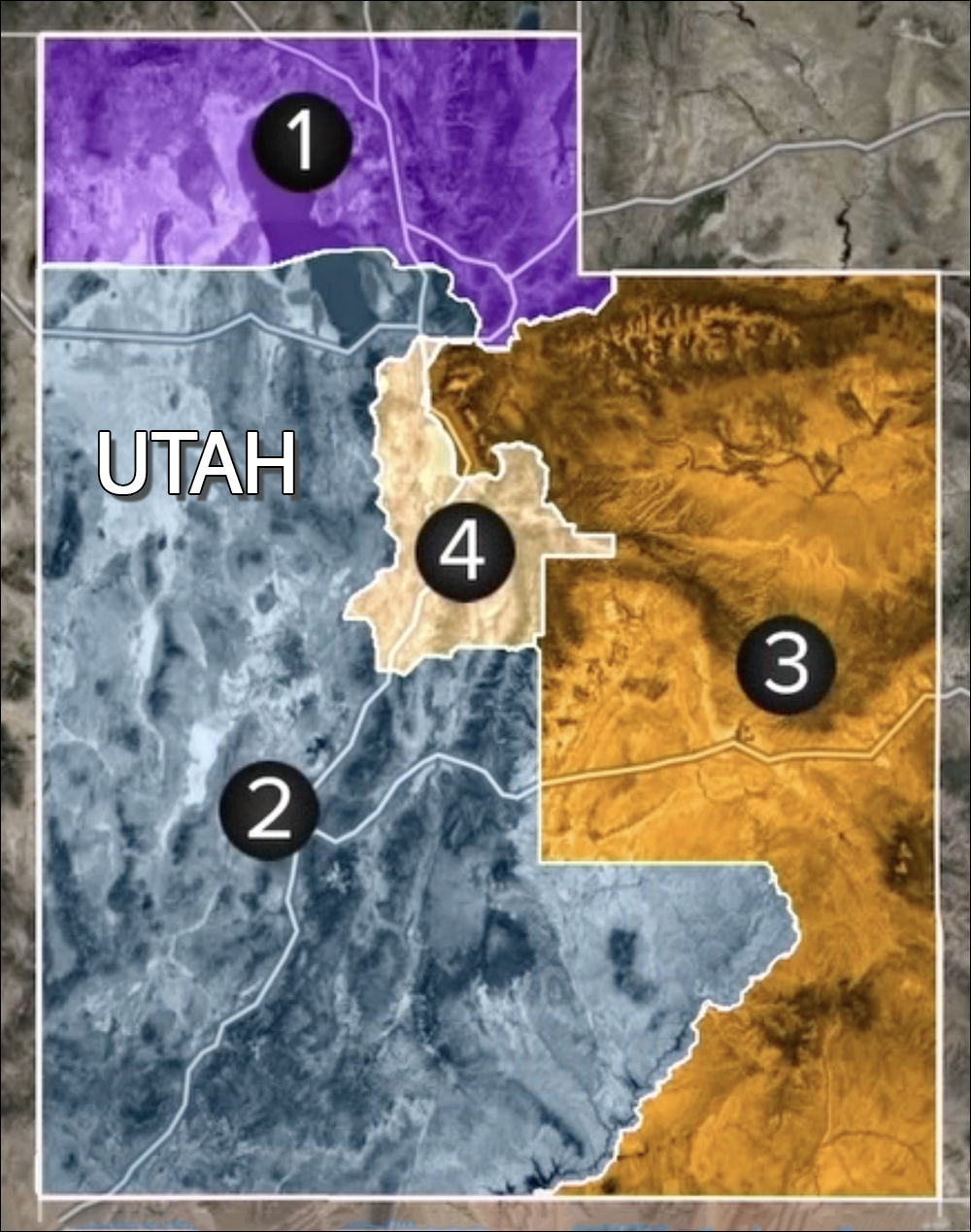
To see this and more detailed maps and District breakdowns go to data.capitol.texas.gov.

By Jim Ellis — Monday, Aug. 18, 2025

House

With the Texas House Democrats likely returning to Austin this week for a new legislative special session, the Republican redistricting map appears set to become law.

The new plan is drawn in response to the US Justice Department informing the state leadership that a recent en banc 5th Circuit Court of Appeals decision pertaining to minority district composition made certain Texas congressional districts illegal.

For political reasons, Republicans are making the most of the redrawing opportunity to craft more favorable districts for their incumbents and candidates. With the Hispanic vote particularly in South Texas turning more GOP favorable, a new map has the potential of producing significant Republican gains.

A byproduct of the redraw is the pairing of several Democratic US House members in newly constructed districts. The one attracting the most attention occurs in Travis County, where Austin-based House members Lloyd Doggett and Greg Casar are preparing for a head-on battle to represent the new 37th CD, which is fully contained within the county and will be heavily Democratic.

Earlier this week, Rep. Doggett released an open letter to his key supporters informing them of his intention to run in new District 37 and suggesting Rep. Casar run in the new 35th District. The 35th contains none of Travis County and is anchored in San Antonio, but a district in which Casar currently sees an approximate 10 percent overlay between the population of his current CD and that part of the new TX-35.

Part of the new CD 35 configuration is similar to Rep. Casar’s current Austin-anchored district, but the addition of Republican voting counties east of San Antonio help create a significantly Hispanic seat that President Trump carried by approximately 10 percentage points.

Casar, who is currently the chairman of the House Progressive Caucus and served for seven years on the Austin City Council, quickly rejected Rep. Doggett’s suggestion. Therefore, we can expect both men to compete for new District 37.

The new 37th, however, is comprised mostly of Rep. Doggett’s territory from his current 37th CD. In the new configuration, 68 percent of the new TX-37’s populace is currently in Rep. Doggett’s domain versus just 32 percent who reside in Rep. Casar’s current district, according to The Down Ballot political blog researchers.

The Federal Election Commission 2nd Quarter disclosure reports also reveal another major Doggett edge. For the ’26 election cycle, Rep. Doggett has raised only a little over $130,000 but sits on a war chest of more than $6.2 million. Rep. Casar posted in excess of $264,000 raised for the current year and holds slightly over $450,000 in his campaign account, less than 10 percent of the money that Rep. Doggett commands.

The looming Doggett-Casar contest is another example of some Democratic primaries popping up around the country that pit an older incumbent against a young rising star. In this case, Rep. Doggett is 78 years old and will be 80 by the time of the next election. He has been a House member since 1995.

Prior to winning a congressional seat, Doggett served as a Justice of the Texas Supreme Court after initially winning election to the state Senate in a 1973 special election. He also ran unsuccessfully for the US Senate in 1984, losing to Republican Phil Gramm.

Casar, 36, was elected to the House in 2022 after taking his seat on the Austin City Council in 2014. An advantage he may have in the new 37th is the large Travis County Hispanic population. The new district configuration yields a Hispanic base of close to 38 percent, but the proportion will certainly be higher among likely Democratic primary voters. The remainder of the populace is comprised of approximately 44 percent Anglo residents, 10 percent who are Black, and eight percent Asian.

The Texas map also pairs Democratic members in two other districts. It is likely that Rep. Marc Veasey (D-Ft. Worth) would lose his Tarrant County power base and run in a new 33rd CD that is fully contained within Dallas County. It is possible that freshman Rep. Julie Johnson (D-Farmers Branch/Dallas), who faces only poor options for re-election, could run against Rep. Veasey.

In Houston, the winner of the November (and possibly early January election should the first vote lead to a runoff, which is likely) special election will have to immediately turn around and face veteran Rep. Al Green (D-Houston) in a new 18th CD that will contain a large portion of the Congressman’s current 9th District.

Once the map becomes law, incumbents and candidates will then make definitive decisions regarding the districts in which they will run.

Krishnamoorthi Expands Lead;
A Crowded 32-Candidate TX-18 Field

By Jim Ellis — Friday, Aug. 15, 2025

Senate

Illinois Rep. Raja Krishnamoorthi (D-Schaumburg)

A new survey conducted for a Super PAC supporting Illinois Rep. Raja Krishnamoorthi (D-Schaumburg) finds the Congressman expanding his previous lead in the open US Senate Democratic primary. Three major candidates are vying for the opportunity of succeeding retiring Sen. Dick Durbin (D).

According to the A to Z poll (conducted for the Impact Fund Super PAC; Aug. 8-10; 615 likely Illinois Democratic primary voters; online), Rep. Krishnamoorthi holds a 38-17-7 percent lead over Lt. Gov. Juliana Stratton and Rep. Robin Kelly (D-Matteson/Chicago), respectively. When those leaning to one of the candidates are added, the Krishnamoorthi advantage expands to 51-28-13 percent.

In June, the GBAO research firm released an Illinois Senate survey (June 5-10; 1,200 likely Illinois Democratic primary voters) that posted Krishnamoorthi to a 32-19-14 percent edge over Lt. Gov. Stratton and Rep. Kelly.

The northern Illinois Congressman also leads in another critical category, that of fundraising. According to the 2nd Quarter Federal Election Commission campaign finance disclosure reports, Rep. Krishnamoorthi had raised at the June 30 reporting deadline almost $12.7 million with a cash-on-hand figure of $11.76 million, far above his two opponents. Stratton, who entered the race in late April, attracted just over $1 million and held $666,000 in her federal campaign account. Rep. Kelly posted $2.4 million in receipts and $2.2 million cash-on-hand.

It is likely that each candidate will see support coming from outside organizations, and it is a certainty that the Impact Fund will be spending to help Krishnamoorthi.

Stratton is counting on Gov. J.B. Pritzker (D), who has endorsed her candidacy, and his allies to come to the table with financial support, but such has yet to materialize. Rep. Kelly will likely have enough in the way of financial backing to be competitive, but the early indicators are certainly pointing Rep. Krishnamoorthi’s way.

The March 17 plurality primary is the actual election in Illinois since it is unlikely the Republican Party will be able to field a credible candidate to compete in a state so solidly in the Democratic camp. The Dave’s Redistricting App statisticians calculate a 55.5D – 39.9R Illinois partisan lean.

In the past two national elections, President Trump lost in the Land of Lincoln. In 2020, President Biden defeated him 57-41 percent, and Kamala Harris posted a 54-43 percent victory margin last November.

TX-18

A new internal campaign poll was released of the TX-18 special election scheduled for Nov. 4. A large field of 32 announced candidates are competing for the opportunity of replacing the late Rep. Sylvester Turner (D-Houston). The eventual winner, however, may have a very short tenure in Congress.

Former Houston City Councilwoman and ex-statewide candidate Amanda Edwards (D) released the results of her campaign’s Brilliant Corners survey (July 20-23; 500 likely TX-18 special election voters; live interview) and found Edwards leading former Miss Universe contestant Carmen Maria Montiel (R), state Rep. Jolanda Jones (D-Houston), Harris County Attorney Christian Menefee (D), and George Foreman IV (I), 18-12-11-10-6 percent, respectively.

The results slightly conflict with a University of Houston poll conducted earlier in July (July 9-18; 400 likely TX-18 registered voters from a sample pool of 2,300 Harris County registered voters; SMS text) that found Edwards and Menefee tied with 19 percent, Montiel and Jones deadlocked at 14 percent preference, and Foreman posting four percent support.

The concluding analysis suggests that no one even reaching the 20 percent support plateau translates into a wide open race with much time remaining before voters begin to cast their ballots. Considering the volume of candidates, even if several do not ultimately qualify, it becomes a foregone conclusion that the contest will advance to a runoff election between the top two finishers regardless of political party affiliation. After the initial vote, Gov. Greg Abbott (R) will schedule the runoff once the primary result becomes official.

Yet, regardless of the special election outcome it is likely when the new redistricting map passes that the winner will be paired in a new 18th District with Rep. Al Green (D-Houston).

Therefore, the new congressional member will immediately find him or herself in a primary campaign, likely against Rep. Green, that will be held March 3. Thus, having to compete in a runoff election probably in early January only then be forced to face Rep. Green in a partisan Democratic primary just weeks later will likely be enough to yield the special election winner a very limited congressional tenure.

Ex-Sen. Sherrod Brown Returns

By Jim Ellis — Thursday, Aug. 14, 2025

Senate

Former Ohio Sen. Sherrod Brown (D)

Former Ohio Sen. Sherrod Brown (D) announced earlier this week that he will return for a comeback attempt next year after losing his seat last November to Republican Bernie Moreno.

Though Brown is a prodigious fundraiser and has had a successful decades-long political career, the numbers suggest reversing his 2024 loss will be a formidable task.

Last November, now-Sen. Moreno defeated Brown by 206,434 votes, or a victory percentage margin of 50.1 – 46.5. What makes Brown’s task more difficult in 2026 is that he actually received more votes in his defeat than he did in winning his previous election, a 2018 re-election victory over then-Rep. Jim Renacci (R). The cumulative results suggest the state is undergoing a major electoral shift.

In 2018, then-Sen. Brown was re-elected to a third term with a 53.4 – 46.6 percent win over Renacci. In that election, he garnered 2,355,923 votes. In his losing 2024 campaign, Sen. Brown’s vote total was 2,650,949, or 295,026 votes more than he received in his 2018 winning campaign.

In reality, even though Brown increased his vote total from six years previously, the 2024 end result proved a major underperformance. Because the Ohio turnout in the 2024 presidential election year was 29.2 percent higher than in the 2018 mid-term election, Sen. Brown would have needed to increase his vote total by 690,914 votes just to keep pace with his winning vote ratio from seven years ago.

Therefore, even with growing his vote total in 2024, Brown’s vote performance as it relates to his previous victory was substantially deficient.

In terms of the Ohio political landscape, Sen. Brown carried only 16 of the state’s 88 counties in 2018, yet his margins were large enough in the big counties to record a comfortable victory. In 2024, the counties he carried were cut in half, dropping to just eight of the 88 local entities.

Comparing Sen. Brown’s county win totals to that of President Biden in the same election year of 2024, the latter man carried one less. Only Lorain County, which Brown represented when he was in the US House and state legislature, voted for him in 2024, but chose President Trump in the national election. The other seven Biden counties also voted for Brown. The same seven counties supported Biden in 2020.

The loyal Democratic counties are no surprise and begin with the entities housing the three cities known as Ohio’s “C-PAC,” Cincinnati (Hamilton County), Cleveland (Cuyahoga), and Columbus (Franklin). The other counties continuing to vote Democratic are Lucas (Toledo), Montgomery (Dayton), and Summit (Akron). The only rural county voting with the Democrats lies along the state’s southeastern border shared with West Virginia, Athens County.

Therefore, for Brown, or any other statewide Ohio Democrat, to gain traction, the party nominees will have to substantially increase their performance over what we saw in 2024 and even 2020.

Though his vote totals did not yield a re-election victory, Sen. Brown did oversee a very successful 2024 fundraising operation. His campaign raised just over $103 million for his failed re-election effort, which was the second highest of any US Senate candidate, behind only Texas Sen. Ted Cruz’s (R) $107-plus million from a state more than twice the size of Ohio.

In contrast, Moreno raised just less than $27 million, which included a personal loan of $4.5 million to his campaign account. Outside spending, however, evened the resource imbalance, accounting for over $190 million toward the Republican cause as compared to just beyond $95 million to assist the Democratic side.

After the 2024 campaign, Brown reported a cash-on-hand figure of $394,230. Since he has not, heretofore, become an official candidate, we will not see a Brown campaign financial disclosure statement until mid-October.

For his part, appointed Sen. Jon Husted (R) has had a robust fundraising spurt since assuming the office after then-Sen. J.D. Vance (R) departed to become Vice President. Sen. Husted has raised just over $3 million and reports $2.65 million in his campaign account.

Sen. Husted is also an accomplished Ohio politician. Before running as Lieutenant Governor on Gov. Mike DeWine’s (R) ticket in the past two gubernatorial statewide elections, Husted was twice elected as Ohio’s Secretary of State, won an election to the state Senate, and served four terms in the state House of Representatives, including four years as Speaker.

The 2026 Ohio campaign appears to be another Senate race where we can already identify the general election combatants. Watch for another very expensive campaign to unfold, but with Ohio’s move to the right, Sen. Husted should be considered the favored candidate. The 2026 special election winner will serve the balance of the current term and then be eligible to run for a six-year term in 2028.

Murkowski for Governor?

By Jim Ellis — Wednesday, Aug. 13, 2025

Governor

Alaska Sen. Lisa Murkowski (R)

It might have been an off-handed comment in response to a reporter’s question, but late last week Sen. Lisa Murkowski (R) confirmed that she is “considering” entering the open Alaska Governor’s race next year.

Almost simultaneously, a Data for Progress survey from July was publicly released (July 21-27; 678 likely Alaska jungle primary voters; text from an online sample pool) and it finds former Rep. Mary Peltola (D) leading businesswoman and former radio talk show host Bernadette Wilson (R) and Lt. Gov. Nancy Dahlstrom (R) 40-11-10 percent in a hypothetical 2026 gubernatorial jungle primary poll.

Most believe the Governor’s race would dramatically change if Sen. Murkowski were to enter, though she was not added to the DfP ballot test. For her part, Peltola, who was defeated for re-election in November but still maintains positive name identification, has yet to officially enter the Governor’s race though recent comments lead most observers to believe that she will run.

Should Sen. Murkowski enter the Governor’s race, that would certainly change the budding campaign’s trajectory. The Republican candidates appear weak, at least in the early phase, and adding Sen. Murkowski to the candidate list would certainly make a more interesting contest. Yet, would she overtake Peltola?

According to the Data for Progress poll, Sen. Murkowski is not popular right now and certainly not with Republican voters. DfP tested 13 well-known Alaska political figures and Sen. Murkowski posted a 37:60 percent favorable to unfavorable image, the worst among all who were included. It in important to note, however, that only four of the 13 tested individuals scored in positive numbers (Peltola, President Trump, former state Sen. Tom Begich, and Wilson) and only Peltola had a positive rating of more than plus-5 percentage points.

Examining the poll’s crosstabs, we see in terms of partisan support that Sen. Murkowski performs better among Democrats than she does with Independents and her own Republican Party voters. Within the Democratic cell segment, her favorability index is 61:35 percent favorable to unfavorable. This compares with a 38:59 percent ratio among self-identified Independent survey respondents and a terrible 23:74 percent among Republicans.

Despite her poor ratings, the unique Alaska election system plays to Sen. Murkowski’s favor. A 2020 ballot initiative that the Murkowski forces supported created a Top Four jungle primary system that adds Ranked Choice Voting rounds if no one receives majority support on the initial vote. The measure was adopted with 50.5 percent of the statewide vote.

In 2024, the Top Four system opponents qualified a ballot initiative to return to the previous partisan primary system. The Top Four survived with a bare 50.1 percent of the vote.

Sen. Murkowski is the chief beneficiary of the Alaska system because she no longer must win renomination in a Republican primary. Therefore, if she were to enter an open Governor’s election, Murkowski would again easily capture one of the four available positions for advancement into the general election. Once in the November campaign, her ability to win general elections would again come to the forefront.

In her career after her father, then-Governor and former US Sen. Frank Murkowski (R), appointed her to the Senate in 2002, Lisa Murkowski has only averaged 46.6 percent of the vote in winning largely plurality elections mostly because Alaska typically features many Independent and minor party candidates in its elections.

The Murkowski average includes the 53.7 percent she received in 2022, but that higher percentage came through three rounds of Ranked Choice Voting. Her initial 2022 percentage prior to advancing into the RCV rounds was 43.4 percent. Therefore, her four-election average without the Ranked Choice system would be 44.0 percent. In 2010, she was upset in the Republican primary but won the general election as a write-in Independent candidate with only 39.7 percent of the vote but topping both a Republican and Democratic nominee.

The Dave’s Redistricting App statisticians calculate an Alaska partisan lean of 52.8R – 41.8D. President Trump slightly exceeded the aggregate partisan lean in all three of his elections (54.5 – 41.4 percent over Kamala Harris; 53.1 – 43.0 percent opposite President Biden; and 51.3 – 36.6 percent against Hillary Clinton), while Sen. Murkowski typically runs significantly below the Republican benchmark.

Soon we will see if the Senator’s comment about “considering” the Governor’s race will prove more than a flippant response. If so, then the open Alaska Governor’s campaign will certainly become more interesting.

New Georgia Senate Polling

By Jim Ellis — Tuesday, Aug. 12, 2025

Senate

One of the tightest 2026 US Senate races is sure to be found in the Peach State of Georgia and a new statewide poll already confirms a developing toss-up general election.

The TIPP Poll organization released the results of their new survey (July 28-Aug. 1; 2,956 registered Georgia voters; online) that forecasts Rep. Mike Collins (R-Jackson) potentially as Sen. Jon Ossoff’s (D) top challenger. According to the related ballot test, Sen. Ossoff’s edge over Rep. Collins would be a scant 45-44 percent.

The other Republican candidates also poll well against Sen. Ossoff but draw less support than Rep. Collins. Savannah area Congressman Buddy Carter (R-Pooler) would pull within 44-40 percent of Sen. Ossoff. Former University of Tennessee head football coach Derek Dooley, son of legendary Georgia University football coach Vince Dooley, would trail 44-39 percent in a hypothetical general election pairing with the first-term incumbent.

The results are not surprising. The Georgia electorate has returned some of the closest election results in the country since the 2018 Governor’s race that found current incumbent Brian Kemp (R) nipping Democrat Stacey Abrams by just over one percentage point.

The 2020 presidential race saw Joe Biden slipping past President Trump by only 11,779 votes from almost 5 million cast ballots.

Both 2020 Senate races were forced to runoff elections (Georgia had a special election that year to replace Sen. Johnny Isakson (R) who had resigned for health reasons prior to him passing away). Two years later, the race for a full term between Sen. Raphael Warnock (D) and Republican Herschel Walker also moved into a post-election runoff.

In the 2024 presidential vote, Trump defeated President Biden, 50.7 – 48.5 percent by a more comfortable margin of 115,100 votes from more than 5.2 million cast ballots, but still a close final tally.

Additionally, Georgia is also one of the few states that holds a post-general election runoff should no candidate receive majority support (Mississippi is another and Louisiana is changing from their jungle primary/December runoff system to a traditional primary and general election beginning in 2026), and the ’26 Senate race advancing into political overtime is certainly a distinct possibility.

With this backdrop, we can expect another series of close Peach State elections led by its Senate and open Governor races. Therefore, the early TIPP general election poll already showing a dead heat comes with little surprise.

Before the general election begins, Republicans are likely to face a tough primary campaign where the top two finishers in the May 19 GOP nomination contest advance into a June 16 runoff election.

TIPP also surveyed the likely Republican primary voters and found Rep. Collins leading Rep. Carter and Mr. Dooley, 25-19-7 percent. Familiarity with the Republican candidates is not particularly high, however. This means the candidates will have to spend heavily in the primary just to win the right to challenge Sen. Ossoff.

A total of 44 percent of the tested polling sample expressed familiarity with Rep. Carter, 42 percent could identify Rep. Collins, and 37 percent recognized Derek Dooley’s name. The latter man won Gov. Kemp’s endorsement, and the Kemp leadership PAC is pledging to spend early to help educate the voters about Dooley. At this point, President Trump has not endorsed a Republican primary candidate, but all are seeking his support.

Resources in the general election, though both sides can expect millions of outside Super PAC money coming into the state to assist their efforts, will likely favor the incumbent Democrat. Already, Sen. Ossoff is the top fundraiser in the country after the latest disclosure reports became public.

The Senator, since his original election in 2020, has raised almost $42 million, but spent $30.8 million largely to clear expenses from the ’20 campaign and to support his substantial fundraising operation. Still, the Senator holds almost $15.5 million in his campaign account according to the June 30 Federal Election Commission finance report.

Rep. Carter is in the strongest financial position among Republicans. His receipts through the second quarter of 2025 top $3.5 million, but that includes a loan to the campaign of $2 million. His cash-on-hand total exceeds $4 million.

Rep. Collins is considerably behind, raising $745,883 since the beginning of the year and posting just over $1 million in the bank. Dooley, who recently became an official candidate, will file his first campaign financial disclosure report on Sept. 30.

Along with the Michigan and North Carolina Senate races, we can count on the Georgia Senate contest attracting a major share of national political attention next year.

Political News Roundup

By Jim Ellis — Monday, Aug. 11, 2025

Senate

Former Florida Attorney General and current US Sen. Ashley Moody

Florida — Educator and 2025 special election congressional nominee Josh Weil (D) announced that he is dropping his US Senate bid. Weil says a health condition prevents him from continuing his campaign. Earlier this year, he ran as a socialist in a conservative district but managed to raise more than $15 million mostly from national sources. Weil lost to now-Rep. Randy Fine (R-Melbourne Beach) by a 57-43 percent margin in the April special election.

Nine Democrats remain in the primary race. Former Congressman Alan Grayson is the only contender ever elected to office. Appointed Sen. Ashley Moody (R) is competing in the 2026 statewide special election to serve the balance of the current Senate term. Gov. Ron DeSantis (R) appointed Moody, then the state’s Attorney General, to replace Marco Rubio, who was appointed US Secretary of State.

Iowa — Two more Democrats are coming forward to enter the 2026 US Senate primary. Des Moines School Board chair Jackie Norris, a former chief of staff to First Lady Michelle Obama, announced during the week that she will enter the Senate primary. Expected to soon declare is state Rep. Josh Turek (D-Council Bluffs).

Already in the Democratic primary are state Sen. Zach Wahls (D-Des Moines) and state Rep. J.D. Scholten (D-Sioux City). The eventual party nominee will challenge Sen. Joni Ernst (R) in the general election.

House

AL-1 — In anticipation of Rep. Barry Moore (R-Enterprise) announcing for the Senate on Aug. 15, former US Rep. Jerry Carl (R), who lost to Moore when the two were paired in one district after a 2023 court-ordered redistricting, has filed a 2026 congressional committee with the Federal Election Commission. The move further suggests that Carl will attempt a political comeback once Rep. Moore officially declares for the open Senate seat as expected.

Chances appear strong that ex-Rep. Carl will be able to win the open 1st District Republican primary and the general election in November of 2026. The Dave’s Redistricting App partisan lean calculation for AL-1 is 76.5R – 22.0D.

CA-32 — Jake Levine (D), a former Biden Administration official and son of former Rep. Mel Levine (D-CA), announced his challenge to veteran Rep. Brad Sherman (D-Sherman Oaks). Jake Rakov, a former Sherman staff member who says the Congressman has lost touch with his constituents, is also in the race. It is likely that another Democrat will advance into the general election against Rep. Sherman, who is virtually guaranteed to advance from the June 2, 2026, jungle primary.

CA-45 — Ex-Rep. Michelle Steel (R) announced that she will not return for a re-match against freshman Rep. Derek Tran (D-Orange). After her defeat by a margin of just 563 votes out of nearly 316,000 cast ballots, the second-closest race in the country, Steel filed a 2026 campaign committee with the Federal Election Commission. Now saying she has “other goals,” Steel is abandoning a congressional comeback effort for next year.

The 45th District, which contains parts of Orange and Los Angeles counties, carries a 52.2D – 45.9R partisan lean according to the Dave’s Redistricting App statisticians. Kamala Harris topped President Trump here, 49.3 – 47.8 percent.

IL-16 — Rep. Darin LaHood (R-Peoria), after indicating he was considering entering the 2026 Illinois Governor’s race, has instead decided to seek re-election to a seventh term in the US House. Holding one of only three Illinois Republican seats, Rep. LaHood will be a prohibitive favorite to win both renomination and re-election in 2026.

NV-1 — State Sen. Carrie Buck (R-Henderson) announced that she will challenge veteran Rep. Dina Titus (D-Las Vegas) next year. Republicans have needed a stronger candidate to oppose the Congresswoman in a district that could become highly competitive. Dave’s Redistricting App rates the NV-1 partisan lean as 52.6D – 42.3R, but the presidential races have proven closer. In 2024, Kamala Harris carried the district, but with only a 50.2 – 48.0 percent victory margin. In 2020, President Biden won the seat with a 53.2 – 44.7 percent spread. Rep. Titus will be favored for re-election, but this is a contest that could draw national attention.

NY-1 — Air Traffic Controller and Army National Guard Black Hawk helicopter pilot Chris Gallant (D) announced his intention to compete for the Democratic nomination to challenge two-term Rep. Nick LaLota (R-Suffolk County). In his two congressional races, Rep. LaLota recorded a pair of 55 percent victories. Assuming the district remains in its current configuration, the Congressman will again be a clear favorite for re-election.

Governor

Alaska — Sen. Lisa Murkowski (R), in what could be an off-the-cuff response to a reporter’s question, indicated that she is considering entering the open Governor’s race next year. A crowded field is forming on both sides, but obviously Sen. Murkowski would become a key competitor if she were to run. Gov. Mike Dunleavy (R) is ineligible to seek a third term.

California — Diamond Resorts International time share founder Stephen Cloobeck (D) joined the growing field for the 2026 open Governor’s campaign. Cloobeck began by issuing attack statements against his new opponents, and in particular toward ex-Rep. Katie Porter (D). More than 70 individuals have announced their intention to enter the statewide jungle primary. It remains to be seen just how many qualify for the ballot. It is certain, however, that the June 2, 2026, primary field will be large. Regardless of percentage attained and party affiliation, the top two finishers will advance into the general election.

Maine — Businessman Ben Midgley, the former long-time president of the Planet Fitness national gym company, announced that he will enter what is becoming a crowded open gubernatorial field in both parties. Gov. Janet Mills (D) is ineligible to seek a third term but is not ruling out a challenge to Sen. Susan Collins (R).

In addition to Midgley, state Sen. Jim Libby (R-Cumberland), former Assistant US Secretary of State Bobby Charles, businessman Jonathan Bush, real estate developer David Jones, University of Maine Trustee Owen McCarthy, and Paris Town Supervisor Robert Wessels, appear to be the major Republican candidates.

For the Democrats, Secretary of State Shenna Bellows, former state House Speaker Hannah Pingree, daughter of US Rep. Chellie Pingree (D-North Haven/Portland), businessman Angus King III, son of Sen. Angus King (I), and former state Senate President Troy Jackson are the major contenders. The eventual Democratic nominee will be favored to hold the position.

State and City

Georgia Attorney General — Former state House Minority Leader Bob Trammell (D) announced his candidacy for the open Attorney General’s position during the week. Republican state Sens. Bill Cowsert (R-Athens) and Brian Strickland (R-McDonough) are battling for the Republican nomination. Incumbent Attorney General Chris Carr (R) is running for Governor. Expect a close open seat general election battle for this office.

Kansas Attorney General — 2022 Attorney General nominee Chris Mann (D) announced he will return to seek a re-match with incumbent AG Kris Kobach (R). Three years ago, Kobach won a close 51-49 percent open general election.

Kobach has been controversial over the years especially when losing the 2018 open gubernatorial election to current Gov. Laura Kelly (D). Speculation was that Kobach would again enter the Governor’s race, but there is no recent indication that he will do so. Still, he can expect to see a competitive re-election battle for Attorney General next November.

Detroit Mayor — The Detroit mayoral jungle primary election was held on Aug. 5, and two Democrats advanced into the November general election. City Council President Mary Sheffield exceeded the 50 percent threshold in the first election, but under the Detroit city procedure one cannot win outright even with majority support. Therefore, she advances into an open November general election against second place finisher Solomon Kinloch, a well-known local pastor.

The field featured nine candidates including retired former Detroit Police Chief James Craig who was running as a Republican. Incumbent Mayor Mike Duggan (I) is not seeking a fourth term in order to run for Governor.

Seattle Mayor — In what will be a general election of far-left candidates, community organizer Katie Wilson (D) placed first in the Aug. 5 primary election with Mayor Bruce Harrell (D) finishing a close second among the eight candidates. Neither reached the majority support mark of 50 percent, as both finished in the high 40s. The general election will be highly competitive.

Trump Orders New Census

By Jim Ellis — Friday, Aug. 8, 2025

Census

The redistricting wars are heating up early in this decade, but the latest move coming from Washington could increase the political temperatures to a “white hot” level.

President Donald Trump yesterday ordered the Census Bureau to craft new state population numbers without including non-citizens. Taken to the fullest, the move could lead to transformational ramifications in many places over the course of time.

As we know, the current redistricting wars are intensifying. The Texas situation is in a current stalemate but will eventually come to fruition. The Ohio lines will be redrawn before the end of the year to comply with state law, and Florida state House Speaker Daniel Perez (R-Miami-Dade County) yesterday announced that he is appointing a special redistricting committee to begin a remap in his state with Gov. Ron DeSantis’ (R) political blessing.

Several Democratic Governors have responded, threatening retaliation with redrawing their own states to counter what will likely be significant Republican congressional district gains in the aforementioned places.

The Trump census decision, however, will not only add fuel to the fire, but change the political dynamic in ways that are just beginning to be realized.

The heart of the census issue is, of course, whether the large US illegal non-citizen population should continue to be counted. The President specifically is directing the Commerce Department to recraft the census that would include only American citizens. Doing so would reduce the population numbers — at least for purposes of federal grants and redistricting — by at least 11.9 million people according to the Department of Homeland Security’s Office of Homeland Security Statistics’ calculations.

In the current census, the individuals in question are included in the state counts.

Additionally, others have pointed to potential flaws in the 2020 census, claiming certain methodological principles used to determine the population numbers are illegitimate, adding to the long-disputed practice of where incarcerated individuals and students living away from their homes should be counted. All of these issues will be addressed in any new census adjustments.

In terms of a recount, the Census Bureau would first look at the states, counties, and cities that have declared themselves as sanctuaries for illegal aliens. According to the Center for Immigration Studies organization, a dozen states — and localities in an additional 21 states, with Virginia, New Mexico, and New York having the most — declare themselves as sanctuary regions. These places will be most affected in a new census because the sanctuary declarations have drawn more such aliens.

The states with the largest projected numbers of non-citizens are California, Texas, Florida, and New York, but all states are affected. In the current census, the individuals in question are included in the state counts.

The census controversy began in the Obama Administration when the decision was made to move the citizenship question to the American Community Survey instead of the actual count. The Trump Administration eliminated the change, but the new Biden Administration reinstated it upon taking office in 2021 for purposes of conducting the 2020 census.

Once President Trump’s new order is implemented, thus adjusting the 2020 census numbers, new battles will begin.

The first issue will be whether to redistrict under the new numbers. This will likely take a Supreme Court order and would result from certain states suing others over the 2020 count.

The most likely scenario would be Idaho suing Minnesota. Idaho would claim that the counting of illegal aliens allowed Minnesota to keep its eighth seat, which is calculated to be the 435th congressional seat, and prevented Idaho from gaining a third seat. They would likely site Congress and the Census Bureau as the offending parties, thus forcing the issue directly to the Supreme Court.

A reapportionment order would have to be given for the new census methodology to be used for immediate redistricting. Otherwise, the changes would appear in the 2030 census.

Apportionment would also affect the electoral vote count for the 2028 presidential election because places like California, Illinois, and New York would clearly lose representation (California could lose as many as six seats, while Illinois and New York would lose at least two apiece) and states such as Florida, Idaho, North Carolina, and Texas (all would gain seats), for example, would significantly change the national electoral vote count used to elect a president.

Not having a new apportionment could lead to a presidential candidate challenging a state’s electoral vote number under the argument that the particular state has too many electoral votes because non-citizens remain in the count, thus creating a whole new controversy.

Additionally, where a new count would clearly reduce the number of Hispanic congressional seats, blacks would likely be the beneficiary of the new methodologies because in several states, California being the clearest example, black populations are discounted because of the addition of the non-citizens in and around certain neighborhoods and localities.

These are just a few of the action points that could develop once the Census Bureau begins the task of adjusting the 2020 final counts. Further ramifications would also undoubtedly rise to the surface, so the President’s directive yesterday will prove to be a major decision.