Category Archives: House

Political Fun in the Sun: Murphy vs. Hasner

The 18th Congressional District of Florida has, so far, lived up to its billing. Stretching through the central portion of the Sunshine State while hugging the Atlantic coast, CD-18 includes all or parts of St. Lucie, Martin, and Palm Beach Counties, and was drawn as a marginal political entity.

Last November, first-time candidate Patrick Murphy (D), a Jupiter attorney, upset nominal incumbent Allen West (R) by just over half a percentage point, or 1,904 votes of more than 330,000 cast ballots. Why categorize West as a “nominal incumbent”? Because redistricting drastically changed his 22nd District to the point where he chose to run in the new 18th, a seat that contained only about one-third of the constituency that originally elected him.

The 2012 eastern Florida political climate should have been sufficient for Rep. West to win, however, because Mitt Romney outpaced President Obama here by more than four percentage points, 51.7-47.6 percent. The closeness of the congressional race and Romney’s 18th CD performance gives the Republicans hope for a conversion in this next election under what should be a more GOP friendly mid-term turnout model.

Toward that end, the Republicans are apparently on the verge of getting the candidate who they believe can propel this challenger race into the top-tier. Though the numbers and political history suggest that the 2014 race will be close, the currently announced candidates have shown little, and Rep. Murphy is rated as the clear early favorite.

The presence of former state House Majority Leader Adam Hasner (R), however, may quickly change the campaign’s status. Believed to be close to declaring his candidacy, Hasner is the strongest possible GOP candidate.

Originally in the 2012 Senate race, Hasner dropped down into a congressional race after redistricting was complete. Deferring to then-Rep. West for the 18th, Hasner took his chances in the heavily Democratic 22nd CD, facing former West Palm Beach mayor Lois Frankel (D). The race went to Frankel on a 55-45 percent count, virtually the same margin that President Obama scored in the district.

But Hasner’s firepower comes in his ability to attract campaign resources. Even in a losing effort, for a race few thought any Republican could win, the former state  Continue reading >

Louisiana Polling

louisiana

Several polls were just conducted about upcoming Louisiana campaigns, specifically the Senate challenge to incumbent Mary Landrieu (D) and the new House special election for resigning Rep. Rodney Alexander’s (R-LA-5) seat.

Senate

Two pollsters went into the field to test Sen. Landrieu and Rep. Bill Cassidy (R-LA-6). OnMessage, conducting an internal poll for the National Republican Senatorial Committee (Aug. 12-15; 800 registered Louisiana voters), found the senator to be leading the congressman by just a 45-41 percent count.

Party loyalty is strong for both candidates. Sen. Landrieu captures 77 percent of the Democratic vote, while Rep. Cassidy seizes 72 percent of the Republicans. In what could be a looming problem for Landrieu, Independents already break 41-37 percent in favor of Cassidy.

The one issue tested, reaction to the Obamacare mandatory health insurance program, was viewed very negatively. Of those sampled, 33 percent favor the program while a whopping 62 percent expressed opposition to the concept; and 53 percent of the 62 percent described their negative impressions as “strong.”

Meanwhile Harper Polling, during the same time frame (Aug. 14-15; 596 registered Louisiana voters) reports even better numbers for Republican Cassidy. According to HP, the Baton Rouge congressman enjoys a 47-45 percent advantage over the senator.

Two lesser known Republican candidates also poll well. Sen. Landrieu surprisingly only ties state Sen. Elbert Guillory (R), with each individual registering 44 percent preference of those polled. Retired Air Force officer Rob Maness (R) does not fare as well. In this pairing, Sen. Landrieu posts a 47-41  Continue reading >

Assessing the House in the 2014 Election Cycle

House-Chart

The US Senate races are rightly attracting almost all of the attention during the early portion of the 2014 election cycle, as minimal action is occurring in House campaigns. Right now, the Republicans appear poised to hold their majority, and may be more likely to add a small number of seats.

Comparing the 2014 House lineup to what we saw during the last cycle yields a much different situation. Due to reapportionment, redistricting, and retirements, no fewer than 62 seats were open for the last campaign. Today, we look at only 17 vacated districts in the current cycle, three of which will be decided in special elections before 2013 ends.

Seats projected as toss-ups are way down, too. Right now, only seven races appear as pure toss-ups – five currently held by Democratic House members compared with only two majority Republican controlled districts.

The pair of Republican toss-ups are:

CA-31: Rep. Gary Miller
CO-6: Rep. Mike Coffman

The five Democratic toss-ups are:

AZ-2: Rep. Ron Barber
CA-52: Rep. Scott Peters
FL-26: Rep. Joe Garcia
NC-7: Rep. Mike McIntyre
UT-4: Rep. Jim Matheson

Overall, according to our PRIsm Information Network race tracking scoreboard, here’s how we have things lining up:

It appears there are 154 Safe Republican seats, 59 Likely Republican districts, and 19 Lean Republican campaigns for a grand total of 232 contests today headed toward the GOP.

For the Democrats, 163 seats are categorized as Safe, only 15 as Likely Democrat, and 18 as Lean Democrat, for a grand total of 196 districts in the Democratic stable. Adding the seven toss-up seats brings us to our grand total of 435.
 Continue reading >

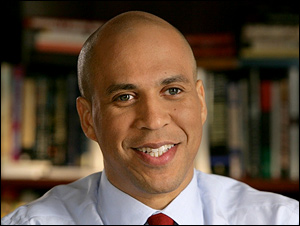
Booker Cruises to a Win

Newark Mayor Cory Booker (D)

Newark Mayor Cory Booker (D)

Yesterday, just 8.8 percent of New Jersey voters went to the polls (481,847 of more than 5.47 million registered with 98 percent of precincts reporting) to participate in the special primary election for US Senate, a process that will prove to be the determinative step in choosing the late Sen. Frank Lautenberg’s (D) successor.

As aggregate polling had almost exactly predicted since the first day of this special election cycle, Newark Mayor Cory Booker commanded the Democratic primary. He racked up 59 percent of the vote compared to second place Rep. Frank Pallone’s (D-NJ-6) 20 percent, third-place finisher Rep. Rush Holt’s (D-NJ-12) 17 percent, with Assembly Speaker Sheila Oliver tallying only 4 percent.

Under Gov. Chris Christie’s (R) special election schedule, the general election vote is Wednesday, Oct. 16, and will officially feature Booker and Republican former Mayor Steve Lonegan (R-Bogota) who easily won the GOP nomination. Lonegan attracted 79 percent of the GOP vote against physician Alieta Eck. Six Independents will also appear on the general election ballot. The national Republican Party apparatus is not expected to actively support Lonegan, virtually conceding the seat to Booker.

The Newark mayor raised close to $10 million for the special primary election ($8.6 million through the final July 24 pre-primary disclosure period) as compared to Pallone’s $729,000 through the same period, though the congressman was able to transfer some $3.3 million from his US House committee. Holt raised over $962,000 during the same time frame and transferred an additional $500,000 from his congressional account to exceed $1.4 million in total Senate campaign receipts. Oliver reported raising less than $12,000.

Of the more than 481,000 people who voted yesterday, 352,120 participated in the Democratic primary. In a state where  Continue reading >

Louisiana House Vacancy

Two days ago, Rep. Rodney Alexander (R-LA-5) surprisingly announced that he would retire from Congress. Yesterday we find he means to exit right away, leaving mid-term in order to accept a position in Gov. Bobby Jindal’s (R) administration as the state’s Veterans’ Affairs Director.

Jindal (R) has already taken action and defined the 5th District special election calendar. As you most likely remember, Louisiana employs the jungle primary system, which means all candidates appear on the same primary ballot regardless of political party affiliation. If a candidate receives an outright majority of the vote, said individual is elected. If no candidate secures at least 50 percent plus one vote, then the top two finishers advance to a final run-off election.

In this instance, Gov. Jindal has chosen Oct. 19 for the first election, with the run-off to occur on Nov. 16. The candidate filing deadline is a quick Aug. 21, therefore giving prospective candidates little time to decide whether they will make the race.

Already, two state legislators have announced their special election candidacies. Republican state Sen. Neil Riser and Democratic state Rep. Marcus Hunter will both soon form campaign committees. Alexandria Mayor Jacques Roy admits that he is considering running, saying that he believes his “centrist Democrat” philosophy is in line with the majority of the 5th District’s constituency.

The 5th CD consumes all of northeastern Louisiana and then takes the upper half of the state’s eastern tail. The Alexandria and Monroe areas are the largest population centers, but each metropolitan region fails to top 65,000 residents.

Mitt Romney defeated President Obama here 61-38 percent in 2012. John McCain carried the seat 62-37 percent over Mr. Obama in 2008. Republicans are the early favorites to hold the district.

2013 Polling Notes:

Two new polls were released covering northeastern 2013 political action.

New Jersey

In the Garden State, Quinnipiac University (Aug. 1-5; 2,042 registered New Jersey voters) tested the upcoming governor’s race where incumbent Chris Christie (R) appears to be steaming toward re-election.
 Continue reading >

New Hampshire Volatility – Again

Over the past four election cycles, no state has generated more political ups and downs than the Granite State of New Hampshire.

During that time more US House incumbents have been defeated than re-elected, an extraordinary statistic for any state. (In the stretch from 2006 through 2012 in the state, five House incumbents have lost their seats and only two have been re-elected consecutively. Two incumbents have both lost and won during this span of elections.) New Hampshire voters have also defeated a US Senator and a House incumbent attempting to win the statewide office. They have also changed majorities in the state legislative chambers virtually at will.

Now the University of New Hampshire just released a poll (July 18-29; 516 New Hampshire adults) testing their federal incumbents’ job approval scores and again found signs that the electorate may already be getting restless.

It is wise to approach the UNH polls with caution, however. First, the University’s polling institute hasn’t been among the most accurate of pollsters during that past few years. It is fair to consider their numbers with skepticism. Second, as is typical for their polls, the sampling period of 12 days is much too long, especially for a sample size of just 516 respondents. Finally, this particular poll only tested “adults” and not registered voters.

That being said, the data does give us some insight as to how the four all-female federal office holders are faring.

The Senators

The strongest is Sen. Jeanne Shaheen who stands for her first re-election next year. In 2006, after serving from 1997-2003 as the state’s governor, Shaheen defeated then-Sen. John E. Sununu (R), 52-45 percent after losing to him 47-51 percent in 2002. According to the poll results, Sen. Shaheen scores a strong 53:23 percent positive to negative on the personal favorability scale. Fifty percent of the sample believes she deserves to be re-elected in 2014, while 34 percent say they would prefer a generic “someone else.” Her re-elect score among Democrats is 78 percent. Among the self-identified Republicans, 27 percent favor her re-election.

Though first-term Sen. Kelly Ayotte (R) is not on the ballot again until 2016, she was also tested. Her favorability score is a less impressive 41:32 percent, down from 50:25 percent from the last UNH poll conducted in April.
 Continue reading >

A Trio of Political Icons Pass

It’s said that famous people die in threes, and that certainly happened again this week in the world of politics. Rather extraordinarily, the youngest of the trio was 96 years of age.

Former Virginia Sen. Harry F. Byrd Jr. (I), who served from 1965 to 1983) passed away on Tuesday at the age of 98.

Ex-Rep. Lindy Boggs (D-LA-2), who succeeded her late husband in Congress back in 1973 and served nine terms, passed away from natural causes at the beginning of the week. She was 97.

And William Scranton, the former Pennsylvania Republican governor and congressman who served as the US Ambassador to the United Nations, also died this week in California at the age of 96.

Sen. Byrd was appointed to his seat, succeeding his father, who was forced to resign in 1965 due to health issues. He then died in 1966 of brain cancer. The younger Sen. Byrd went into the Senate as a Democrat, but his conservative philosophy on fiscal issues led him to leave the party in 1970 to become an Independent. Until his death this week, Byrd was the oldest living former senator.

Boggs succeeded her husband, Hale Boggs, who was the House Majority Leader. He died in a plane crash over a remote area of Alaska, flying with his Democratic colleague Rep. Nick Begich. The late Begich was the father of current US Sen. Mark Begich (D-AK). After retiring from the House, President Clinton appointed the former congresswoman as the US Ambassador to the Holy See, a position she would hold from 1997-2001.

Like the other two luminaries who passed, Scranton was from a political family. His grandfather, Joe Scranton, served five non-consecutive terms in Congress. Scranton’s son, William W. Scranton III, later became Pennsylvania’s lieutenant governor.