Category Archives: House

Rep. Moulton Sees A Different Path

By Jim Ellis

March 13, 2019 — While former New York City mayor and media magnate Michael Bloomberg and Sen. Sherrod Brown (D-OH) both backed away from entering the presidential campaign because they couldn’t see a path for themselves to win the Democratic nomination, a different Democratic office holder appears to be taking the opposite view.

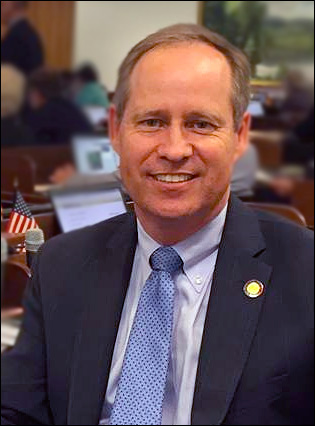
Massachusetts Rep. Seth Moulton (D-Salem)

Massachusetts Rep. Seth Moulton (D-Salem) was one of the leaders of the group who attempted to deny Nancy Pelosi a return to the speakership. Therefore, with little thought of becoming a factor in the current House Democratic majority, Moulton is looking at other opportunities.

While he didn’t expressly deny examining a potential primary challenge to Sen. Ed Markey (D) earlier in the year, such a move no longer appears to be on the congressman’s horizon. Rather, he appears to believe his chances might be a bit better in trying for the “big prize.”

Scheduling visits to neighboring New Hampshire and then over to Iowa in the coming weeks, Rep. Moulton is clearly testing the waters to enter the presidential race. And, according to reports from people close to his effort, a national campaign announcement is likely forthcoming at the end of April or beginning of May.

Rep. Moulton, who served four tours of duty in the Iraq War and saw significant combat action, is a liberal Democrat, but he seems to be a hybrid in falling between the socialist Democrats such as Bernie Sanders, Alexandria Ocasio-Cortez (D-NY), and his Massachusetts colleague Sen. Elizabeth Warren, and the former Blue Dog Democrats who trend more centrist.

Continue reading

The Outer Banks Battle

By Jim Ellis

The late longtime North Carolina Rep. Walter Jones Jr. / Photo by Gage Skidmore, Flickr

Feb. 12, 2019 — The death of veteran North Carolina Rep. Walter Jones Jr. (R-Farmville) on Sunday, Feb. 10, 2019 — his 76th birthday — has sent the state’s 3rd District into a special election that will likely last all the way to Sep. 10, and the campaign will be unusually competitive.

Since the district was drawn in its current configuration in 2011, the Democrats have spent only an aggregate of $53,000 in challenging Rep. Jones. In 2018, he was unopposed. Two years earlier, Democratic nominee Ernest Reeves placed his name on the ballot but literally spent no money. During the four post-2010 census elections, Jones averaged 74.5 percent of the vote, and 66.0 percent when the uncontested campaign is removed from the configuration.

But, the special election campaign looks very different and will be the first truly competitive campaign in this part of eastern North Carolina since Jones unseated then-Rep. Martin Lancaster all the way back in 1994.

On Friday, candidate filing closed and no less than 26 Republicans, Democrats, and minor party candidates filed to run in the April 30 primary. With so many names on the ballot it is possible that both major parties could be forced into runoff elections even though North Carolina has only a 30 percent runoff rule.

For the Republicans, 17 individuals filed including a two-time primary opponent to Rep. Jones, three sitting state representatives, and the state Republican Party vice chair. But the Democrats, for the first time in more than two decades, have legitimate contenders in a district that should continually elect Republicans. The six-person Democratic field contains two former mayors, one of Greenville, the other New Bern, and two retired Marine Corps officers.

Continue reading

PA-12 NOMINEE KELLER IMMEDIATELY HITS OPPONENT, PELOSI, SANDERS, CORTEZ

Pennsylvania Congressional Map | Source: Pennsylvania State Supreme Court (click on image to see full size)

By Jim Ellis

Pennsylvania state Rep. Fred Keller
(R-Mifflinburg)

March 5, 2019 — On Saturday, during a seven-hour marathon special district convention marked with controversy, the central Pennsylvania Republican delegates chose state Rep. Fred Keller (R-Mifflinburg) as the party nominee for 12th District Congressman Tom Marino’s (R-Williamsport) vacated seat. Marino resigned from the House at the end of January due to professional and health reasons.

Gov. Tom Wolf (D) scheduled the replacement special election for May 21. Under Pennsylvania election law, the various political parties call a district convention or meeting for purposes of choosing a special election nominee. Originally, 24 potential Republican candidates expressed interest in running, but only 14 were successful in having their names placed into nomination before the 200-plus assembled delegates.

After Rep. Marino’s unexpected announcement, Democrats responded quickly and re-nominated their 2018 candidate, local college professor Marc Friedenberg, who advances into the special general election hoping to perform better than he did against Marino. In November, Friedenberg lost 66-34 percent while spending just over $90,000 on his federal campaign.

Saturday’s convention became controversial once the Club for Growth organization began sending mailers to the delegates attacking state Rep. Jeff Wheeland (R-Williamsport), over his record on tax issues as a legislator first elected in 2014. Prior to gathering in Williamsport, Wheeland appeared as the candidate most likely to become the delegates’ choice.

But, the convention was rocked when the representative’s stepson distributed a letter detailing how Wheeland abused he and his mother. The combination attack was enough to drive Wheeland from the race just before the fourth ballot, yielding the victory for Keller.

Continue reading

THE UPCOMING NC-3 SPECIAL ELECTION;
WILL A REPUBLICAN PREVAIL IN
A STATE THAT LEANS DEMOCRATIC?

North Carolina Congressional Districts


By Jim Ellis

March 1, 2019 — North Carolina Gov. Roy Cooper (D) announced the special election schedule for his state’s 3rd Congressional District, vacant since 13-term incumbent Rep. Walter Jones (R-Farmville) passed away on Feb. 10.

Candidate filing will close March 8, a short official period largely because eight individuals have already declared their candidacies. The partisan primary elections will be held April 30, followed by runoff elections, if necessary, on July 9. A secondary election will occur if no candidate receives at least 30 percent of the vote in their respective nomination election.

Should all parties nominate on April 30, then the special general will move to July 9. Otherwise, the final vote will be held Sept. 10. It is presumed that the State Board of Elections members, who have the power to schedule the succeeding District 9 election because no general election winner was certified, will follow the governor’s lead on Monday and schedule that special election within these same schedule guidelines.

With six Republicans, including three sitting state representatives already in the race, and more likely to come, the chances of the GOP being forced to hold a runoff election are extremely high.

Continue reading

Colorado & Hickenlooper —
Decisions, Decisions

By Jim Ellis

Feb. 27, 2019 — Saying he’s “not cut out to be a senator,” former Colorado Gov. John Hickenlooper (D) said that he will either run for president in 2020 or no office at all. He further stated that, “Senators don’t build teams. Senators sit and debate in small groups … But I’m not sure that’s my — I’m a doer. That’s what gives me joy.”

Former Colorado Gov. John Hickenlooper – not running for Senate (Photo Moritz Hager)

While Hickenlooper is definitive that he won’t enter the Democratic senatorial primary to challenge first-term GOP incumbent Sen. Cory Gardner, he also has made lesser-than-expected moves toward entering the presidential race.

With already a dozen Democrats either officially entering the race or forming exploratory committees, and ex-Vice President Joe Biden set to announce his decision about becoming a candidate in the coming month, Hickenlooper, with low national name identification, may be waiting too long to generate a serious effort. Therefore, the more time that passes, the greater the chances of this ex-two-term governor and Denver mayor not being on the ballot at all in 2020.

The Monday announcement was certainly good news for Sen. Gardner. Possibly in the most vulnerable position of any Republican senator standing for re-election in 2020 – largely because his state has voted decidedly Democratic in the past several elections – the Colorado and national party leadership had hoped to recruit Hickenlooper into the Senate race. Most political observers clearly believe he would be Gardner’s strongest general election challenger.

Right now, mostly minor candidates have announced for the senate in Colorado. The two most prominent Democratic figures are former state House speaker and defeated US Senate and congressional candidate Andrew Romanoff, and ex-state senator and defeated gubernatorial candidate Mike Johnston, who finished third in the 2018 party primary that nominated current governor, Jared Polis.

Continue reading

New York, 2020: A Political Hotbed?

By Jim Ellis

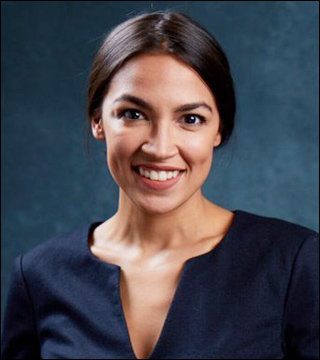
Rep. Alexandria Ocasio-Cortez’s (D-Bronx) upset in the 14th District Democratic primary during the last cycle has awakened the New York left.

Feb. 20, 2019 — The state of New York, which generally features mostly non-competitive congressional campaigns in its 27 districts may see a very different 2020. Already, individuals are making preliminary political moves in at least 18 of the 27 CDs, including many budding primary challenges.

Rep. Alexandria Ocasio-Cortez’s (D-Bronx) upset of then-Rep. Joe Crowley (D-Queens) in the 14th District Democratic primary during the last cycle has awakened the New York left. Now, it appears several other New York City veteran Democrats could face their own 2020 primary challenge.

Even Ocasio-Cortez, who has angered many establishment Democrats with some of her actions and comments, could also see primary competition as rumors of a return match for Crowley, who remains as the Queens Borough Democratic Party chairman, begin to swirl.

In terms of potential Democratic primary challenges, individuals are coming forward to at least begin talking about developing a potential campaign. Those targeted include Reps. Tom Suozzi (D-Glen Cove), Yvette Clarke (D-Brooklyn), Jerrold Nadler (D-Manhattan), Carolyn Maloney (D-New York City), Jose Serrano (D-Bronx), and Eliot Engel (D-Bronx). And, Ocasio-Cortez even listed new House Democratic Conference chairman Hakeem Jeffries (D-Brooklyn) as an incumbent for the Justice Democrats organization, apparently much to the chagrin of the rest of the NY Democratic delegation.

Continue reading

House Democrats Release “Frontline Program” Targeting Perceived
Vulnerable GOP CDs

By Jim Ellis

Feb. 12, 2019 — Countering the previously announced National Republican Congressional Committee Patriot Program targeting list, the Democratic Congressional Campaign Committee released their Frontline Program protection listing late last week.

Since the Democrats are now in the House majority, their list is wholly defensive in nature while the Republicans are the minority challengers, a juxtaposition of roles from the past four election cycles. Of the 44 Frontline defense districts, 43 are also GOP Patriot Program targets. The lone exception is Connecticut freshman Jahana Hayes (D-Wolcott), a former national Teacher of the Year award winner who won a 56-44 percent victory in her maiden general election campaign.

The targeting organizational programs are important because both official political party apparatuses help the candidates with fundraising, a campaign element where Democrats overwhelmed Republicans in the 2018 election cycle. Therefore, it is likely that the Patriot Program is more important to the previously identified GOP members than the Frontline operation is to the Democratic incumbents, most of whom raised multi-millions in their own right.

Comparing the lists, the 43 top Democratic protection members who are also found on the Republican register could more realistically be narrowed to 27 campaigns that should reasonably be placed in the highest vulnerability category.

In 19 of the 27, President Trump carried the district over Hillary Clinton, and four years earlier Mitt Romney topped President Obama in 17 of the CDs. The Republicans had won all three post-redistricting congressional elections (2012, ’14, ’16) in 22 of the 27 districts prior to the 2018 vote.

Continue reading