Monthly Archives: January 2026

Mary Peltola for Senate?

By Jim Ellis — Friday, January 9, 2026

Senate

Alaska’s Mary Peltola (D)

Surprising reports are coming from Alaska indicating that former Rep. Mary Peltola (D) will announce a US Senate bid before the end of this month.

The move is eyebrow-raising in that it was presumed by most that Peltola, who lost her seat in 2024 to current at-large Congressman Nick Begich III (R-Chugiak), would enter the open Governor’s race. In that campaign, she would easily have punched her ticket into the general election and eventually face a Ranked Choice Voting Republican opponent who is politically much weaker than two-term Sen. Dan Sullivan (R).

Should these reports prove true, Peltola, who won two congressional elections through the state’s top four primary system featuring the Ranked Choice Voting option, would likewise advance into the general election. Attempting to unseat Sen. Sullivan, however, might become a bridge too far.

In the 2024 congressional race, then-Rep. Peltola held a huge resource advantage over Begich. The campaign spending ratio was 5:2 in Peltola’s favor ($13.2 million to $2.6 million), yet she would lose the race by a 51.2 – 48.8 percent mark after three rounds of Ranked Choice Voting.

In a contest against Sen. Sullivan, who already has more than $5 million in his campaign account, the dollar advantage would likely fall to the incumbent, though both will have more than enough financial support to communicate their respective messages in a one-congressional district state.

Because Peltola has been circumspect for months about the race she might enter, or whether she would run for public office at all in 2026, pollsters have tested her for several offices.

Two polls were released in 2025 pitting Peltola against Sen. Sullivan. The results were not surprising as she has typically polled close in her past electoral efforts and ended with very tight results in her three congressional campaigns.

In her trio of federal political battles, winning two (both against former Governor and 2008 Vice Presidential nominee Sarah Palin) and losing one (to Begich), Peltola averaged 51.8 percent of the vote. All three of her races required Ranked Choice Voting rounds since none of the candidates reached the majority mark in the initial vote.

The Alaska Survey Research firm released an online US Senate campaign survey in late October of 1,908 likely voters. The result found Peltola holding a 48-46 percent lead over Sen. Sullivan. An earlier poll, from the Democratic firm Data for Progress, (published Aug. 8, 2025; 678 likely Alaska voters; online) found the Senator holding a slight 46-45 percent edge.

Data for Progress also tested Peltola in the Governor’s race. In the firm’s Aug. 8 poll, the ballot test results found the former Congresswoman commanding 40 percent support in the top four jungle primary that includes all candidates irrespective of political party affiliation. Her total compared to radio talk show host Bernadette Wilson’s (R) 11 percent preference figure while Lt. Gov. Nancy Dahlstrom (R) attracted 10 percent support. None of the other five candidates (four Republicans and one Democrat) included in the poll broke into double-digit figures.

In the March 2025 Data for Progress survey, Peltola topped Lt. Gov. Dahlstrom 44-34 percent in a projected two-way general election. Therefore, the news breaking that Peltola has more interest in a Senate challenge than in running for the open Governor’s position was unexpected.

For the 2024 congressional race, two Republican firms, American Viewpoint and Cygnal, in August of that campaign year released polls finding then-Rep. Peltola leading Begich, 45-39 percent and 46-45 percent, respectively. A mid-September American Viewpoint survey posted Begich to a 44-40 percent edge. Finally, Cygnal’s mid-October numbers projected a Begich lead of 49-45 percent.

Thus, the aggregate polling largely proved accurate because the predicted tight finish proved true.

While Mary Peltola entering the 2026 US Senate race would probably not end in victory for her, she would certainly put the race in play for the Democrats who need a net gain of four seats to capture the Senate majority, and of course political lightning could strike. A Sullivan-Peltola race would certainly be competitive and would attract a significant amount of national political attention.

The Senate Open Races

By Jim Ellis — Thursday, January 8, 2026

The Senate Opens

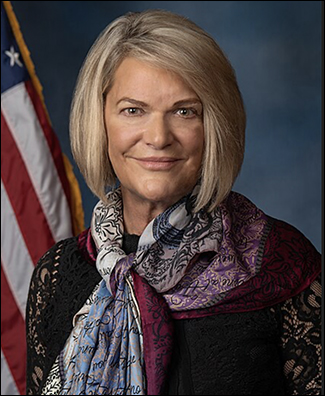
Wyoming first-term Sen. Cynthia Lummis (R)

With Sen. Cynthia Lummis (R-WY) announcing her retirement at the end of last year, Wyoming becomes the ninth state to host an open 2026 US Senate race. As we begin 2026, we take a brief look at each open contest.


Alabama

Sen. Tommy Tuberville (R) is leaving the Senate to run for Governor. His replacement will almost assuredly come from the Republican primary. The leading candidates are Attorney General Steve Marshall, US Rep. Barry Moore (R-Enterprise), and anti-human trafficking activist and ex-Navy SEAL Jared Hudson. Marshall is ineligible to seek a third term in his current position. This race could turn into an interesting three-way campaign since early polling projects different leaders.


Illinois

Senate Democratic Whip Dick Durbin (D-IL) is retiring and leaves a three-way party primary battling for the right to succeed him. The three contenders are Lt. Gov. Juliana Stratton and Reps. Robin Kelly (D-Matteson/Chicago) and Raja Krishnamoorthi (D-Schaumburg).

From the beginning, Rep. Krishnamoorthi has held a large lead in polling and certainly fundraising. At this point less than three months before the March 17 primary, Rep. Krishnamoorthi looks to be the clear favorite for the Democratic nomination and to win the seat in the general election.


Iowa

Sen. Joni Ernst (R) is retiring after two terms, and three-term Rep. Ashley Hinson (R-Marion/Cedar Rapids) appears as the prohibitive favorite to win the Republican nomination. Democrats are poised to make a run for the seat even though their nominee will be a decided underdog.

Reports last week indicate that Democratic Party leaders favor state Rep. Josh Turek (D-Council Bluffs), thinking he would be the strongest candidate to oppose Rep. Hinson. Also vying for the party nomination are state Sen. Zach Wahls (D-Des Moines), former state legislators Bob Krause and Richard Sherzan, and local Chamber of Commerce executive Nathan Sage.


Kentucky

Sen. Mitch McConnell (R) is retiring after serving what will be seven six-year terms. Without Gov. Andy Beshear in the Senate race for the Democrats, the battle to succeed Sen. McConnell will be fought in the Republican primary. There, we see a three-way race among former Attorney General and 2023 Republican gubernatorial candidate Daniel Cameron, Rep. Andy Barr (R-Lexington), and wealthy businessman Nate Morris.

Cameron, despite losing the 2023 general election to Gov. Beshear, leads Barr and Morris in polling but the Congressman has a multi-million-dollar advantage over Cameron in cash resources. Morris is independently wealthy and has been advertising early. Polling, however, shows he has little momentum.

For the Democrats, we will see a primary rematch from the 2020 race between former Marine Corps officer Amy McGrath and then-state Rep. Charles Booker. Kentucky’s Republican nature suggests that the eventual GOP nominee, likely either Rep. Barr or Cameron, will be a clear favorite in the general election.


Michigan

Michigan is one of two open Senate races projected as highly competitive in the general election. In this case, Republicans have a chance to convert a Democratic seat. Former Rep. Mike Rogers, who faces only a Michigan Republican Party former officer and minor candidates is a prohibitive favorite for the party nomination on Aug. 4. Rogers came within 19,006 votes of winning the 2024 Senate race and now is well positioned for the 2026 campaign.

The Democrats are embroiled in a tight three-way campaign for the party nomination among Rep. Haley Stevens (D-Birmingham), state Sen. Mallory McMorrow (D-Royal Oak), and former Wayne County Health Director Abdul El-Sayed. All three have raised into seven figures and are running close in early polling.

Rogers advantage is that his eventual Democratic opponent will have come through a tough primary late in the cycle. This race is likely to be in toss-up mode all the way through the November election.


Minnesota

Sen. Tina Smith (D) surprisingly announced her retirement early in 2025, and leaves in her wake a two-way Democratic primary between Lt. Gov. Peggy Flanagan and Rep. Angie Craig (D-Prior Lake). Flanagan is staking out the left flank of the Democratic Party, while Rep. Craig is positioning herself as more business friendly.

Under the Minnesota system, the state political party convention through delegate voting grants pre-primary endorsements. Typically, the candidates adhere to the endorsement process and don’t force primaries. It appears, however, this Senate election will advance to an Aug. 11 primary irrespective of the party convention action.

Republicans hope to recruit former national sportscaster Michele Tafoya into the race. Regardless of a potential Tafoya candidacy, the eventual Democratic nominee will have the advantage in the general election.


New Hampshire

Sen. Jeanne Shaheen (D) is retiring after three terms. Rep. Chris Pappas (D-Manchester) has adroitly transformed himself into the consensus Democratic nominee.

Former Sen. John E. Sununu (R), who lost to Shaheen in 2008 after defeating her in 2002, is competing for the nomination and looks to face former Massachusetts Senator and 2014 New Hampshire Senate candidate Scott Brown. Sununu is likely to win the Republican nomination. Rep. Pappas will only be a slight favorite after the late Sept. 8 primary election. Clearly, the Republicans having a Sununu family member on the ballot gives the party a fighting chance to convert the seat.


North Carolina

Though both parties feature multiple candidates vying for their respective open US Senate nominations, each looks to already have their general election candidate.

For the Democrats in the second open race that will be highly competitive in the general election, former two-term Governor and previous four-term Attorney General Roy Cooper looks to be a lock for his party’s nomination. On the Republican side, former Republican National Committee and ex-North Carolina Republican Party chairman Michael Whatley is in the driver’s seat to clinch a general election ballot position.

The North Carolina race promises to feature a hotly contested campaign immediately after the general election begins on March 4 and will carry through to the November vote. The Tar Heel State always features tight elections, and the 2026 US Senate campaign will be no exception. Democrats certainly have a viable opportunity to convert this seat.


Wyoming

Late last year, Sen. Lummis announced that she would not seek a second term, which opens the safe Republican Wyoming seat. With Gov. Mark Gordon (R) term-limited and unlikely to run for the Senate, all eyes are on at-large Rep. Harriet Hageman (R-Cheyenne) to decide if she will run for Governor, Senate, or re-election. Once she makes a decision, the Wyoming political musical chairs will begin.

At this point, it is unclear who will run where, but the Republicans will hold the seat. We may have to wait awhile, however, to see how this political situation unfolds. The candidate filing deadline is not until May 29 for the associated Aug. 18 primary election.

Rep. Doug LaMalfa Passes Away

By Jim Ellis — Wednesday, January 7, 2026

House

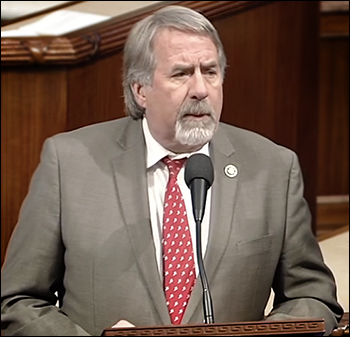
California Congressman Doug LaMalfa

California Congressman Doug LaMalfa (R-Oroville) suddenly passed away during yesterday’s early hours, marking the fourth time a member of the House has died during the current congressional biennial. The other 119th Congress deceased members are Reps. Raul Grijalva (D-AZ), Sylvester Turner (D-TX), and Gerry Connolly (D-VA).

Rep. LaMalfa’s death will lead to a special election and likely in California’s new 1st Congressional District. Running in the new district will give the Democrats a distinct advantage to convert the seat.

According to the redistricting Proposition 50 verbiage that voters passed in a Nov. 4 special election, the new plan would be in effect from the beginning of 2026 until the California Citizens Redistricting Commission redraws the map after the 2030 census. Therefore, it is a virtual certainty that the special election will be held in the new district, though seeing a lawsuit arguing otherwise could be forthcoming. Gov. Gavin Newsom (D) will schedule the special election to replace the late Congressman.

LaMalfa, after serving three terms in the state Assembly and being elected to the state Senate, claimed the 1st District congressional seat in 2012. He was re-elected six times, including November of 2024. In his seven congressional elections, LaMalfa averaged 59.5 percent of the vote.

It is arguable that Rep. LaMalfa received the worst draw of any California Republican incumbent when comparing the new 1st District to the 1st CD from which he was elected. The northern California draw was largely conceived to give state Senate President Mike McGuire (D-Sonoma County) the opportunity of running for the US House.

Under the California term limits law, McGuire is ineligible to seek re-election to the state Senate this year. Considering that Gov. Newsom needed a two-thirds vote in each legislative chamber to place the redistricting map on the special election ballot as a referendum, a favorable 1st District was drawn to benefit the Senate President at the expense of Rep. LaMalfa.

The change is dramatic. The new 1st contains only 43 percent of the territory that constituted the previous 1st District, with 57 percent of the new constituency coming from the Democratic districts of Reps. Jared Huffman (D-San Raphael) and Mike Thompson (D-St. Helena/ Clear Lake). According to the Dave’s Redistricting App statisticians, the 1st District partisan lean moves from a 60.2R – 37.7D Republican advantage to a pro-Democratic edge of 55.2D – 44.1R. Therefore, the chances of the Republicans retaining the seat, even if Rep. LaMalfa would have run for re-election, are for them less than favorable.

The death of LaMalfa and Monday’s official resignation of Rep. Marjorie Taylor Greene (R-GA) leaves the Republican majority margin at 218-213, with each party yielding two vacant seats.

Georgia Gov. Brian Kemp (R) announced yesterday that the special election to replace Rep. Greene is scheduled for March 10. All candidates will be placed on a jungle election ballot. If no candidate receives majority support, the top two finishers, irrespective of partisan affiliation, will advance to a runoff election no later than 28 days after the initial vote. As the safest Republican seat in Georgia (DRA partisan lean: 69.2R – 28.9D) the GOP will retain the seat in the upcoming special election.

On Jan. 31, Houston, Texas voters will decide between Harris County Attorney Christian Menefee (D) and former City Councilwoman Amanda Edwards (D) to replace the late Rep. Sylvester Turner (D) who died last March. Regardless of the outcome, both candidates will then advance into a March 3 regular Democratic primary election, though one will be an incumbent. There, they will face Rep. Al Green (D-Houston) and others in a reconfigured 18th District under the new Texas redistricting map. Should no candidate receive majority support in the regular primary, a runoff will occur on May 26.

In northern New Jersey, voters will go to the polls in partisan primaries on Feb. 5 to choose nominees for the purpose of replacing Gov-Elect Mikie Sherrill (D) in the 11th Congressional District. The special general election is scheduled for April 16. The eventual Democratic nominee will be a heavy favorite to hold the seat. Once this election is complete, the House will have a full complement of 435 members for the first time since Rep. Grijalva passed away on March 13, 2025.

Walz Out, Klobuchar In?

By Jim Ellis — Tuesday, January 6, 2026

Governor

Minnesota Governor Tim Walz (D) yesterday announced that he is ending his bid for a third gubernatorial term and, perhaps more surprisingly, veteran US Senator and former presidential candidate Amy Klobuchar (D) is reportedly seriously considering entering what will now be an open Governor’s race.

The unexpected turn of events appears directly connected to the controversy surrounding the alleged fraud claims regarding certain Minnesota public assistance programs. Clearly, the Governor’s internal polling revealed his chances of winning re-election have greatly diminished; hence, his rather abrupt decision to retire.

Should Sen. Klobuchar become a gubernatorial candidate, she will be the fourth senator choosing to run for governor in the 2026 election cycle. The others are Sens. Tommy Tuberville (R-AL), Michael Bennet (D-CO), and Marsha Blackburn (R-TN). From this group, only Sen. Tuberville is risking his Senate seat to enter his state’s Governor’s campaign. The others, including Sen. Klobuchar, would all have a free ride relating to their current position and be in position to choose their own US Senate successor via appointment.

At this point in Minnesota, 11 Republicans have announced their gubernatorial campaigns including 2022 gubernatorial nominee and former state Sen. Scott Jensen, state House Speaker Lisa Demuth (R-Rocori) and state Reps. Peggy Bennett (R-Albert Lea) and Kristin Robbins (R-Maple Grove).

It is unclear how the Walz retirement and potential Klobuchar entry will affect the burgeoning Republican field. In any event, considering Minnesota’s reliably Democratic voting history, the eventual party nominee, and particularly if it is Sen. Klobuchar, will be favored to win the general election. With the candidate filing deadline not until June 2 for the Aug. 11 primary election, much time remains for each party’s field to gel.

As previously mentioned, should Sen. Klobuchar run for and be elected Governor, she would appoint her successor. The appointed individual would then presumably compete in a 2028 special election to serve the balance of the term. In this case, because Sen. Klobuchar was re-elected in 2024, the appointed Senator, after winning the special election, would then have the opportunity of seeking a full six-year term in 2030.

Should the Klobuchar scenario occur, Minnesota would then have two freshmen Senators during the next Congress similar to the situation we currently see in Ohio. Because Minnesota Sen. Tina Smith (D) is retiring, the state’s in-cycle race is also open.

Gov. Walz was first elected to his statewide post in 2018 and re-elected in 2022. He averaged 53.1 percent of the vote in his two statewide campaigns. Prior to running for Governor, Walz represented the state’s southern 1st Congressional District for six terms. He then, of course, became the 2024 Vice Presidential nominee on the national Democratic ticket with Kamala Harris. Prior to his entry into elective politics, Walz was a high school geography teacher and football coach.

Nationally, 36 gubernatorial elections will be held later this year. In those 36 campaigns, 18 incumbents, down from 19 with the Walz decision, will seek re-election and the remaining 18 states will feature open gubernatorial competition. Within the group of 36 in-cycle states, each party currently holds 18 Governor’s chairs.

Looking Forward to March

By Jim Ellis — Monday, Jan. 5, 2026

Midterms
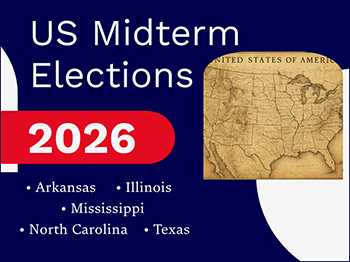
As we begin Midterm Election ‘26, we look to the nation’s first set of primaries, five of which will take place in the month of March.

Casting the first regular midterm cycle ballots will be voters in Arkansas, North Carolina, and Texas on March 3; Mississippi on March 10; and Illinois a week later, on St. Patrick’s Day, March 17.

Candidate filing has closed in all five states, and four of the five employ a runoff system. Only Illinois will select nominees through a plurality vote. Arkansas, Texas, and Mississippi feature 50 percent plus-1 vote nomination thresholds, while North Carolina candidates clinch their party’s nomination when exceeding 30 percent.


March 3:

Arkansas — The Natural State voters are looking at a quiet midterm election, just as the Republicans desire. Gov. Sarah Huckabee Sanders (R) is on the ballot for a second term. She faces no renomination competition. For the Democrats, state Sen. Fred Love (D-Mabelvale) and magazine publisher Bupha Xayprasith-Mays battle for the party nomination, and realistically for the right to lose to Gov. Sanders in the general election.

Sen. Tom Cotton (R) faces little in the way of primary opposition. He will easily defeat his two minor Republican opponents in the March 3 primary. He will probably face Lewisville Mayor Ethan Dunbar (D) in the general election. Sen. Cotton will be rated as a prohibitive favorite to win a third term in November.

Three of the four congressional incumbents, all Republicans, face no GOP opposition. Only Rep. French Hill (R-Little Rock) has a minor Republican opponent. All four Arkansas US Representatives are heavy favorites for re-election.

North Carolina — The open US Senate race is the only Tar Heel statewide campaign in 2026, and the nominees are virtually set long before voters cast ballots in the March 3 election.

Both former Gov. Roy Cooper and ex-Republican National Committee chairman Michael Whatley — though each face a large number of intra-party opponents — will glide to their respective Democratic and Republican nominations. The general election, however, will feature one of the most competitive Senate races in the nation.

With a new congressional map yielding little in the way of general election competition, a great deal of political attention will be centered upon the new 1st District. There, Republicans hope to unseat two-term Democratic incumbent Don Davis (D-Snow Hill).

The 1st was the focal point of the 2025 redistricting plan, and now the district moves clearly into the lean Republican column from its previous Democratic tilt. With Rep. Davis winning re-election by less than two percentage points in 2024, the re-draw will give the edge to the new Republican nominee.

Laurie Buckhout, the ’24 GOP nominee who almost defeated Rep. Davis, returns for a re-match and is favored to win the Republican primary against state Sen. Bobby Hanig (R-Currituck County), Carteret County Sheriff Asa Buck, Lenoir County Commissioner Eric Rouse, and attorney Ashley-Nicole Russell.

The other major primary campaign comes on the Democratic side in the state’s 4th CD. There, freshman Rep. Valerie Foushee (D-Hillsborough/Chapel Hill) fights for renomination against Durham County Commissioner Nida Allam. Expect the Congresswoman to prevail on March 3, but this race will likely host an ideologically driven campaign.

Texas — The Lone Star State will feature a major March 3 primary. The Senate race for both parties will headline the primary vote. Republican Sen. John Cornyn looks to be facing a runoff election, assuming he qualifies, with either Attorney General Ken Paxton or Rep. Wesley Hunt (R-Houston). The only certainty here appears that no candidate will receive majority support.

For the Democrats, the party primary will likely decide whether Rep. Jasmine Crockett (D-Dallas) or state Rep. James Talarico (D-Austin) will win the nomination. It is probable that the first-place finisher will exceed the 50 percent majority threshold. The eventual Republican nominee will be rated as at least a slight favorite in the general election, but the contest will be competitive.

Gov. Greg Abbott will win a fourth nomination as Governor against minor opponents. The Democrats will likely head to a gubernatorial runoff election and probably between two of the following three contenders: state Rep. Gina Hinojosa (D-Austin), former Congressman and 2006 gubernatorial nominee Chris Bell, and businessman Andrew White, son of the late former Governor Mark White. Gov. Abbott will be favored in the general election.

The US House races in Texas feature 11 open seats among the state’s 38 districts. Six of the 11 are Republican-held with three new seats created through the 2025 redistricting map.

The Democrats will feature a District 18 paired battle including both Jan. 31 special election candidates, Harris County Attorney Christian Menefee and ex-Houston City Councilwoman Amanda Edwards, against Rep. Al Green (D-Houston).

The other open Democratic seat lies in Dallas and Tarrant counties since Rep. Crockett is running for Senate. The six open Republican seats and three new districts all feature crowded primaries. Advancing to runoffs in each situation appears as a virtual certainty.


March 10:

Mississippi — Sen. Cindy Hyde-Smith (R) is on the ballot for a second full term and will be favored for re-election. She faces only one minor GOP opponent. The likely Democratic nominee, also expected to win the party nomination outright, is Lowndes County District Attorney Scott Colom. We can expect the Democrats to mount an effort in the general election, but it will be difficult to unseat Sen. Hyde-Smith in this reliably Republican state.

The only serious primary contest occurs in the state’s Delta region. Second District veteran Congressman Bennie Thompson (D-Bolton) has drawn a primary opponent in the person of attorney and former congressional aide Evan Turnage. This contest is expected to be a generational battle as opposed to being ideologically based. Turnage will attempt to create a contrast between himself, as a challenger in his 40s, and an incumbent in his late 70s. Expect Rep. Thompson to again prevail, but this could become a contest that draws significant political attention.


March 17:

Illinois — The major Illinois contest is the open US Senate Democratic primary. Here, Rep. Raja Krishnamoorthi (D-Schaumburg) appears to have the inside track toward winning the plurality election. He is favored to defeat Lt. Gov. Juliana Stratton and Rep. Robin Kelly (D-Matteson/Chicago). The Democratic nominee then becomes a prohibitive favorite to win the general election and succeed retiring Sen. Dick Durbin (D).

Gov. J.B. Pritzker is on the ballot for a third term and is unopposed for the Democratic nomination. Six Republicans, including 2022 party nominee Darren Bailey, are competing. Regardless of who comes through the GOP battle, Gov. Pritzker will be a prohibitive favorite to win the general election.

As in Texas, Illinois features a large number of open US House seats. In the Land of Lincoln, five of the state’s 17 congressional seats are open, all currently Democratic held districts. We will see nomination clinching elections in every Illinois CD on March 17. Each of the five open seats will remain Democratic in the general election.

Among the notable campaigns is a comeback attempt from former Rep. Jesse Jackson, Jr. (D), who has a reasonable chance of winning the crowded 2nd District Democratic primary. The winner will replace Rep. Kelly. Should Jackson return to the House, he will join his brother, Rep. Jonathan Jackson (D-Chicago), in the congressional delegation.

Another former member, Melissa Bean, is attempting to regain the 8th District seat she lost in 2010; she has a good chance of being successful.

The open 4th District campaign is controversial in that retiring Rep. Jesus “Chuy” Garcia (D-Chicago) didn’t announce his retirement decision, thus allowing his congressional chief of staff, Patty Garcia, to declare at the end of the filing period; therefore, she is running unopposed for the Democratic nomination. Garcia, no relation to the Congressman, will likely face major competition in the general election, however.

Two prominent Democrats, including Chicago Alderman Byron Sigcho-Lopez, are attempting to qualify for the ballot as Independent candidates. The Illinois ballot requirements for non-major party candidates are substantial, but the potential candidates have until May 26 to qualify.