
Tag Archives: Rep. Liz Cheney

Impeachment Republicans’ Trouble

By Jim Ellis

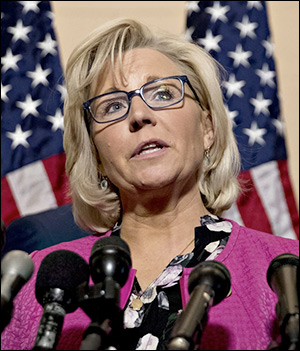
Rep. Liz Cheney (R-WY), one of 10 Republican House members who voted to impeach former President Donald Trump

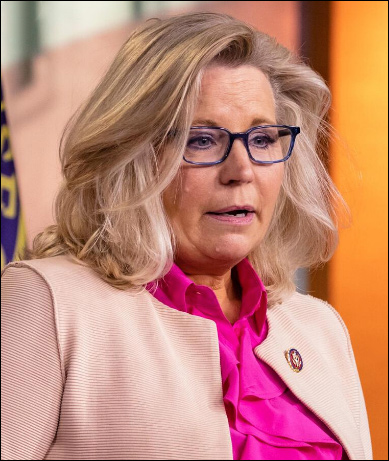
Oct. 15, 2021 — As we know, 10 House Republicans voted to impeach then-President Donald Trump over the Jan. 6 US Capitol controversy and now it appears that the nine running for re-election are currently facing a bumpy political road.

Reports have surfaced in the political media that identify billionaire Peter Thiel, a Trump supporter, as contributing to the campaigns of the Trump-endorsed candidate opposing at least two of the Impeachment Republicans, Reps. Liz Cheney (R-WY) and Jaime Herrera Beutler (R-WA). The big question is whether Thiel and other like-minded mega donors will fund Super PAC efforts against the House incumbents who supported the impeachment resolution.

Already, Thiel is reportedly committing $10 million to a Super PAC supporting Arizona Senate candidate Blake Masters. He faces a credible field in the GOP primary, including Attorney General Mark Brnovich, solar company owner Jim Lamon, retired Arizona National Guard Adjutant General Mick McGuire, and State Corporation Commission member Justin Olson.

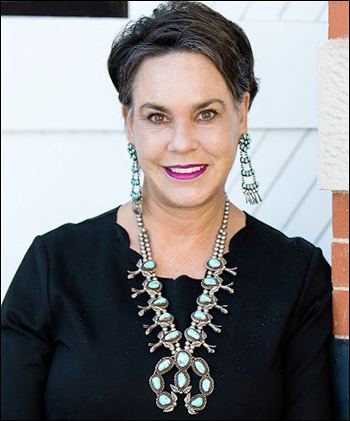
It is unknown whether Thiel will put that type of money behind the Trump endorsed House candidates trying to deny the impeachment Republicans re-nomination, but he has made the maximum campaign contribution to at least two of the contenders, Harriet Hageman, who is opposing Rep. Cheney, and retired Army officer Joe Kent, Rep. Herrera Beutler’s GOP challenger.

Let’s look at how the 10 are currently faring in their re-election efforts:

• CA-21 – Rep. David Valadao: With California’s top-two qualifying system there are effectively no Republican or Democratic primaries. The candidates finishing first and second from the June primary will advance into the general election regardless of party affiliation. There is little chance of denying Rep. Valadao one of the two finalist positions, but he will face a difficult general election campaign irrespective of the Trump-backed efforts.

• IL-16 – Rep. Adam Kinzinger: Reports suggest that the Democratic state legislative leadership is attempting to collapse Rep. Kinzinger’s seat since Illinois loses a seat in reapportionment. He faces a multi-candidate Republican field, but the redistricting lines will be the biggest factor in whether or not Rep. Kinzinger continues his congressional career. The situation won’t be fully known until the redistricting plan is formally introduced and passed into law.

• MI-3 – Rep. Peter Meijer: Freshman Rep. Meijer may have the most favorable situation of all the impeachment Republicans. While he does have primary opposition, none of the candidates appear particularly formidable. Additionally, the preliminary redistricting maps suggest that while Meijer’s district will significantly change, he will still have a Republican seat anchored in Grand Rapids. Adding the city of Kalamazoo would make re-election more competitive, but the overall district would still favor a Republican nominee in most instances.

• MI-6 – Rep. Fred Upton: Multiple Republican candidates have surfaced against Rep. Upton, but his bigger problem may be redistricting. The Michigan Independent Citizens Commission has released four draft maps, and all pair Rep. Upton with another Republican incumbent, either Reps. Bill Huizenga (R-Holland) or John Moolenaar (R-Midland).

Though Trump has endorsed state Rep. Steve Carra (R-Kalamazoo), Upton’s bigger problem would likely be facing another incumbent. It is also possible that Carra finds himself placed in another district.

• NY-24 – Rep. John Katko: Like Rep. Upton, Katko’s biggest re-election problem appears to be redistricting and not the two Republicans who have announced against him. Though the New York preliminary congressional redistricting map has not yet been released, it appears the Democratic leadership is looking to take as many as five of the eight Republican seats away from the GOP.

This very likely means that Rep. Katko would find himself paired with another Republican incumbent, even potentially House Republican Conference Chair Elise Stefanik. Redistricting will likely be the key factor in whether or not Rep. Katko returns to Congress after the next election.
Continue reading

Trump Chooses Cheney Opponent

By Jim Ellis

Sept. 14, 2021 — Movement is occurring in the Wyoming Republican primary challenge race against at-large Rep. Liz Cheney (R-Wilson). At this point, however, the latest developments may still not be enough to deny her re-nomination in a crowded open GOP primary scheduled for Aug. 16, 2022.

Former Wyoming Republican National Committeewoman Harriet Hageman late last week announced her candidacy as a Republican representative in the state’s lone congressional district to challenge Rep. Liz Cheyney (R-Wilson).

Attorney and former Wyoming Republican National Committeewoman Harriet Hageman late last week announced her candidacy in the Equality State’s lone congressional district. She joined a throng of eight GOP candidates opposing Rep. Cheney in the 2022 primary.

A day after Hageman’s announcement, former President Donald Trump, who is the focal point of Rep. Cheney’s actions relating to the Jan. 6 uprising at the Capitol and her vote to impeach him, is now actively supporting one of the candidates.

Hageman, in a coordinated announcement and endorsement over a two-day period, entered the race knowing she had the support of the former national chief executive. Such backing has often helped other endorsed candidates prevail in similar Republican primaries.

After Trump publicized his Hageman endorsement, the field slimmed to seven as US Air Force veteran Bryan Miller and attorney Darin Smith ended their campaigns, thus answering the former President’s call for the party to unite behind one candidate.

The remaining group of contenders, state Sen. Anthony Bouchard (R-Laramie), state Rep. Chuck Gray (R-Casper), retired Army Colonel Denton Knapp, former Pavillion mayor, Marissa Joy Selvig, and two minor candidates, have not yet followed suit.

Polling suggests that the crowded field, with the anti-Cheney vote split multiple ways, could allow the congresswoman to win re-nomination with a rather small plurality. Another point in her favor is that Wyoming does not register voters by political party affiliation. In this state’s nomination elections, and in many other places, voters simply choose the party primary in which they desire to participate.

This system would allow disaffected Democrats to vote in the Republican primary. They would likely support Cheney, having the goal of thwarting the Trump and conservative forces who are attempting to oust her.

Because Rep. Cheney has gone so far to oppose Mr. Trump’s post-election actions and stances, denying her re-nomination becomes a significant test of the former president’s party leadership. Cheney has even aligned herself with House Speaker Nancy Pelosi (D-CA) in taking her Trump opposition to the ultimate level by serving as a member of the House select committee investigating the Capitol uprising. This was knowingly done so in defiance of House Republican Leader Kevin McCarthy’s (R-CA) directive to the GOP members vis-a-vis committee participation.

Continue reading

Cheney: The Battle Intensifies

By Jim Ellis

Rep. Liz Cheney, (R-WY)

July 23, 2021 –The internal Republican strife involving Wyoming at-large Rep. Liz Cheney (R-Wilson/Jackson) reached a heightened negative level Wednesday.

In what seems like a news story that won’t die, Rep. Cheney again sided with the Democrats regarding the continuing saga of reviewing the violent situation that occurred at the Capitol on Jan. 6th and this time publicly attacked her party’s top House leader.

The controversy again erupted on Wednesday when Speaker Nancy Pelosi (D-CA) rejected two of the Republican members that House Minority Leader Kevin McCarthy (R-CA) appointed to the select committee charged with investigating what occurred in the Capitol building on that January day.

Leader McCarthy had appointed Rep. Jim Banks (R-IN) as the ranking Republican for the select committee and Ohio Rep. Jim Jordan (R-Urbana) among his five designated appointments. Earlier, Pelosi had already chosen Rep. Cheney as her lone Republican committee selection, leaving McCarthy to recommend members to fill the remaining GOP slots.

After the Speaker rejected Reps. Banks and Jordan, Leader McCarthy pulled the remaining members on his slate and called the committee a partisan sham. Cheney, however, chose to remain as part of the Speaker’s contingent.

Rep. Cheney then held a news availability in front of the Capitol where she slammed McCarthy as being unfit to serve as Speaker, if the Republicans re-claim the majority in the next election, saying that “any person who would be the third in line to the Presidency must demonstrate a commitment to the Constitution and a commitment to the rule of law, and Minority Leader McCarthy has not done that.”

Those comments then led to Texas Rep. Lance Gooden (R-Terrell) tweeting, “when will Liz Cheney officially switch to the party that she truly represents? We don’t want her in the Republican Party any longer! She is a disgrace!”

Continue reading

It’s Down to a Dozen in SC-7

By Jim Ellis

South Carolina state Rep. William Bailey (R-Myrtle Beach)

June 17, 2021 — South Carolina state Rep. William Bailey (R-Myrtle Beach), who became the first individual to announce a Republican primary challenge to Rep. Tom Rice (R-Myrtle Beach) has become the first candidate to withdraw, with his announcement this past Tuesday. Bailey initially entered the race immediately after the congressman voted to impeach former President Trump in relation to the Jan. 6 assault on the Capitol.

Rep. Bailey indicated that there are ‘enough conservatives in the race to give Mr. Rice a strong challenge,’ and says he is leaving the congressional race to seek re-election to his state House position.

After Bailey’s departure, and including Rep. Rice, there are a dozen announced candidates for the Republican congressional primary in a 7th District that currently occupies South Carolina’s northeastern sector and includes the cities of Myrtle Beach and Conway. In the two Trump presidential elections, the district’s voters strongly supported the former president and with very consistent margins: 58-39 percent in 2016 and 59-40 percent last November.

Normally, a large field of opponents would help an incumbent, but maybe not under the South Carolina election system. The state, like many others in the south, adopts a secondary runoff election process, meaning the winning candidate must secure an absolute majority. If no one can achieve the mark in the primary election, the top two vote-getters advance to a secondary election.

What makes the Palmetto State’s system different is that the runoff cycle lasts only two weeks. Typically, South Carolina holds its primaries in mid-June with the associated runoffs following in the latter part of the month.

Therefore, an incumbent under attack doesn’t have much time to recover before the next election commences. This calendar likely enhances the most common pattern of incumbents generally losing a runoff election if they are forced into a secondary vote.

The large number of contenders notwithstanding, and without Rep. Bailey in the field, the two most prominent challengers appear to be Horry County School Board chairman Ken Richardson and former Myrtle Beach mayor, Mark McBride, though the latter man was defeated in a runoff election for a third term. McBride was also beaten badly in a 2020 special election for the state House of Representatives.

Continue reading

The Very Real Challenges Of 10 Reps Who Voted to Impeach Trump

By Jim Ellis

Former President Trump

April 20, 2021 — The 10 House Republicans who voted for ex-President Trump’s second impeachment have drawn national media attention, and the newly disclosed first quarter campaign finance numbers give us a sense of which incumbents have a significant challenge ahead of them while others look ahead to clear sailing.

To refresh memories, the 10 GOP impeachment supporters are: Reps. Jaime Herrera Beutler (R-WA), Liz Cheney (R-WY), Anthony Gonzalez (R-OH), John Katko (R-NY), Adam Kinzinger (R-IL), Peter Meijer (R-MI), Dan Newhouse (R-WA), Tom Rice (R-SC), Fred Upton (R-MI), and David Valadao (R-CA). Of these, all have declared opposition with the exception of Rep. Katko.

Based upon fundraising, which is an excellent indication of a candidate’s early support and whether the contender is making the right moves to position him or herself properly against an incumbent, we see two members, and possibly a third, who appear to have capable opponents.

Ohio’s Max Miller, the former Trump White House aide, is the top fundraiser among the nine challenger contests. He reports more than $500,000 in receipts with just over $438,000 remaining in his campaign account for a battle with two-term incumbent Rep. Gonzalez. For his part, the congressman raised well over $600,000 in the first quarter and his cash-on-hand exceeds $1 million.

The other seemingly significant contender is technology executive and Army veteran Joe Kent who is challenging six-term Washington Rep. Beutler. He raised over $269,000 as compared to the congresswoman’s $744,755. On hand, Kent has almost all his money remaining having spent only about a net $20,000 at this early point in time. Washington has a jungle primary, so the chances of qualifying two Republicans for the general election or Rep. Beutler not advancing are scenarios currently difficult to fathom.

The leading incumbent fundraiser of the group is House Republican Conference chair Cheney, who posted campaign receipts of more than $1.5 million, and holding well over $1.4 million in her campaign account. Combined, her top two Republican opponents raised a total of more than $500,000 and would have over $320,000 cash-on-hand if they would coalesce behind just one candidate. A crowded field, especially in light of her strong 1st quarter fundraising performance, puts Rep. Cheney in a favorable position for renomination even though support to replace her is clearly significant.

The Illinois crowded field against Rep. Kinzinger also plays to his advantage. Of his six announced opponents, only community affairs consultant and previous congressional candidate Cynthia Lauf has attracted more than $150,000. With Rep. Kinzinger holding over $2.5 million in his campaign account and no single strong opponent emerging means the congressman remains in advantageous position for renomination.

The only one of the group who may not benefit from having multiple challengers is South Carolina’s Tom Rice (R-Myrtle Beach). Horry County School Board chairman Ken Richardson appears to be the most formidable of the possible opponents, raising over $154,000 with just under $90,000 remaining in the bank.

Continue reading

The Impeachment Ten

By Jim Ellis

Rep. Liz Cheney, (R-WY)

March 4, 2021 — Another credible opponent for Wyoming at-large Rep. Liz Cheney (R-Wilson/Jackson) came forward earlier this week, which continues the onslaught of political activity against the 10 House Republicans who voted in favor of impeaching then-President Donald Trump for his perceived role in the Jan. 6 Capitol uprising.

Already, Rep. Cheney has four credible opponents. The latest to announce is state Rep. Chuck Gray (R-Casper). He joins state Sen. Anthony Bouchard (R-Laramie), former Pavillion mayor Marissa Joy Selvig, and energy consultant Bryan Miller.

Of the four, Sen. Bouchard and Rep. Gray are the most credible, but the large field assembling against her actually helps Rep. Cheney. Considering that Wyoming is a plurality primary state, a person is nominated by simply obtaining the highest number of votes regardless of percentage attained. Therefore, with Cheney’s opposition split among multiple candidates, the chances of her winning re-nomination with less than a majority becomes a plausible outcome.

The other nine pro-impeachment members are in different situations. From this group, only New York Rep. John Katko (R-Syracuse) has not yet drawn Republican primary opposition.

Three others are from states with primary structures that will help them advance into the general election. Reps. David Valadao (R-CA), Jaime Herrera Beutler (R-WA), and Dan Newhouse (R-WA) will file under a top-two qualifying system.

Rep. Valadao represents a Bakersfield-Fresno district that voted heavily in favor of both President Biden and Hillary Clinton, the latter back in 2016. With all candidates on the same ballot, and not being from a strong Trump district, it is less likely that his vote to impeach the sitting Republican president will greatly affect him.

In the race are former Rep. T.J. Cox (D), the man who lost to Valadao by a percentage point in 2020 after defeating him by an even closer split in 2018, former state Assemblywoman Nicole Parra (D), and ex-Fresno City Councilman and 2020 congressional candidate Chris Mathys (R).

Washington Rep. Beutler, under the same top-two primary system as California’s Valadao, has already drawn three Republican opponents, none of whom have held elective office. We can expect a strong Democrat to emerge here, meaning the eventual preliminary vote division should provide Rep. Beutler with a relatively easy road into the general election.

Continue reading

Impeachment Targets

By Jim Ellis

Rep. Liz Cheney, (R-WY), one of 10 representatives facing primary challenges as a result of their votes to impeach Donald Trump.

Feb. 1, 2021 — Ten Republican House members voted to impeach then-President Donald Trump in January and already primary challenges are being announced against some, the most serious of which appears to be aimed at Republican Conference chair Liz Cheney (R-WY). A new poll suggests that she would badly trail a challenger in her presumed battle for re-nomination come August of 2022 in the at-large Wyoming Republican primary race.

Of the 10, seven already have announced Republican opponents, four of which appear potentially serious. The quartet facing what could become a serious challenge are Reps. Cheney, Tom Rice (R-SC), Dan Newhouse (R-WA), and David Valadao (R-CA). The others with minor challengers are Reps. Adam Kinzinger (R-IL), Anthony Gonzalez (R-OH), and Peter Meijer (R-MI). Those seeing no announced challenger are Reps. Fred Upton (R-MI), John Katko (R-NY), and Jaime Herrera Beutler (R-WA).

As many as 1,000 people, according to the Casper Star-Tribune reporter covering the event, gathered at the Wyoming state Capitol in Cheyenne Late last week to listen to Florida Rep. Matt Gaetz (R-Ft. Walton Beach/Pensacola) and Donald Trump Jr., the latter via telephone, attack Rep. Cheney for her vote to impeach former President Trump.

McLaughlin & Associates released a new poll testing Rep. Cheney against one announced opponent, state Sen. Anthony Bouchard (R-Laramie), and a presumed challenger, state Rep. Chuck Gray (R-Casper). The results suggest Cheney has serious internal political problems.

The McLaughlin poll was conducted during the Jan. 25-27 period and surveyed 500 general election likely voters. According to their data, Cheney’s re-elect score is only 13 percent, which drops to an even lower 10 percent when only Republicans are segmented. Paired directly with state Sen. Bouchard, Rep. Cheney would trail 54-21 percent.

Continue reading