
Category Archives: Election Analysis

Georgia Republican Senate Candidates Closing in on Sen. Jon Ossoff

By Jim Ellis — Thursday, May 29, 2025

Senate
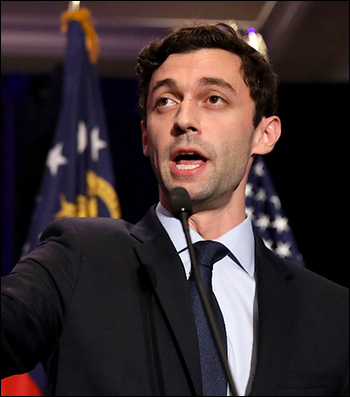
Georgia Democratic Sen. Jon Ossoff

A recently released Cygnal survey research firm poll finds the Republican Senate candidate pool pulling closer to Georgia Sen. Jon Ossoff (D), and the two best available performers aren’t yet in the race.

The Cygnal poll (May 15-17; 800 likely Georgia voters; live interview & text) projects that Secretary of State Brad Raffensperger (R) runs slightly ahead of Sen. Ossoff, 44.3 to 44.1 percent. Rep. Mike Collins (R-Jackson) appears next strongest, trailing the incumbent, 45.7 – 44.3 percent. Neither, however, are announced Senate candidates.

Secretary Raffensperger, who was the focal point of the 2020 vote fraud claim controversy in the presidential race, could seek re-election. He has also publicly contemplated entering the open Governor’s race but has been relatively silent about launching a bid against Sen. Ossoff.

Rep. Collins has been listed as a potential Senate candidate since the beginning of the prognostication discussion, and he is still considered as a possible statewide contender.

Another potential Republican candidate, but one unlikely to run, is former US Senator and current Small Business Administration Director Kelly Loeffler. She also does well in the Cygnal poll, trailing Ossoff just 46.3 – 42.8 percent.

The announced candidates fall into the same close polling realm. Sen. Ossoff would lead Rep. Buddy Carter (R-Pooler/Savannah), 46.0 – 42.1 percent, while state Agriculture Commissioner John King falls behind the Senator by a closer 44.7 – 42.1 percent.

This set of polls is much different from what we have previously seen in the early going. Before, Gov. Brian Kemp (R), who recently announced he would not run for Senate, polled slightly ahead of Ossoff, but the others were substantially behind. Therefore, the new Cygnal poll, from a frequent Georgia pollster, marks a significant improvement for the lesser known GOP candidates and potential contenders.

For example, the April Atlanta Journal-Constitution poll (May 15-24; 1,000 registered Georgia voters) found Sen. Ossoff leading Commissioner King, 51-38 percent. A January WPA Intelligence survey (Jan. 14-15; 500 likely Georgia voters) posted Ossoff leading King, 47-31 percent and 45-32 percent over Rep. Carter.

The Tyson Group also polled the Georgia Senate race in January (Jan. 30-31; 600 likely Georgia voters) and reported Gov. Kemp leading Sen. Ossoff, 49-42 percent. They also tested Rep. Carter and found Ossoff rebounding to lead 47-32 percent. The Trafalgar Group, in their April poll (April 24-27; 1,426 likely Georgia voters; multiple sampling techniques), saw Sen. Ossoff running ahead of Rep. Collins by a closer 47.5 – 42.8 percent margin.

The Trafalgar Group also released Republican primary numbers from last month’s results. At the time, Rep. Marjorie Taylor Greene (R-Rome), who later announced that she would not enter the Senate race, led the group with 42.7 percent of the likely Republican primary voters. Raffensperger was second with 22.0 percent, followed by Rep. Collins’ 15.0 percent support. Rep. Carter drew 13.1 percent, potential candidate Rep. Rich McCormick (R-Suwanee) posted 5.3 percent, and Commissioner King trailed with only 2.0 percent preference.

While certain states, adjacent North Carolina being a prime example, see routine polling inaccuracies that usually involve an under-poll for Republican candidates, the 2024 Georgia data produced sound projections.

According to the Real Clear Politics Polling Archives, the past six Georgia presidential polls all saw the race coming down to a one point margin. The final Atlas Intel (Nov. 3-4) survey predicted the correct margin, a two-point victory for President Trump. This most recent polling track record is a clear improvement for Georgia polling methodologies because the group of participating pollsters largely missed the 2020 Georgia presidential and 2022 Senate races.

The Republican nomination field is expected to be large, meaning the May 19 GOP Senate primary will likely advance to a late June runoff between the eventual top two finishers. Once a Republican nominee is chosen (Sen. Ossoff is expected to be unopposed for the Democratic nomination) the Peach State political fireworks will then consume the remaining five months of the ’26 election cycle.

The Georgia race promises to be one of the most hotly contested battleground Senate campaigns of the 2026 election cycle. It is clearly the Republicans’ best chance to convert a Democratic seat, so the party will be all-in here, regardless of which Republican will ultimately challenge Sen. Ossoff.

Senate: Early Open Seat Observations

By Jim Ellis — Tuesday, May 27, 2025

Senate

Senator and former Auburn football coach Tommy Tuberville

It appears that Alabama Sen. Tommy Tuberville (R) will announce his campaign for Governor at some point this week.

Tuberville’s doing so will make the Alabama seat the sixth open Senate race for the 2026 election cycle, joining Illinois, Kentucky, Michigan, Minnesota, and New Hampshire.

Sen. Tuberville’s move toward the Governor’s contest looks ever more secure since Lt. Gov. Will Ainsworth (R) announced late last week that he will not run. Earlier this month, his statements led observers to believe that he would be the only Republican willing to challenge the Senator in the Republican gubernatorial primary.

Previously, Ainsworth reiterated that he would not run for the Senate, making it clear that his eyes were on the Governorship. Therefore, his announcement of not running for Governor is quite surprising but likely a testament to Tuberville’s strength within the Republican base.

In the open Senate race, we can expect to see a crowded Republican field, but possibly only one major candidate on the Democratic side. While a Republican House member may or may not jump into the Senate skirmish, several state officials are likely to do so.

For the Democrats, former US Senator Doug Jones, who Sen. Tuberville unseated in 2020 with a 60-40 percent victory margin, is indicating that he is considering either entering the Senate or Governor’s race next year. With Tuberville headed to the Governor’s campaign, it is probable that Jones, if he decides to again run for office, will attempt to regain his Senate seat since that race will be open.

Three of the open Senate seats are already stabilizing. At the outset, the races in Illinois and Minnesota appear similar. Here, we see Sens. Dick Durbin (D-IL) and Tina Smith (D-MN) retiring, leaving hotly contested Democratic primaries in their wake. Republicans, on the other hand, don’t see a major candidate surfacing right now in either campaign.

The Illinois Democratic primary will be decided on March 17. The contest features two US House members, Reps. Raja Krishnamoorthi (D-Schaumburg) and Robin Kelly (D-Matteson/Chicago), along with Lt. Gov. Juliana Stratton.

The Lieutenant Governor won endorsements from Gov. J.B. Pritzker (D) and the state’s junior Senator, Tammy Duckworth (D). Yet, Stratton and Rep. Kelly largely share the same major constituency, the Black community, and even hail from similar locations in the Chicago area. Therefore, the two have a high probability of splitting the same vote pool. Rep. Krishnamoorthi had almost $20 million in his campaign account at the end of the first quarter and may have better potential to attract downstate votes. In any event, this will be an interesting early race.

In Minnesota, with former state Senate Minority Leader Melisa Lopez Franzen already dropping out of the Democratic race, the contest, likely to be decided in an August primary, is already evolving into a close two-way affair between Lt. Gov. Peggy Flanagan and Rep. Angie Craig (D-Prior Lake).

Kentucky Sen. Mitch McConnell (R) retiring after seven terms will leave this seat with a new occupant for the first time since 1985. Republicans are headed to a May primary battle between former Attorney General and 2023 GOP gubernatorial nominee Daniel Cameron and Rep. Andy Barr (R-Lexington).

The big unanswered question, however, is whether Gov. Andy Beshear (D-KY) will enter the race. He has won two statewide campaigns, including defeating Cameron in the 2023 general election. If the Governor runs for Senate, the open race becomes very much in play. Should he only focus on running for President in 2028, the eventual GOP nominee should have an easy walk in the general election.

The New Hampshire Senate race is already evolving into a general election contest even before state legislators decide if they will move the September primary to an earlier date.

Rep. Chris Pappas (D-Manchester) is quickly uniting the Democratic Party behind his candidacy and looks to become a consensus candidate. He will have the advantage in November likely over former Massachusetts Sen. Scott Brown (R), who is moving toward again locking down the GOP nomination. In 2014, he held Sen. Jeanne Shaheen (D) to a 51-48 percent re-election victory.

Finally, the Michigan race looks to be the one toss-up open Senate race. Republican former Representative and 2024 US Senate nominee Mike Rogers returns for another shot but may have to win a Republican primary against Rep. Bill Huizenga (R-Holland).

The Wolverine States Democrats are for sure headed to a contested primary. Rep. Haley Stevens (D-Birmingham) and state Sen. Mallory McMorrow (D-Royal Oak) are already in the race, while term-limited Attorney General Dana Nessel may soon join the field. The 2024 general election was decided by just 19,006 votes, and it would not be surprising to see a similar result occur in 2026.

Rep. Gerry Connolly Passes Away

By Jim Ellis — Friday, May 23, 2025

US House

Virginia Rep. Gerry Connolly passed away Wednesday, May 21, 2025.

Veteran Democratic Rep. Gerry Connolly (D-VA) passed away yesterday after an extensive battle with cancer. He is the third member to die since the beginning of the current Congress.

At the end of April, Connolly announced that his cancer had returned and that he would not seek re-election and step down as Ranking Minority Member of the Oversight and Government Reform Committee. At the beginning of the current Congress, he easily defeated Rep. Alexandria Ocasio-Cortez (D-NY) to win the committee leadership position.

Because Rep. Connolly had already announced his retirement, a campaign was already forming to succeed him in the 2026 election. Fairfax County Supervisor James Walkinshaw (D) and state Sen. Stella Pekarsky (D-Centreville) are viewed as the leading candidates for the impending regular election. It is assumed both will enter the special election that Virginia Gov. Glenn Youngkin (R) will call for what is now a vacant 11th Congressional District.

Others will likely enter, though some key potential candidates, such as former state House Speaker Eileen Filler-Corn (D) and state Sen. Jennifer Boysko (D-Herndon), indicated in the days prior to Connolly’s death that they will support Supervisor Walkinshaw for the federal position.

Gov. Youngkin will likely schedule the special election for a period around Labor Day. The 11th CD is heavily Democratic (Dave’s Redistricting App partisan lean: 67.2D – 30.7R), so the eventual party nominee is virtually assured of assuming the seat.

Virginia’s congressional district political party organizations have the power to determine their own nomination process. This means the local leadership and party organization members can choose to hold a regular primary election, a “firehouse primary”, which means a vote with very few polling places in the district, or conduct a nominating convention with local delegates.

Democrats typically favor regular primaries, while Republican committees generally opt for a convention or the firehouse primary option.

Rep. Connolly was first elected to the House in 2008, after serving six years as the Fairfax County Board of Supervisors chairman. He originally won the Board’s Providence District seat in 1994.

The House Democratic Conference is now reduced to 212 members since Rep. Connolly is the third Democratic member to pass away this year. The other two were Reps. Raul Grijalva (D-AZ) and Sylvester Turner (D-TX). Special elections for the previous two vacant districts are scheduled for late September (Arizona) and early November (Texas), the latter being concurrent with the regular local election schedule.

Virginia’s 11th District is located wholly within Fairfax County and houses Fairfax City in the Washington, DC suburbs. The district begins at the Maryland border and includes the Tysons Corner community at its eastern border. The 11th hosts the Reston and Herndon communities through which it stretches to Dulles Airport, and then moves south to add the Centreville, Springfield, Burke, and Lorton communities.

The Down Ballot political blog prognosticators rank the VA-11 seat as the 81st safest Democratic seat in the party conference. President Joe Biden carried the district with a 66-31 percent margin in 2024, and a 70-29 percent spread in 2020.

Connolly was born in Boston, Massachusetts in 1950. He was 75 years old.

Maine Rep. Golden to Seek Re-Election

Campaign ad by Rep. Jared Golden

By Jim Ellis — Thursday, May 22, 2025

US House

Maine’s four-term Rep. Jared Golden (D-Lewiston), amid speculation that he might run for Governor or possibly the Senate against his former boss, Sen. Susan Collins (R), announced that he will seek a fifth term in the House next year.

Earlier in the year, Rep. Golden was circumspect about his political plans not only acknowledging that he was considering a statewide bid, but also that he might retire outright from elective politics.

Next year, it appears he will face former two-term Gov. Paul LePage (R), who again returned from living in Florida to announce for public office in Maine. In 2022, LePage unsuccessfully challenged Gov. Janet Mills (D). Earlier this month, LePage announced that he would enter the 2nd Congressional District race next year.

Rep. Golden had a close call in 2024, winning a Ranked Choice Voting re-election with only 50.3 percent of the vote over retired NASCAR driver and then-state Rep. Austin Theriault. It was presumed that Theriault would run again, but he has since stated that he will not and endorsed LePage. The former Governor carried the 2nd District in all of his gubernatorial runs, even in ‘22 when he lost the statewide count to Gov. Mills by 13 percentage points.

Maine’s 2nd District encompasses most of the state’s geographic area and has the largest land mass of any CD east of the Mississippi River. ME-2 is also the most Republican seat in the nation that elects a Democrat to the House of Representatives. According to the Dave’s Redistricting App statisticians, the 2nd has a 52.9R – 41.2D partisan lean. President Trump has carried the 2nd District in all three of his national runs, winning the last two races with percentage margins of 53-44 percent (2024) and 52-45 percent (2020).

With Rep. Golden out of the Governor’s race, Democrats will still see a crowded open primary since Gov. Mills is ineligible to seek a third term. Those party members officially announced for Governor include Secretary of State Shenna Bellows, businessman Angus King, III, son of Sen. Angus King (I-ME), and former state Senate President Troy Jackson, who hails from Maine’s far northern tier. Expected to soon enter is former state House Speaker Hannah Pingree, daughter of US Rep. Chellie Pingree (D-North Haven/Portland).

For the Republicans, former Assistant US Secretary of State Bobby Charles, ex-local official Robert Wessels, and businessman Owen McCarthy are the announced candidates.

Despite the Republican trends exhibited in the 2nd CD, Rep. Golden has been able to prevail in his House races, partially due to the Ranked Choice Voting system, which applies for Maine’s federal races and primaries outside of the national presidential campaign. Counting the post-RCV rounds as his final tally, Rep. Golden has averaged 51.7 percent of the cumulative vote for his entire congressional career.

With the House partisan division at 220R – 215D, counting the two vacant Democratic seats that will be filled later in the year, Maine’s 2nd District, with its favorable Republican voting history outside of the US House race, will become a major national GOP conversion target. Any seat the Republicans can gain from the Democratic column will go a long way toward sustaining the party’s small majority.

The Golden-LePage race is guaranteed to be close with both candidates being popular with the 2nd District constituency. Winning this race could well be a precursor to which party clinches the next US House majority.

A Pair of Senate No-Go’s

By Jim Ellis — Wednesday, May 21, 2025

Senate

Minnesota Sen. Tina Smith (D) — not seeking re-election.

Two Midwest Democratic Senate primaries became better defined early this week. With no viable Republican candidate so far coming forward in either Minnesota or Illinois, the Democratic primary in both states is likely to produce the outgoing incumbents’ successors.

With that being the case, in Minnesota, we see former state Senate Minority Leader Melisa Lopez Franzen (D) suspending her Senate campaign, and Illinois Rep. Lauren Underwood (D-Naperville) has been telling supporters she has decided not to enter the open Democratic primary to replace retiring Sen. Dick Durbin (D).

Minnesota Sen. Tina Smith (D) is not seeking re-election, and immediately upon the incumbent’s political intentions becoming public, Lt. Gov. Peggy Flanagan (D) announced her Senate candidacy. Shortly thereafter, Franzen joined the race. At the end of April, Rep. Angie Craig (D-Prior Lake) entered, and the primary campaign’s trajectory changed.

While Lt. Gov. Flanagan continued in the favorite’s position, the Craig entry made the race a two-way affair in many observers’ minds. This narrowed a plausible victory path for Ms. Franzen; hence, she came to the conclusion that her Senate effort would be relegated to futile status.

The Illinois situation is vastly different. Some believe Rep. Underwood might have eventually positioned herself as the favorite to defeat Reps. Raja Krishnamoorthi (D-Schaumburg), Robin Kelly (D-Matteson/Chicago), and Lt. Gov. Juliana Stratton.

Considering the credibility factor of those in the field, the Land of Lincoln Democratic primary campaign will be a difficult run for any who ultimately file. Apparently, Rep. Underwood believed her chances of topping the Democratic field were not strong enough to risk what has become, for her, a safe House seat.

Expect the Minnesota race to be very expensive, but whether the Flanagan-Craig battle will be settled in the primary election remains to be seen. The Minnesota nominating process features state party endorsing conventions. Most of the time, and particularly on the Democratic side, the candidates accept the convention result and do not force a primary.

In this high-stakes race, however, the chances of the candidate not receiving the party endorsement forcing the August primary must be considered a likelihood. Still, the endorsing convention facet of the Minnesota nominating system creates one more obstacle that the eventual nominee must overcome either by winning the official party endorsement or bypassing the party leaders’ votes.

The Illinois race is shaping up to be an interesting battle. In a three-way race with an early primary (March 17) and no runoff, one candidate must find the right geographic and demographic coalition path to victory.

The best-positioned candidate now may be Rep. Krishnamoorthi. Having the most money in the bank at this point – at the end of March he posted just under $20 million in his campaign account – and seeing two Black opponents coming from the same area in Chicago conceivably splitting the sizable Illinois Black and South Side city vote will likely work in his favor. If the two women run close together, Krishnamoorthi may inherit the inside track toward building a plurality victory coalition within groups beyond the city of Chicago.

Lt. Gov. Stratton has the support of Gov. J.B. Pritzker (D) and Sen. Tammy Duckworth (D) suggesting that she will be viewed as the party establishment candidate. Stratton, however, is just getting her campaign launched and is far behind in the money chase.

Suggestions abound that the Governor may be helping construct a Super Pac to boost her standing, but it remains to be seen if such will happen or whether this is mere wishful thinking from the Stratton team.

Though we are still in the very early stages of these two campaigns, both will be nomination battles to carefully monitor for the remainder of the pertinent nomination cycles.

Democrats Down in All States Requiring Voter Registration With Political Party Affiliation

By Jim Ellis — Tuesday, May 20, 2025

Democratic Party

Former President Joe Biden campaigns prior to his election to the presidency in 2020. / Photo by Gage Skidmore

In 31 states, individuals registering to vote must list a political party affiliation to do so, and the latest trends suggest significant partisan changes.

The most stunning pattern when comparing the latest registration numbers with those found from Joe Biden’s victorious presidential election in 2020 is that Democratic preference is down in all 31 party registration states. This does not necessarily mean there are fewer Democratic registered voters in all instances, but their percentage of the entire registered voter universe in each of these states is lower than in 2020.

In comparison, Republican registration under the same time parameters is up as a percentage to the whole in 23 of the 31 states. The Independent, or Non-affiliated option is up in 18 of the party registration state universes.

Further research would likely lead to the conclusion that Democrats are attracting fewer younger and new voters when compared with past performance. Additionally, the changes in voter registration preferences may be a key reason as to why ballot test polling has been less accurate than in years past.

Florida is a good example of the polling accuracy factor. In voter registration, we have seen a dramatic shift since 2020. In the Biden year, Democrats had a Florida voter registration edge of 36.3 percent to the Republicans’ 35.7 percent. Non-affiliated voter percentage was 26.4, while an additional 1.7 percent of the registered universe was affiliated with a minor party recognized under the state’s election law.

Today, according to the latest available figures, 39.6 percent of Florida’s registered voters are Republicans and 31.3 percent are Democrats, while Non-affiliateds comprise 26.0 percent of the registered universe and an additional 3.0 percent are members of minor parties.

Polling in Florida, according to the Real Clear Politics Polling Archives, throughout the 2024 cycle projected President Trump and Sen. Rick Scott leading their Democratic opponents by a respective seven percent average (Trump) and five-point margin (Scott), yet Trump won by more than 13 percentage points and Scott just under 13. One reason for the big polling miss is likely a failure to properly emphasize the large voter registration shift in the Republicans’ favor.

Today, there are a larger number of registered Republicans than Democrats in 12 of the 31 party reg places. The Non-affiliated option is the top registrant in an additional 10 states, while Democrats lead in only nine, which is down three states (Florida, Kentucky, and Nevada) from the party’s standing in 2020.

The Republican majority or plurality states are: Arizona, Florida, Idaho, Iowa, Kansas, Kentucky, Nebraska, Oklahoma, South Dakota, Utah, West Virginia, and Wyoming.

The Non-affiliated majorities or pluralities are: Alaska, Arkansas, Colorado, Connecticut, Massachusetts, Nevada, New Hampshire, North Carolina, Oregon, and Rhode Island.

Democratic Party registration is tops in: California, Delaware, Louisiana, Maine, Maryland, New Jersey, New Mexico, New York, and Pennsylvania. Democrats, however, hold an outright majority of registered voters in only Maryland.

The three states with the largest swing since 2020 toward Republicans are Idaho, Wyoming, and Iowa. The GOP gained a net 8.4 percentage points in Idaho, 7.4 in Wyoming, and 5 points in Iowa. The party’s biggest drop, however, came in Colorado where the GOP lost 2.7 points. The next highest losses were in Delaware (2.3 net percent) and Nevada (1.6 percent drop).

As mentioned above, Democrats lost affiliation ground in all 31 states. Their three biggest drops, all down between six and seven percentage points, occurred in West Virginia, Nevada, and Rhode Island.

The Non-affiliated gains and losses are more erratic. The Independent, Non-affiliated, or “Declined to State” category saw gains in 18 states but losses in 12 others. Louisiana does not report Non-affiliated numbers. The biggest Non-affiliated gainers were Nevada (up 9.1 net percentage points from 2020), Massachusetts (7.3), Rhode Island (5.8), and Colorado (5.4). The fact that two of the most loyal Democratic states, Massachusetts and Rhode Island, are among the top gainers in Non-affiliated voter registration is another bad sign for the Democrats.

The states with the highest Non-affiliated decline are Alaska (-12.1 net percentage points in comparison with 2020), South Dakota (-9.8), and Idaho (-6.4).

Total voter registration is up in only 19 of the 31 states, meaning there are fewer registered voters today in 12 of the party registration states than in 2020.

The downturn is largely due to population loss (Connecticut; Louisiana) or states performing their proscribed registration purge. The latter process eliminates voters who have passed away, moved, or have not voted in a specific number of consecutive general elections as dictated by their individual state laws.