
Tag Archives: Markwayne Mullin

Markwayne Mullin Confirmed;
Armstrong Now Oklahoma Senator

By Jim Ellis — Wednesday, March 25, 2026

Senate

Oklahoma’s Markwayne Mullin yesterday won Senate confirmation to his new position as Secretary of Homeland Security. A day before, Mullin resigned from the Senate thus creating a new open seat for the 2026 election cycle.
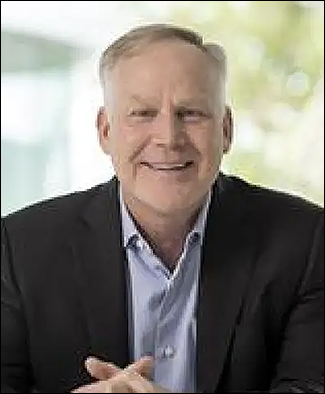
Energy businessman and now Oklahoma Sen. Alan Armstrong (R)

Mullin was first elected to the House in 2012 and was re-elected four times. He won a special election to the Senate in 2022 replacing then-Sen. Jim Inhofe (R) who resigned the seat for family reasons after serving 28 years. Immediately upon the Mullin confirmation, Oklahoma Gov. Kevin Stitt (R) appointed energy businessman Alan Armstrong (R) to serve the balance of the current term.

Under Oklahoma procedure, when a Senate vacancy occurs the Governor appoints a replacement. The person agreeing to accept the appointment then signs an oath saying he or she will not seek election to the succeeding term. Therefore, Sen. Armstrong will only serve until just after the special election, which is scheduled concurrently with the regular election cycle.

Because the Mullin seat is in-cycle this year, the winner of the regular term — likely the person who wins the concurrent special election — will earn a full six-year term. The odds-on favorite to win both elections is Rep. Kevin Hern (R-Tulsa) who announced for the seat as soon as then-Sen. Mullin was designated as the new Homeland Security Secretary.

The Mullin resignation means there will be 11 open US Senate races in this cycle, seven from the Republican side as compared to four open Democratic seats.

Alan Armstrong was born and raised in the Bartlesville area of northern Oklahoma. He graduated from the University of Oklahoma and then went to work for the Williams energy company where he spent his professional career, rising to the company’s top position serving from 2011 to 2025. After retiring, he became a member of the Williams company Board of Directors from which he resigned to accept the short-term Senate appointment.

Oklahoma has a unique procedure for the appointment process that disqualifies the appointee from running for the seat to which they are chosen. While unconstitutional to pass a law that prohibits a citizen from seeking political office, the state lawmakers got around the requirement by having the appointment process include the signing of the oath pledging not to run.

If an individual decided to break the oath, it would be difficult for the state to pursue action against the person because of the individual’s constitutional right to participate in the political process. There is no indication in this case that Sen. Armstrong will attempt to break his oath.

Rep. Hern is cementing his case to become a consensus Senate candidate. After his formal announcement of candidacy, both Gov. Stitt, who had not expressed clear interest in running for the Senate, and Rep. Stephanie Bice (R-Oklahoma City) who confirmed she was contemplating entering the race, both announced they would not run.

In the Republican primary, the announced candidates challenging Rep. Hern are real estate broker Sean Buckner, IT professional Nick Hankins, nurse Ron Meinhardt, and non-profit CEO Wayne Washington.

For the Democrats, progressive activist Evan Beck, private investigator Troy Green, janitor Rebekah LaVann, retired attorney Jim Priest, and nurse N’Kiyla Thomas have declared their candidacies.

The Oklahoma candidate filing deadline is April 3, so time remains for a stronger contender in both parties to come forward. With no former or current elected official in the overall field, it appears that Rep. Hern is a lock to become the consensus Republican nominee and a prohibitive favorite for the general election.

Oklahoma, Arizona Results

Rep. David Schweikert

As the Republican National Convention belatedly got underway in Tampa Tuesday, voters in four states went to the polls but only two of those places, Oklahoma and Arizona, hosted races of significance.

A run-off election was held in Oklahoma’s 2nd District for both parties in order to continue the replacement process for retiring Rep. Dan Boren (D-OK-2). Former Democratic district attorney Rob Wallace knocked off local Farm Bureau executive Wayne Herriman by a 57-43 percent count. Wallace will face businessman Markwayne Mullin who won the Republican nomination by the same margin. Democratic turnout, however, was much higher than that for the GOP, about 44,000 voters to just over 21,000. The Eastern Oklahoma 2nd District is viewed as a strong Republican conversion opportunity. Though the 2nd is the most Democratic seat in the state, Oklahoma voters are expected to support Republican presidential nominee Mitt Romney in such landslide proportions that additional momentum will be generated for Mullin in the congressional contest.

But the big prize in last night’s primary contests was Arizona. As expected, Rep. Jeff Flake (R-AZ-6) easily captured the Republican Senatorial nomination, defeating businessman Wil Cardon by capturing more than two-thirds of the Republican vote.

In the Scottsdale-anchored new 6th Congressional District, in a paired major battle of two incumbent freshmen Republicans, Rep. David Schweikert (R-AZ-5) defeated his GOP colleague, Rep. Ben Quayle (R-AZ-3), by a 53-47 percent margin. This has been a hotly contested campaign since the beginning, with each candidate attempting to sell himself as the more conservative stalwart. Schweikert will easily win the general election and should be able to hold this seat for the remainder of the decade, barring any type of further significant primary challenge.

In the expansive eastern 1st CD, also producing no surprises, former representative Ann Kirkpatrick took the Democratic nomination and will face former state senator Jonathan Paton who was a landslide winner on the Republican side. The 1st is a highly marginal district, so expect a fierce battle in the general election.

In the new southeastern 2nd District, formerly numbered 8, newly elected Rep. Ron Barber (D), fresh from his recent special election victory, will attempt to win a full term against former Gulf War veteran Martha McSally (R).

The western 4th District was drawn as Arizona’s safest Republican seat, which explains why freshman Rep. Paul Gosar moved here from the marginal 1st District despite only representing one-third of the new constituency. The ploy worked as Gosar defeated state Sen. Ron Gould and GOP businessman Rick Murphy, while overcoming more than $800,000 in conservative independent expenditure targeted against him. The congressman should now have an easy ride in the general election, even though he only notched 51 percent of the vote against his two Republican opponents.

Back in suburban Phoenix, former Rep. Matt Salmon looks like he has won a ticket back to Congress with a solid victory over former Arizona state House Speaker Kirk Adams. The 5th District is another safe Republican seat, so Salmon now appears to be a lock for victory in November.

In the new marginal 9th District, also in the Phoenix suburbs, Democratic former state senator Kyrsten Sinema won her party’s nomination, defeating state Senate Minority Leader David Schapira and former state party chairman and Clinton Administration official Andrei Cherny. On the Republican side, Paradise Valley Mayor and former congressional candidate Vernon Parker won a very close Republican primary contest, as he placed first against six other candidates.

Republicans had hoped Sinema would become the Democratic nominee because they believe she can be painted as too liberal for the CD-9 constituency. Expect a hot race here in the fall. Democrats should enjoy a slight advantage, and an edge that will likely expand throughout the rest of the decade due to demographic changes but, for now, the 2012 congressional battle must be considered a toss-up.

Sullivan Loses in Okla.; Other Incumbents Fare Well

The big story of yesterday’s Oklahoma primary voting is the defeat of six-term Rep. John Sullivan (R-OK-1), who fell to military reserve pilot Jim Bridenstine by a substantial 54-46 percent margin. Sullivan becomes the fourth non-paired incumbent to fail in a renomination bid during this election cycle. Reps. Jean Schmidt (R-OH-2), Tim Holden (D-PA-17), and Silvestre Reyes (D-TX-16) are the other three.

In the open 2nd District of Oklahoma, both parties will feature Aug. 28 run-off elections. The Republicans will battle between businessman Markwayne Mullin (42 percent) and state Rep. George Faught (23 percent). Democrats will likely have a close contest between former district attorney Rob Wallace (46 percent) and Tulsa County Farm Bureau President Wayne Herriman (42 percent). Rep. Dan Boren (D) is retiring. This may be the Republican’s best conversion opportunity in the country.

Turning to South Carolina, the general election candidates are now set in the Palmetto State’s new 7th District. Horry County Council chairman Tom Rice was a strong 56-44 percent winner over former lieutenant governor Andre Bauer in the Republican primary. Rice is a prohibitive favorite now in the general election. In the run-off campaign that lasted just four official days after the Horry County court ruled that the Democrats must hold a secondary vote, former Georgia state Rep. Gloria Tinubu easily beat back attorney Preston Brittain, 73-27 percent. The run-off was challenged because votes for a withdrawn candidate were not originally included in the final tally.

In Utah, Sen. Orrin Hatch, as expected, was an easy 67-33 percent winner in his Republican primary battle with former state Sen. Dan Liljenquist. Hatch will now cruise to re-election to a seventh term in November.

Another incumbent turned back a serious primary challenge with ease. Three-term Rep. Doug Lamborn (R-CO-5) repelled self-funding opponent Robert Blaha by a strong 62-38 percent margin despite the challenger spending more than $720,000 of his own money. Lamborn, who has had trouble solidifying what should be a safe Colorado Springs district, appears to be building the kind of strength one would expect to see from a now veteran incumbent.

Finally, in New York, a series of primaries produced no surprises. Embattled Rep. Charlie Rangel (D-NY-13), challenged by four Democrats, again survived the onslaught but with only 45 percent of the vote. State Sen. Adriano Espaillat was his closest challenger with 40 percent; former Clinton Administration official and 2010 congressional candidate Clyde Williams only recorded 10 percent of the vote.

Rep. Nydia Velazquez (D) was a 58-31 percent winner over New York City Councilman Erik Dilan. Velazquez will now represent the new 7th District, which contains 71.2 percent of her current constituency. Neighboring Rep. Yvette Clarke (D-NY-9) was an easy winner in her primary with a huge 88 percent of the vote.

Elsewhere in the state, two individuals won open-seat New York City races that effectively punches their ticket to Congress. State Assemblywoman Grace Meng was an easy Democratic primary winner and will succeed retiring Rep. Gary Ackerman in the new 6th District. In Brooklyn, Democratic state Assemblyman Hakeem Jeffries will replace retiring Rep. Ed Towns in the new 8th District.

New York City attorney Sean Mahoney won the right to challenge freshman Rep. Nan Hayworth (R) in the new 18th District. Mahoney won despite the district being anchored in Westchester County. As expected, Rep. Bill Owens (D) will defend his marginal district against 2010 nominee Matt Doheny (R). And, former Erie County Executive Chris Collins (R) will face Rep. Kathy Hochul (D) in a new district that heavily favors the Republicans.

Finally, in the US Senate race, conservative Wendy Long easily defeated New York City Rep. Bob Turner (R-NY-9), who had no legitimate chance of remaining in the House post-redistricting. Long, also officially carrying the Conservative Party line, will face Sen. Kirsten Gillibrand (D) in a long shot November challenge effort.