
By Jim Ellis — Monday, March 30, 2026
House
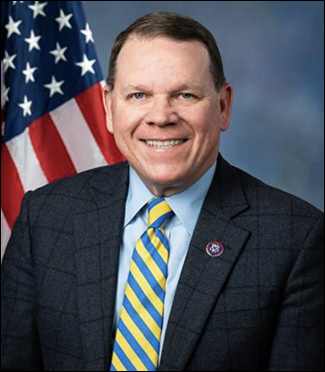
Veteran US Rep. Sam Graves (R-Tarkio)
of Missouri
Graves was initially elected to the House in 2000 and only dropped below 60 percent support one time in his 12 re-election campaigns. Prior to serving in Congress, Graves won seats in both the Missouri state House of Representatives and state Senate. He has been in elective office consecutively since the 1992 election.
The Graves retirement means there are temporarily 61 open US House seats headed to the next election. The number will recede to 59 when the special elections in GA-14 (April 7) and NJ-11 (April 16) occur to fill vacant seats. Of the 61 open positions, 27 members, including Rep. Graves, are retiring from elective politics. The remainder are running, or have run, for a different office.
Missouri’s 6th District contains the state’s northern counties beyond Kansas City to the Iowa border and all the way to the western Illinois border. Under the new Missouri congressional map drawn for the 2026 election cycle, the 6th now contains a significant part of Kansas City including the major Kansas City International Airport and the North Kansas City community.
The addition of the Kansas City metro region reduces the district’s Republican partisan lean by approximately six percentage points, but CD-6 remains as the GOP’s third strongest domain in the Show Me State. According to the Dave’s Redistricting App (DRA) partisan lean calculations, the new MO-6 records a 61.5R – 36.5D split. President Trump received 68.8 percent of the vote in the previous district as compared to Kamala Harris’ 30.0 percent.
With the Missouri candidate filing deadline expiring tomorrow, we can expect a number of candidates to come forward to file in the new open 6th District. The eventual Republican nominee coming from the Aug. 4 primary should have little trouble holding the seat in the November general election.
Whether the new map will be used for the 2026 election remains in question, however, even as candidate filing is closing. Petition signatures have been filed for an initiative to repeal the new map, but the qualification process is not complete. More than enough signatures have been submitted to meet the basic requirement for ballot line acquisition, but whether all additional legal requirements have been met remains unanswered.
Therefore, as the candidates file under the new map, the possibility remains that the repeal initiative could force a re-filing under the previous map. A court ruling on Friday upheld the new plan, but the Secretary of State has until the Aug. 4 primary to rule on signature validation.
According to Missouri initiative law, a ballot proposition requires signatures equal to five percent of the total number of votes cast for the most recent gubernatorial campaign. In this case, the 2024 gubernatorial election saw 2,960,266 ballots cast, meaning the five percent total would require 148,013 valid signatures.
The procedure, however, requires the petitions to equal five percent of the gubernatorial total vote in two-thirds of the state’s congressional districts, or likely six of the eight. Therefore, the actual number of required signatures could be lower than the calculated statewide total. The redistricting opponents have submitted more than 305,000 signatures.
The new draw centers around the state’s 5th District that veteran Congressman Emanuel Cleaver (D-Kansas City) represents. Instead of being a Kansas City metro district, the new 5th stretches from the city of Independence eastward through central Missouri and past the capital city of Jefferson City.
The new map changes the 5th District from a seat with a DRA partisan lean of 60.8D – 35.9R to one that would likely elect a Republican with a 56.6R – 41.1D spread. The remaining seven seats, 6R and 1D, will remain with the current party.