
Daily Archives: January 22, 2026

Rep. Letlow to Challenge Sen. Cassidy

By Jim Ellis — Friday, January 23, 2026

Senate

Louisiana Rep. Julia Letlow

Three-term Louisiana Rep. Julia Letlow (R-Start) has joined the group challenging GOP Sen. Bill Cassidy. The Senator confirmed he received a message from Rep. Letlow saying that she will oppose him in this year’s Republican primary and then subsequently publicly declared her intentions. Reports are also surfacing that President Trump has endorsed her candidacy.

The move is a bit of a surprise since a reported understanding existed between Rep. Letlow and state Rep. Julie Emerson (R-Carencro), chair of Louisiana’s House Ways and Means Committee, that the two would not oppose each other in the Senate challenge. Rep. Emerson announced her candidacy in late October.

It has long been presumed that President Trump would be active in this race since Sen. Cassidy is one of just two Republican Senators on the 2026 ballot to have voted for impeachment over the Jan. 6 controversy at the Capitol. Recently, Trump has been more conciliatory toward the Senator, but it is still clear that he would prefer a different Republican join Sen. John Kennedy (R) in representing Louisiana.

Clearly, the Bayou State race will be one of the premier GOP primary contests. Aside from Rep. Letlow and state Rep. Emerson, 10 others — including State Treasurer and former Congressman and ex-Deputy White House Chief of Staff in the first Trump Administration John Fleming, state Sen. Blake Miguez (R-New Iberia), Public Service Commissioner Eric Skrmetta, and St. Tammany Parish Councilwoman Kathy Seiden — are all in the nomination race against Sen. Cassidy.

Typically, such a large field would generally help an incumbent because the anti-incumbent votes would be split among so many contenders. In Louisiana, however, the political dynamics have changed. At the end of 2024, the legislature and Governor reinstituted the partisan primary and runoff system to replace the jungle primary structure the state had used since the late 1970s.

Now, such a crowded field likely ensures that the initial vote ends with no candidate receiving majority support, thus forcing the top two finishers to a secondary runoff election.

Originally, the new primary election was scheduled for April 18 but because the US Supreme Court has yet to render a decision on the Louisiana racial gerrymandering case, the state has postponed the first vote to May 16 and the runoff, if necessary, to June 27.

The candidate filing deadline for major party candidates is Feb. 13, so it remains to be seen just how many of the dozen candidates follow through with the filing process. It is a good bet that the field will narrow once the filing deadline arrives.

Rep. Letlow was elected to the US House in a 2021 special election after her husband, Luke Letlow, won the 2020 election. Unfortunately, he would die of COVID before he was able to take office. After winning the initial special election, Rep. Letlow was easily re-elected in 2022 and 2024, averaging 65.2 percent of the vote.

With Letlow leaving the House, it means there are 54 open seats with three vacancies moving toward special elections. She is the 29th Republican not to seek re-election and 14th retiring House member to enter a 2026 US Senate race.

The battle for her 5th District House seat becomes interesting in that the district could significantly change depending upon SCOTUS’s ruling on the Louisiana redistricting case. Therefore, who might run to succeed Rep. Letlow won’t be completely settled until the high court justices make their decision and district boundaries are set.

In California, Gov. Gavin Newsom (D) scheduled the special election to replace the late US Rep. Doug LaMalfa (R) concurrently with the state’s June 2 regular primary. If no candidate receives majority support, the top two will run off on Aug. 4. At this point, state Assemblyman James Gallagher (R) is the only announced candidate.

Surprisingly, the special election will occur in the current 1st District and not the new 1st that voters adopted in the November special election. Republicans will hold the seat in the special election, but Democrats will likely convert it in November under the new lines that clearly favor their party.

The other two special elections, TX-18 and NJ-11, are scheduled for Jan. 31 and Feb. 5, respectively. The Texas seat is in the final runoff stage while the New Jersey district will host partisan primaries in early February and fill the seat in a special general election on April 16. Democrats are expected to win both of the latter elections.

Tafoya’s Announcement for Senate

By Jim Ellis — Thursday, January 22, 2026

Senate
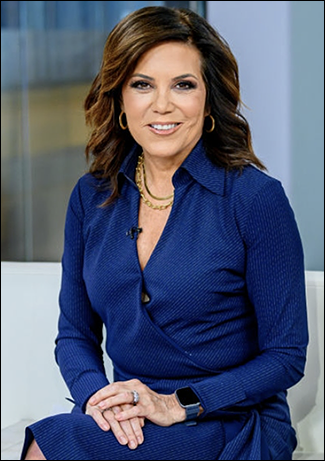
Michele Tafoya

Recently, both Democratic and Republican party leaders have scored positively in 2026 Senate candidate recruitment.

Last week, Democrats successfully recruited former at-large Rep. Mary Peltola into the Alaska Senate race, and this week the Republicans convinced their top Minnesota candidate prospect to enter the 2026 open campaign.

Former national sportscaster Michele Tafoya, who came to prominence from her years as part of the NFL Sunday Night Football telecasting team, this week formally declared for the Republican US Senate nomination and currently faces no major competition in the GOP primary.

In the general election, Tafoya will likely face either Lt. Gov. Peggy Flanagan or Rep. Angie Craig (D-Prior Lake).

The Democratic nomination battle will be interesting. Typically, Minnesota candidates in both parties don’t force a primary if they fail to receive the party endorsement at the state delegate convention. It is probable in this campaign, however, that the losing convention candidate will force a primary election to be decided on August 11th.

Considering the current state of the Minnesota Democratic Farm Labor Party, the most liberal candidate would likely earn the delegate vote. If so, Lt. Gov. Flanagan should be favored. Rep. Craig, risking her congressional seat to run for the Senate, probably won’t end her quest because of a partisan convention delegate vote. With her strong fundraising and campaign ability, Rep. Craig could be considered the favorite to win the primary election even without the official party blessing.

Democrats have enjoyed a strong run in Minnesota over at least the past couple decades and certainly so since 2006, the last election year when a Republican, former Gov. Tim Pawlenty, won a major statewide race. Despite the Democrat’s long string of statewide victories, their more recent average win percentage isn’t particularly high. Therefore, the act of fielding a potentially strong candidate like Tafoya suggests that the Republicans scoring an upset victory is within the realm of possibility.

Since the 2018 election, inclusive, Democrats have won every major statewide race, but their aggregate vote percentage average is only 53.5, low for a party that has not lost a major statewide campaign in what will be 20 years at the next election.

One could also argue that the recent average is artificially high because of Sen. Amy Klobuchar (D). Of the eight studied races, she won two and her average vote total is 58.2 percent against weak Republican competition. If she is removed from the calculation, the average Democratic win percentage in their most recent six victories is only 51.7.

Unfortunately for the Republicans, the highest GOP total in those same statewide elections is President Trump’s 46.7 percent total in 2024. Even when including Trump’s high number, the Republican aggregate average during the studied period is only 42.7 percent.

While the political situation is hot in Minneapolis right now when considering the ICE controversy and the public assistance fraud scandal, Republican strategists will still need to properly position Tafoya in order to positively drive home the policy differences between her and the eventual Democratic nominee. Because she is a prominent candidate, it is likely the Tafoya campaign will be adequately funded to properly deliver her message.

While the ICE tensions may well die down before the Nov. 3 election, the Tafoya campaign will work to keep the fraud scandal alive and pin the blame upon the Democrats. This task will be easier if Lt. Gov. Flanagan becomes the party nominee because, as a state official, she can be held at least partially responsible for the government’s poor oversight.

While Tafoya will be a credible Republican voice in the November contest, she still must be rated as a decided underdog at least until her campaign begins to significantly move polling numbers as the general election unfolds.