
By Jim Ellis — Thursday, January 8, 2026
The Senate Opens
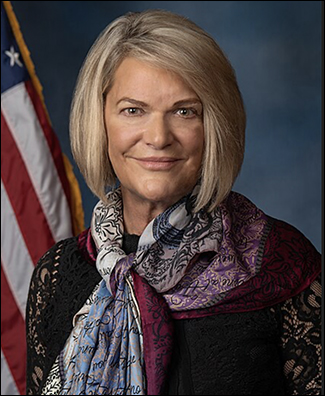
Wyoming first-term Sen. Cynthia Lummis (R)
Alabama
Sen. Tommy Tuberville (R) is leaving the Senate to run for Governor. His replacement will almost assuredly come from the Republican primary. The leading candidates are Attorney General Steve Marshall, US Rep. Barry Moore (R-Enterprise), and anti-human trafficking activist and ex-Navy SEAL Jared Hudson. Marshall is ineligible to seek a third term in his current position. This race could turn into an interesting three-way campaign since early polling projects different leaders.
Illinois
Senate Democratic Whip Dick Durbin (D-IL) is retiring and leaves a three-way party primary battling for the right to succeed him. The three contenders are Lt. Gov. Juliana Stratton and Reps. Robin Kelly (D-Matteson/Chicago) and Raja Krishnamoorthi (D-Schaumburg).
From the beginning, Rep. Krishnamoorthi has held a large lead in polling and certainly fundraising. At this point less than three months before the March 17 primary, Rep. Krishnamoorthi looks to be the clear favorite for the Democratic nomination and to win the seat in the general election.
Iowa
Sen. Joni Ernst (R) is retiring after two terms, and three-term Rep. Ashley Hinson (R-Marion/Cedar Rapids) appears as the prohibitive favorite to win the Republican nomination. Democrats are poised to make a run for the seat even though their nominee will be a decided underdog.
Reports last week indicate that Democratic Party leaders favor state Rep. Josh Turek (D-Council Bluffs), thinking he would be the strongest candidate to oppose Rep. Hinson. Also vying for the party nomination are state Sen. Zach Wahls (D-Des Moines), former state legislators Bob Krause and Richard Sherzan, and local Chamber of Commerce executive Nathan Sage.
Kentucky
Sen. Mitch McConnell (R) is retiring after serving what will be seven six-year terms. Without Gov. Andy Beshear in the Senate race for the Democrats, the battle to succeed Sen. McConnell will be fought in the Republican primary. There, we see a three-way race among former Attorney General and 2023 Republican gubernatorial candidate Daniel Cameron, Rep. Andy Barr (R-Lexington), and wealthy businessman Nate Morris.
Cameron, despite losing the 2023 general election to Gov. Beshear, leads Barr and Morris in polling but the Congressman has a multi-million-dollar advantage over Cameron in cash resources. Morris is independently wealthy and has been advertising early. Polling, however, shows he has little momentum.
For the Democrats, we will see a primary rematch from the 2020 race between former Marine Corps officer Amy McGrath and then-state Rep. Charles Booker. Kentucky’s Republican nature suggests that the eventual GOP nominee, likely either Rep. Barr or Cameron, will be a clear favorite in the general election.
Michigan
Michigan is one of two open Senate races projected as highly competitive in the general election. In this case, Republicans have a chance to convert a Democratic seat. Former Rep. Mike Rogers, who faces only a Michigan Republican Party former officer and minor candidates is a prohibitive favorite for the party nomination on Aug. 4. Rogers came within 19,006 votes of winning the 2024 Senate race and now is well positioned for the 2026 campaign.
The Democrats are embroiled in a tight three-way campaign for the party nomination among Rep. Haley Stevens (D-Birmingham), state Sen. Mallory McMorrow (D-Royal Oak), and former Wayne County Health Director Abdul El-Sayed. All three have raised into seven figures and are running close in early polling.
Rogers advantage is that his eventual Democratic opponent will have come through a tough primary late in the cycle. This race is likely to be in toss-up mode all the way through the November election.
Minnesota
Sen. Tina Smith (D) surprisingly announced her retirement early in 2025, and leaves in her wake a two-way Democratic primary between Lt. Gov. Peggy Flanagan and Rep. Angie Craig (D-Prior Lake). Flanagan is staking out the left flank of the Democratic Party, while Rep. Craig is positioning herself as more business friendly.
Under the Minnesota system, the state political party convention through delegate voting grants pre-primary endorsements. Typically, the candidates adhere to the endorsement process and don’t force primaries. It appears, however, this Senate election will advance to an Aug. 11 primary irrespective of the party convention action.
Republicans hope to recruit former national sportscaster Michele Tafoya into the race. Regardless of a potential Tafoya candidacy, the eventual Democratic nominee will have the advantage in the general election.
New Hampshire
Sen. Jeanne Shaheen (D) is retiring after three terms. Rep. Chris Pappas (D-Manchester) has adroitly transformed himself into the consensus Democratic nominee.
Former Sen. John E. Sununu (R), who lost to Shaheen in 2008 after defeating her in 2002, is competing for the nomination and looks to face former Massachusetts Senator and 2014 New Hampshire Senate candidate Scott Brown. Sununu is likely to win the Republican nomination. Rep. Pappas will only be a slight favorite after the late Sept. 8 primary election. Clearly, the Republicans having a Sununu family member on the ballot gives the party a fighting chance to convert the seat.
North Carolina
Though both parties feature multiple candidates vying for their respective open US Senate nominations, each looks to already have their general election candidate.
For the Democrats in the second open race that will be highly competitive in the general election, former two-term Governor and previous four-term Attorney General Roy Cooper looks to be a lock for his party’s nomination. On the Republican side, former Republican National Committee and ex-North Carolina Republican Party chairman Michael Whatley is in the driver’s seat to clinch a general election ballot position.
The North Carolina race promises to feature a hotly contested campaign immediately after the general election begins on March 4 and will carry through to the November vote. The Tar Heel State always features tight elections, and the 2026 US Senate campaign will be no exception. Democrats certainly have a viable opportunity to convert this seat.
Wyoming
Late last year, Sen. Lummis announced that she would not seek a second term, which opens the safe Republican Wyoming seat. With Gov. Mark Gordon (R) term-limited and unlikely to run for the Senate, all eyes are on at-large Rep. Harriet Hageman (R-Cheyenne) to decide if she will run for Governor, Senate, or re-election. Once she makes a decision, the Wyoming political musical chairs will begin.
At this point, it is unclear who will run where, but the Republicans will hold the seat. We may have to wait awhile, however, to see how this political situation unfolds. The candidate filing deadline is not until May 29 for the associated Aug. 18 primary election.