Tag Archives: Sen. Sherrod Brown

Ohio Senate: Mandel Declares

By Jim Ellis

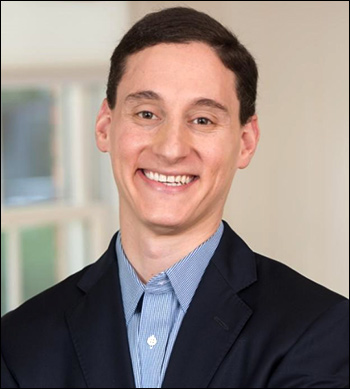
Former Ohio State Treasurer and 2012 US Senate candidate Josh Mandel (R), now 2022 senate candidate.

Feb. 12, 2021 — Former Ohio state treasurer and 2012 US Senate candidate Josh Mandel (R), armed with over $4.3 million in his federal campaign account, announced Wednesday that he will run for the state’s open Senate seat next year. Last week, Rep. Tim Ryan (D-Warren/ Youngstown) stated that he will officially declare his own federal statewide candidacy in March.

It is clear that Mandel will not be the only major Republican to battle for the GOP nomination. It is likely, however, that he will begin the primary campaign with more money than any of his future competitors. The only other person holding as large a federal war chest who didn’t run for office in 2020 is former US Rep. Pat Tiberi (R), but he has already made public his intention not to enter next year’s open Senate race.

Several members of the Republican congressional delegation are reportedly assessing the Senate contest as is sitting Secretary of State Frank LaRose. Often mentioned as potential candidates are Reps. Steve Stivers (R-Columbus), Bill Johnson (R-Marietta), Dave Joyce (R-Russell Township), and Warren Davidson (R-Troy). Reps. Jim Jordan (R-Urbana) and Troy Balderson (R-Zanesville) have publicly stated they will not run for the Senate.

Ex-congressman and 2018 US Senate nominee Jim Renacci (R) is another potential contender and confirms that he is considering the race. State Republican Party chair Jane Timken, who resigned her position at the end of last week, is also expected to become a candidate. State Sen. Matt Dolan (R-Chagrin Falls), whose district forms a virtual horseshoe around the city of Cleveland, is also contemplating launching a Senate campaign. Sen. Dolan, the chairman of the state Senate Finance Committee, is a part owner of the Cleveland Indians baseball club.

Mandel was first elected to the Ohio House of Representatives in 2006 when he was 29 years old. He then won the treasurer’s post in 2010 and held it for eight years. He lost the 2012 Senate race to Sen. Sherrod Brown (D) by a 51-45 percent count but raised more than $18 million for his campaign. Mandel was planning to run again in 2018, but his wife’s serious health situation caused him to exit the race after announcing. The couple has since divorced.
Continue reading

Jockeying for Ohio’s Senate Seat

By Jim Ellis

Jan. 28, 2021 — Monday’s surprise announcement that Sen. Rob Portman (R) will not seek re-election next year has ignited a flurry of activity and speculation from potential candidates and political observers alike. Some looking to challenge Gov. Mike DeWine (R) are now also beginning to survey and assess how an open US Senate candidate field might unfold.

Recent voter history suggests that the eventual Republican nominee will at least begin the general election campaign in the favorite’s role. The GOP, with a large number of statewide office holders, former elected officials, and a dozen sitting US House members, has an array of candidates from which to choose, and many will take the plunge.

For example, former US Rep. Jim Renacci, who held Sen. Sherrod Brown (D) to a 53-47 percent victory in the 2018 campaign and was reportedly looking to challenge Gov. DeWine in the 2022 Republican primary, may now set his sights on the open Senate seat.

Another ex-office holder, Pat Tiberi, who averaged 60.6 percent of the vote over nine elections from a Columbus area congressional district that former governor and presidential candidate John Kasich once held, still sits on more than $5 million in his federal campaign account even though he hasn’t been on the ballot since 2016.

It was widely believed that he was amassing a huge war chest to run against Sen. Brown in ’18, but family considerations led him to change his mind, resign from Congress and instead take the reins of the Ohio Business Roundtable.

Still another former elected official, ex-state Treasurer Josh Mandel (R), who lost the 2012 Senate election to Sen. Brown, was planning to run again in 2018 until leaving the race because of his wife’s health issue. Mandel raised almost $20 million for his Senate race eight years ago and has over $4 million in his campaign account even though he has not been a federal candidate in eight years.

Republicans hold all of the state’s constitutional offices. Lt. Gov. Jon Husted, Secretary of State Frank LaRose, Attorney General Dave Yost, state Treasurer Robert Sprague, and State Auditor Keith Faber are all credible potential US Senate candidates.

Continue reading

Rep. Moulton Sees A Different Path

By Jim Ellis

March 13, 2019 — While former New York City mayor and media magnate Michael Bloomberg and Sen. Sherrod Brown (D-OH) both backed away from entering the presidential campaign because they couldn’t see a path for themselves to win the Democratic nomination, a different Democratic office holder appears to be taking the opposite view.

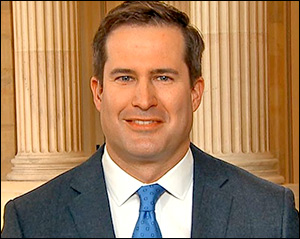
Massachusetts Rep. Seth Moulton (D-Salem)

Massachusetts Rep. Seth Moulton (D-Salem) was one of the leaders of the group who attempted to deny Nancy Pelosi a return to the speakership. Therefore, with little thought of becoming a factor in the current House Democratic majority, Moulton is looking at other opportunities.

While he didn’t expressly deny examining a potential primary challenge to Sen. Ed Markey (D) earlier in the year, such a move no longer appears to be on the congressman’s horizon. Rather, he appears to believe his chances might be a bit better in trying for the “big prize.”

Scheduling visits to neighboring New Hampshire and then over to Iowa in the coming weeks, Rep. Moulton is clearly testing the waters to enter the presidential race. And, according to reports from people close to his effort, a national campaign announcement is likely forthcoming at the end of April or beginning of May.

Rep. Moulton, who served four tours of duty in the Iraq War and saw significant combat action, is a liberal Democrat, but he seems to be a hybrid in falling between the socialist Democrats such as Bernie Sanders, Alexandria Ocasio-Cortez (D-NY), and his Massachusetts colleague Sen. Elizabeth Warren, and the former Blue Dog Democrats who trend more centrist.

Continue reading

With Brown Bowing Out,
Does That Mean Biden Will Begin?

By Jim Ellis

Ohio Sen. Sherrod Brown (D) – not running for president

March 11, 2019 — Ohio Sen. Sherrod Brown, another of the potential Democratic presidential candidates who most observers thought would enter the race, is not.

His announcement late last week was a bit surprising considering his home state with 136 first-ballot delegates and 153 overall (the seventh largest state delegation at the Democratic National Convention) moved the primary to March 10, partially with the idea of giving him a boost.

Sen. Brown’s decision provides us a clue as to what else may happen, however. He, like former New York City Mayor Michael Bloomberg, basically said the reason for not becoming a candidate is that the victory path is not evident. The underlying conclusion is they obviously believe former Vice President Joe Biden will enter the race.

Though all three men (Biden, Bloomberg, and Brown) certainly must be considered liberals on the ideological scale, they are not part of the far-left faction that Sens. Bernie Sanders, Kamala Harris, Elizabeth Warren, Cory Booker, and others are attempting to attract. Therefore, if the Bloomberg and Brown paths are blocked, then it is Biden who is their most formidable impediment.

If the former vice president and Delaware senator enters the race, and some say he will do so early next month, is he a lock for the nomination? Polling indicates he would jump to the top of the current heap but would be nowhere close to the majority of delegate votes required to win the nomination on the first convention ballot. In four late February national polls of likely Democratic primary voters, Biden tops them all but with preference percentages of 27, 30, 29, and 31 – hardly dominating numbers.

Continue reading

Bloomberg & Other Surprises

By Jim Ellis

Former New York City Mayor Michael Bloomberg (D)

March 8, 2019 — Former New York City Mayor Michael Bloomberg’s decision earlier this week not to enter the Democratic presidential race becomes the first major surprise move of the early campaign.

It was clearly expected that he would become a candidate. After all, he was talking about committing $500 million of his own money to the effort, he’d hired key campaign staff, designed a presidential campaign logo, and even organized an announcement tour beginning in his birthplace of Boston, Massachusetts.

Speculation continues to surround former Vice President Joe Biden’s decision regarding whether or not he may also ultimately decide to take a pass on the race; Bloomberg’s reasoning provides us a key clue that at least he thinks Biden will soon form a campaign.

So far, 11 Democrats have become candidates with two more filing exploratory committees. The pair remaining in pre-candidate status are Sen. Kirsten Gillibrand (D-NY) and Rep. Tulsi Gabbard (D-HI).

It is conceivable that one or both of the latter women could decide not to become candidates. Rep. Gabbard has run into organizational trouble, is being attacked for her foreign policy positions, and now has drawn serious primary opposition for her congressional seat. Just recently, state Sen. Kai Kahele (D-Hilo) has earned public endorsements from former governors and key Hawaii Democratic Party leaders.

While many in the media cast Sen. Gillibrand as a top-tier candidate, she has gone nowhere since her exploratory announcement, failing so far to even break one percent in any released poll.

Continue reading

Biden Up Twice

By Jim Ellis

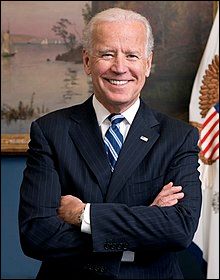
Former vice president and ex-Delaware senator Joe Biden

Dec. 18, 2018 — A pair of Democratic presidential primary polls were just released — one with a national respondent universe, and the other for the first-in-the-nation Iowa Caucus. In both, former vice president and ex-Delaware senator Joe Biden is staked to a lead. The most disappointing performer appears to be Massachusetts Sen. Elizabeth Warren, who settles into middle-of-the-pack status in both surveys.

CNN conducted the national poll (conducted by the SSRS firm; Dec. 6-9; 463 Democrats and independent-leaning Democrats). For two reasons, this survey is of little statistical relevance. First, the national sample of only 463 individuals is very low, thus leading to a huge error factor. Second, as we know, the presidential nomination process is decided by winning delegate support in every state and territory, thus monitoring a candidate’s national standing, while being of media interest, actually provides little in the way of tangible political value.

The Des Moines Register/CNN Mediacom Iowa poll (conducted by Selzer & Company; Dec. 10-13; 455 likely Iowa Democratic Caucus attenders) is the more relevant of the two studies since it previews the Iowa Caucus, which is responsible for apportioning the state’s nominating delegates and tentatively scheduled for Feb. 3, 2020.

In the national poll, Biden places first with 30 percent preference followed by Vermont Sen. Bernie Sanders (I/D-VT) who posts 14 percent. These are the only two potential candidates in double figures.

Continue reading

Ohio: Contrasting Polls

By Jim Ellis

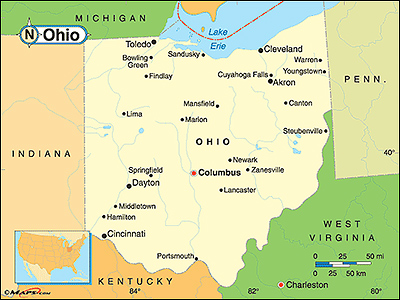
state-of-ohio-mapNov. 1, 2018 — The Buckeye State of Ohio is viewed as one of the country’s quintessential swing states. In 2016, however, the state exceeded polling and even Republican expectations in their presidential vote, as President Trump won a decisive 52-44 percent victory over Hillary Clinton.

Some suggested the Trump vote was an indication that the state could be moving more definitively to the political right, but new surveys suggest the Buckeye electorate is returning to its previous swing vote history.

Still, Ohio proves a reliable national political barometer. In both 2008 and 2012, the electorate here voted for President Obama after twice after backing President George W. Bush in his two elections. The state previously favored President Bill Clinton in his two successful national campaigns. In fact, the last time Ohioans failed to vote for the winning presidential candidate came in 1960 when the state awarded its electoral votes to Republican Richard Nixon in his national losing effort against John F. Kennedy.

Two new polls were released this week that paint different pictures of the Ohio electorate’s current state. Some of the results are curious to the point of questioning the polling reliability or not being able to adequately determine how the governor’s race will end and failing to understand the wide discrepancy in US Senate polling projections.

Continue reading