
By Jim Ellis

Wisconsin Gov. Tony Evers
The Democratic presidential primary is interesting since the Wisconsin electorate will be the first to vote post-March 17, and so far, becomes the only group to cast ballots during the COVID-19 lockdown situation. How this affects today’s vote in terms of turnout and candidate loyalty will be interesting to analyze.
Whether or not this election would even happen today has been a point of discussion for the past two weeks. Many Democratic strategists were lobbying Gov. Tony Evers, a fellow Democrat, for several days to move the election, but he was slow to act. Late last week, Gov. Evers decided to ask the legislature to pass a bill changing the election date, but the Republican majority leadership in the two chambers refused. Gov. Evers then made a last-ditch effort to declare a state of emergency and attempted to move the election.
The latter action drew the Republican leadership’s ire, and they immediately petitioned the state Supreme Court arguing that the governor has no power to arbitrarily move an election. They also went to the US Supreme Court attempting to get a lower-court ruling to extend the absentee ballot return deadline past the original election schedule countermanded.
At the heart of the election date becoming a political football was not the presidential race, but rather an important state Supreme Court election. Though the race is ostensibly nonpartisan, it is clear that Democrats believe chances for the candidate they are backing improve in a later election, while Republicans think the appointed incumbent they support fares better in a quicker, and presumably lower turnout contest.
 March 11, 2020 — Former vice president Joe Biden expanded his lead for the Democratic presidential nomination, but he didn’t quite deliver the knockout blow that many predicted.
  March 5, 2020 — Tuesday’s elections in Texas and California were subject to slow counting, but at least in the Lone Star State, the numbers are near final.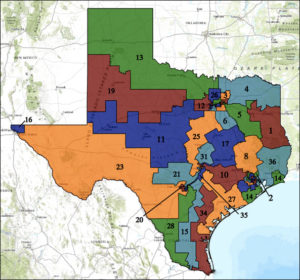


 Feb. 25, 2020 — While the Nevada Caucus counting drags on and tabulations will at some point determine just how many delegates Sen. Bernie Sanders (I-VT), former Vice President Joe Biden, and ex-Mayor Pete Buttigieg receive from the state – currently, it appears that Sanders will win somewhere between 19 and 23 bound delegate votes, while Biden and Buttigieg should both earn bound votes in the high single digits – a new US Senate poll is proving more curious today.